

Why You’ll Love This Thai Green Curry
This Thai green curry recipe is a fantastic choice for anyone looking to whip up something tasty without spending hours in the kitchen. It comes together in just 35 minutes, making it ideal for busy parents, students, or working professionals who want a flavorful meal after a long day. You’ll appreciate how this dish balances health benefits with delicious taste.
Packed with fresh herbs, green chilies, and nutrient-rich coconut milk, this curry offers antioxidants, vitamins, and healthy fats that support your wellness goals. Whether you’re a food enthusiast, diet-conscious individual, or traveler seeking familiar flavors abroad, it’s a versatile option that adapts to various dietary needs. Its distinctive blend of aromatic Thai basil, lemongrass, and spicy green curry paste creates a vibrant, bold taste that sets it apart from other curries.
One of the best parts is its adaptability for different diets, like vegan or gluten-free, so newlyweds, seniors, or baking enthusiasts can customize it easily. Imagine enjoying a meal that’s not only quick and healthy but also full of that harmonious flavor you crave. For home cooks and party hosts, this recipe turns everyday ingredients into something special that delights everyone at the table.
Jump to:
- Why You’ll Love This Thai Green Curry
- Essential Ingredients for Thai Green Curry
- How to Prepare the Perfect Thai Green Curry: Step-by-Step Guide
- Adding and Cooking the Main Ingredients
- Dietary Substitutions to Customize Your Thai Green Curry
- Mastering Thai Green Curry: Advanced Tips and Variations
- How to Store Thai Green Curry: Best Practices
- FAQs: Frequently Asked Questions About Thai Green Curry
- What key step improves the flavor when making Thai Green Curry?
- Can I make Thai Green Curry using store-bought curry paste?
- What ingredients are traditionally included in Thai Green Curry?
- How spicy is Thai Green Curry compared to other Thai curries?
- What are good substitutes if I can’t find kaffir lime leaves for Thai Green Curry?
- Thai Green Curry
- Ingredients
- Instructions
- Last Step:
- Notes
- Nutrition
- Did you make this recipe?
Essential Ingredients for Thai Green Curry
Building a great Thai green curry starts with the right ingredients, and this recipe keeps it simple yet authentic. Below, you’ll find a comprehensive list based on the classic preparation, making it easy to gather everything you need. Each item is listed with precise measurements to ensure your curry turns out perfectly every time.
- 3 tablespoons Thai green curry paste
- 2 cloves fresh garlic, minced (to enhance jar paste if used)
- 1 teaspoon fresh ginger, finely grated (to enhance jar paste if used)
- 1 teaspoon lemongrass paste or 1 stalk fresh lemongrass, finely minced (to enhance jar paste if used)
- 1 tablespoon vegetable oil
- 1 cup (240 ml) chicken or vegetable broth, low sodium
- 1 cup (240 ml) full-fat coconut milk or coconut cream for richer sauce
- 1 tablespoon fish sauce
- 1 teaspoon white sugar
- Salt, to taste
- 4 kaffir lime leaves, torn (or substitute with lemongrass stalk or lime peel)
- 400 grams chicken thigh, skinless and boneless, sliced (breast can be used with adjusted cooking time)
- 150 grams Japanese eggplants, small, sliced (or substitute with small regular eggplants or zucchini)
- 100 grams snow peas, trimmed
- 1 cup Thai basil leaves (or regular basil as substitute)
- 1 tablespoon lime juice
- Garnishes (optional): crispy fried Asian shallots, Thai basil or cilantro/coriander leaves, green or red chili slices
For special dietary options, you can make swaps like using soy sauce instead of fish sauce for a vegan version. This list covers everything required for a full serving, helping home cooks measure accurately and avoid any surprises. If you’re new to Thai cooking, stick to these quantities for the best results and enjoy experimenting later.
How to Prepare the Perfect Thai Green Curry: Step-by-Step Guide
Getting started with Thai green curry is straightforward and fun, even if you’re a beginner. First, gather all your ingredients and prepare them by chopping vegetables, slicing the protein, and measuring out the curry paste and coconut milk. This prep step, which takes about 15 minutes, helps everything run smoothly so you can focus on cooking.
Next, heat 1 tablespoon of vegetable oil in a skillet or pot over medium-high heat. Add the curry paste along with garlic, ginger, and lemongrass paste if you’re enhancing a jar version, and cook for 2 to 3 minutes until it’s fragrant and mostly dry. This key step brings out the flavors and makes the curry taste amazing, as shared in many home cooking tips.
Now, pour in 1 cup of chicken or vegetable broth and 1 cup of coconut milk, stirring well to dissolve the paste and create a creamy base. Bring it to a simmer, then season with 1 tablespoon of fish sauce, 1 teaspoon of white sugar, and salt to taste for that perfect balance. Add the torn kaffir lime leaves at this point to infuse aromatic notes.
Adding and Cooking the Main Ingredients
Stir in the sliced chicken thigh and let it simmer gently for 7 minutes until it’s cooked through; adjust time if using chicken breast. For added veggies, include the sliced Japanese eggplants next and cook for another 5 minutes until they’re soft. Taste the curry and tweak the seasoning with more fish sauce, salt, or sugar as needed to suit your preferences.
Finish by adding the trimmed snow peas and cooking for 2 more minutes so they stay slightly crisp. Finally, stir in 1 cup of Thai basil leaves and 1 tablespoon of lime juice just before serving to keep the colors bright and flavors fresh. For more ideas on pairing, consider trying a refreshing drink like the one at blueberry lemonade recipe, which complements the curry’s spice.
Serve your curry hot over rice and garnish with optional crispy fried Asian shallots, herbs, or chili slices. The total cooking time is around 20 minutes, making this a quick option for busy nights. Remember, small adjustments like these can elevate your meal without much effort.

Dietary Substitutions to Customize Your Thai Green Curry
Making Thai green curry adaptable is one of its charms, especially for diverse groups like busy parents or diet-conscious folks. You can swap out proteins easily, such as replacing chicken with tofu, tempeh, shrimp, or mushrooms for vegan and pescatarian options. These changes let you keep the dish exciting while meeting different needs.
When it comes to vegetables, sauces, and seasonings, get creative with substitutions like using zucchini or bell peppers instead of Japanese eggplants based on what’s in season. For gluten-free versions, swap fish sauce with tamari, and adjust the curry paste’s spiciness to match your heat level. Adding herbs like cilantro can bring a fresh twist, making the curry feel new each time.
Here are some quick modifications in a table for easy reference:
| Category | Original Ingredient | Substitution |
|---|---|---|
| Protein | Chicken thigh | Tofu or tempeh for vegan diets |
| Vegetable | Japanese eggplants | Zucchini or bell peppers |
| Sauce | Fish sauce | Soy sauce or tamari for gluten-free |
This flexibility ensures everyone from food enthusiasts to seniors can enjoy a personalized version. For more dessert ideas to follow your meal, check out the coconut cream pie, which uses similar coconut flavors for a sweet finish.
Mastering Thai Green Curry: Advanced Tips and Variations
Once you’re comfortable with the basics, taking your Thai green curry to the next level is all about little tricks that enhance the experience. For instance, toasting the green curry paste in a dry pan before adding liquids intensifies its aroma and depth, a pro technique that makes a big difference. You can also experiment with flavors by adding roasted peanuts for crunch or a squeeze of lime juice for extra tanginess.
Presentation plays a role too; arrange garnishes like finely sliced chili and fresh herbs on top to make your dish look as good as it tastes. If you’re planning ahead, prepare the curry paste and chop vegetables in advance, storing them separately to keep everything fresh until you’re ready to cook. These strategies not only refine the recipe but also make it efficient for various occasions, like family dinners or gatherings.
Flavor variations can include incorporating different proteins or veggies, building on what we discussed earlier. For example, if you love coconut, try linking it to other recipes on the blog for inspiration. Overall, these tips help travelers and party hosts adapt the curry to suit any event, turning it into a go-to favorite.
How to Store Thai Green Curry: Best Practices
Proper storage keeps your Thai green curry tasting great for leftovers, which is perfect for busy lifestyles. Put it in an airtight container and refrigerate for up to 3 days to maintain its freshness and creamy texture. This method works well for meal prep, letting you have a quick meal ready during the week.
For longer storage, freeze the curry in freezer-safe containers for up to 2 months, then thaw it overnight in the fridge before reheating. When warming it up, do so gently on the stove or in the microwave, stirring occasionally to keep the consistency smooth. Portioning into individual containers makes it easy for working professionals or students to grab and go.
To get the most out of your curry, always cool it completely before storing, as this prevents bacterial growth and keeps flavors intact.
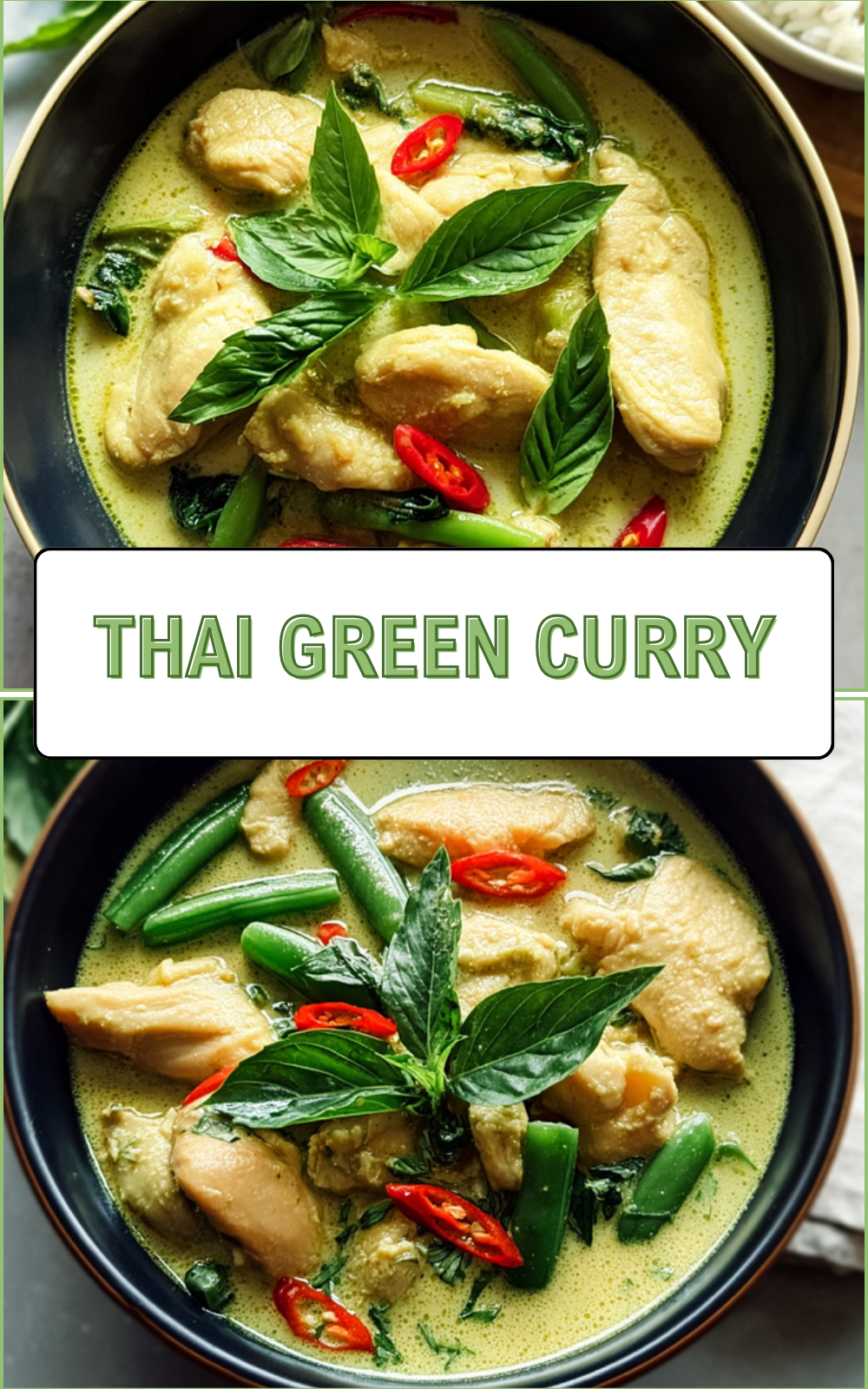
FAQs: Frequently Asked Questions About Thai Green Curry
What key step improves the flavor when making Thai Green Curry?
The key step is to fry the green curry paste in oil before adding other ingredients. This cooking process releases the essential oils and aromas in the paste, intensifying the curry’s flavor. Whether you use store-bought or homemade paste, sauté it for a few minutes until fragrant and slightly caramelized to bring out deeper complexity in the dish.
Can I make Thai Green Curry using store-bought curry paste?
Yes, you can use store-bought green curry paste for convenience. Brands like Maesri closely match the authentic flavor of homemade paste. To boost freshness, add minced fresh garlic, ginger, and lemongrass when frying the paste. This enhances the aroma and balances the paste’s concentrated spice.
What ingredients are traditionally included in Thai Green Curry?
Traditional Thai Green Curry contains green curry paste, full-fat coconut milk, chicken thigh pieces, Japanese eggplant, snow peas, kaffir lime leaves, Thai basil, fish sauce, sugar, and lime juice. These ingredients combine to create a creamy, spicy, and fragrant curry with balanced sweet, salty, and tangy notes.
How spicy is Thai Green Curry compared to other Thai curries?
Thai Green Curry is known for its bright green color and is typically spicier than red or yellow curries. The heat mainly comes from fresh green chilies in the curry paste and additional small Thai chilies. You can adjust the spiciness by using less curry paste or removing some seeds from the chilies to suit your heat preference.
What are good substitutes if I can’t find kaffir lime leaves for Thai Green Curry?
If kaffir lime leaves are unavailable, you can substitute with lemongrass stalks or thin strips of fresh lime zest (green part only). These alternatives provide the citrusy, aromatic notes kaffir lime leaves add to the curry, though the flavor will be slightly different. Adding these at the simmering stage helps infuse the curry with bright, fresh citrus aroma.
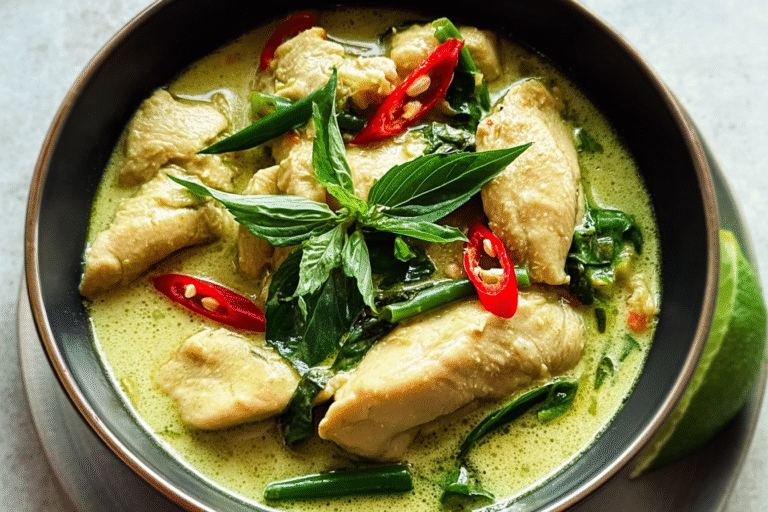
Thai Green Curry
🌿 Savor the authentic flavors of Thai Green Curry made with fresh herbs and rich, creamy coconut sauce.
🍛 This recipe provides a perfect balance of spicy, sweet, and savory, making it an ideal comforting dish for any occasion.
- Total Time: 35 minutes
- Yield: 4 servings 1x
Ingredients
3 tablespoons Thai green curry paste
2 cloves fresh garlic minced to enhance jar paste if used
1 teaspoon fresh ginger finely grated to enhance jar paste if used
1 teaspoon lemongrass paste or 1 stalk fresh lemongrass finely minced to enhance jar paste if used
1 tablespoon vegetable oil
1 cup (240 ml) chicken or vegetable broth low sodium
1 cup (240 ml) full-fat coconut milk or coconut cream for richer sauce
1 tablespoon fish sauce
1 teaspoon white sugar
Salt to taste
4 kaffir lime leaves torn or substitute with lemongrass stalk or lime peel
400 grams chicken thigh skinless and boneless sliced breast can be used with adjusted cooking time
150 grams Japanese eggplants small sliced or substitute with small regular eggplants or zucchini
100 grams snow peas trimmed
1 cup Thai basil leaves or regular basil as substitute
1 tablespoon lime juice
Garnishes optional crispy fried Asian shallots Thai basil or cilantro/coriander leaves green or red chili slices
Instructions
1-Getting started: with Thai green curry is straightforward and fun, even if you’re a beginner. First, gather all your ingredients and prepare them by chopping vegetables, slicing the protein, and measuring out the curry paste and coconut milk. This prep step, which takes about 15 minutes, helps everything run smoothly so you can focus on cooking.
2-Heat 1 tablespoon of vegetable oil in a skillet or pot over medium-high heat. Add the curry paste along with garlic, ginger, and lemongrass paste if you’re enhancing a jar version, and cook for 2 to 3 minutes until it’s fragrant and mostly dry. This key step brings out the flavors and makes the curry taste amazing, as shared in many home cooking tips.
3-Now, pour in 1 cup of chicken or vegetable broth and 1 cup of coconut milk, stirring well to dissolve the paste and create a creamy base. Bring it to a simmer, then season with 1 tablespoon of fish sauce, 1 teaspoon of white sugar, and salt to taste for that perfect balance. Add the torn kaffir lime leaves at this point to infuse aromatic notes.
4-Stir in the sliced chicken thigh and let it simmer gently for 7 minutes until it’s cooked through; adjust time if using chicken breast. For added veggies, include the sliced Japanese eggplants next and cook for another 5 minutes until they’re soft. Taste the curry and tweak the seasoning with more fish sauce, salt, or sugar as needed to suit your preferences.
5-Finish by adding the trimmed snow peas and cooking for 2 more minutes so they stay slightly crisp. Finally, stir in 1 cup of Thai basil leaves and 1 tablespoon of lime juice just before serving to keep the colors bright and flavors fresh. For more ideas on pairing, consider trying a refreshing drink like the one at blueberry lemonade recipe, which complements the curry’s spice.
6-Serve your curry hot over rice and garnish with optional crispy fried Asian shallots, herbs, or chili slices. The total cooking time is around 20 minutes, making this a quick option for busy nights. Remember, small adjustments like these can elevate your meal without much effort.
Last Step:
Please leave a rating and comment letting us know how you liked this recipe! This helps our business to thrive and continue providing free, high-quality recipes for you.Notes
🌿 Use fresh herbs and aromatics like garlic, ginger, and lemongrass to enhance flavor.
🥥 Opt for full-fat coconut milk or coconut cream for a richer, creamier sauce.
🌶 Adjust spice levels by adding or omitting chili slices according to preference.
- Prep Time: 15 minutes
- Cook Time: 20 minutes
- Category: Main Course
- Method: Simmering
- Cuisine: Thai
- Diet: Gluten-Free
Nutrition
- Serving Size: 1 serving