
Why You’ll Love This Thai Basil Pesto
Thai Basil Pesto is one of those recipes that feels special, but it takes only a few minutes to make. If you like bold, fresh sauces that can wake up a simple meal, this one is for you. It uses pantry-friendly ingredients, comes together in a mini food processor, and brings a bright Thai-inspired flavor to everyday food.
- Easy to make: You only need 15 minutes from start to finish, and the blender does most of the work. This is a great choice for busy parents, students, and working professionals who want something fast.
- Good for you: Thai basil brings vitamin A and vitamin C, while nuts add healthy fats and a little protein. According to Cleveland Clinic, basil also contains plant compounds that may support overall wellness. You can read more in this helpful guide to the health benefits of basil.
- Very flexible: This pesto works in pasta, noodles, rice bowls, soups, stir-fries, on toast, or as a dip. It fits many eating styles because it is naturally vegan and dairy-free.
- Big flavor: Thai basil has a sweet, anise-like taste with a slight spicy edge that makes this pesto stand out from classic pesto sauce.
Tip: If you want a sauce that makes plain food taste exciting, this homemade pesto is a smart one to keep in the fridge.
If you enjoy easy homemade sauces, you may also like this creamy coconut cream pie dip for a different kind of quick kitchen win.
Jump to:
- Why You’ll Love This Thai Basil Pesto
- Essential Ingredients for Thai Basil Pesto
- Main Ingredients
- Optional Ingredient Notes
- Special Dietary Options
- How to Prepare the Perfect Thai Basil Pesto: Step-by-Step Guide
- First Step: Wash, dry, and pick the basil
- Second Step: Add the basil to the processor
- Third Step: Add the rest of the ingredients
- Fourth Step: Blend into a paste
- Final Step: Store or serve right away
- Dietary Substitutions to Customize Your Thai Basil Pesto
- Protein and Main Component Alternatives
- Vegetable, Sauce, and Seasoning Modifications
- Mastering Thai Basil Pesto: Advanced Tips and Variations
- Pro cooking techniques
- Flavor variations
- Presentation tips
- Make-ahead options
- How to Store Thai Basil Pesto: Best Practices
- Refrigeration
- Freezing
- Reheating
- Meal prep considerations
- FAQs: Frequently Asked Questions About Thai Basil Pesto
- What is Thai basil pesto?
- What’s the difference between Thai basil and regular basil?
- What ingredients do I need for Thai basil pesto?
- How do you make Thai basil pesto at home?
- How long does Thai basil pesto last and how should I store it?
- Thai Basil Pesto
- Ingredients
- Instructions
- Last Step:
- Notes
- Nutrition
- Did you make this recipe?
Essential Ingredients for Thai Basil Pesto
This Thai basil recipe uses simple ingredients, but each one has a purpose. The basil gives the sauce its fresh, bold taste, while the nuts create body and creaminess. The garlic, vinegar, sugar, and lime juice help balance the flavor so the finished pesto tastes bright, savory, and just a little tangy.
Main Ingredients
- 2 cups Thai basil leaves, packed, washed, and dried – This is the star of the recipe and gives the pesto its signature sweet, slightly spicy flavor.
- 2 tablespoons cashew nuts, roasted and unsalted – Cashews add creaminess and a smooth texture.
- 2 tablespoons peanuts, roasted and unsalted – Peanuts add nuttiness and make the sauce richer.
- 2 garlic cloves, crushed – Garlic gives the pesto sharpness and depth.
- 1/2 teaspoon chili flakes – This adds gentle heat. You can increase it if you want a spicier pesto sauce.
- 60 milliliters olive oil or sesame oil – Oil helps the pesto blend into a smooth paste and gives it a silky finish.
- 1/2 teaspoon sea salt or 1 teaspoon soy sauce or tamari – This adds savory balance and rounds out the flavor.
- 1 teaspoon rice wine vinegar – Vinegar adds a light tang that lifts the whole sauce.
- 1 teaspoon caster sugar – Sugar softens the sharp edges and helps the basil flavor shine.
- Juice from 1/2 lime, to taste – Lime adds brightness and freshness at the end.
Optional Ingredient Notes
- Italian basil supplement: If you cannot find enough Thai basil, you can mix in Italian basil. The flavor will be milder, but it still works well.
- Use one nut type: You can use just cashews or just peanuts if that is what you have on hand. Both add creaminess and flavor.
- Oil choice: Olive oil gives a smooth, mellow finish, while sesame oil brings a deeper, more fragrant note.
Special Dietary Options
- Vegan: This recipe is already vegan because it has no cheese or dairy.
- Gluten-free: Use tamari instead of soy sauce if you want a gluten-free version.
- Low-calorie: Use a little less oil and thin the pesto with a spoonful of water or extra lime juice.
| Ingredient | Role in the Recipe | Easy Swap |
|---|---|---|
| Thai basil | Main flavor base | Italian basil mixed in if needed |
| Cashews and peanuts | Creaminess and nuttiness | Use only one type |
| Olive oil or sesame oil | Texture and richness | Use a lighter hand for a thinner sauce |
| Lime juice and vinegar | Brightness and balance | Adjust to taste |
How to Prepare the Perfect Thai Basil Pesto: Step-by-Step Guide
Making homemade Thai basil pesto is simple, but a few small details help the flavor come out better. I like to gather everything first, then blend quickly so the basil stays bright and fresh. This is an easy homemade pesto recipe that works whether you are using a food processor or a mortar and pestle.
First Step: Wash, dry, and pick the basil
Start with 2 cups Thai basil leaves. Wash them well, then dry them fully with a clean towel or salad spinner. This matters because extra water can make the pesto taste flat and watery. Pick the leaves from the stems and discard any damaged leaves.
Second Step: Add the basil to the processor
Place the basil leaves in a mini food processor. If you are using a mortar and pestle, add the leaves in small batches. Thai basil has narrower, serrated leaves and purple stems, so it looks different from Italian basil. Its flavor is sweeter and a little spicy, which gives the sauce its unique character.
Third Step: Add the rest of the ingredients
Add the 2 tablespoons roasted cashews, 2 tablespoons roasted peanuts, 2 crushed garlic cloves, 1/2 teaspoon chili flakes, 60 milliliters olive oil or sesame oil, 1/2 teaspoon sea salt or 1 teaspoon soy sauce or tamari, 1 teaspoon rice wine vinegar, 1 teaspoon caster sugar, and juice from 1/2 lime. If you want a more mellow version, keep the chili flakes at 1/2 teaspoon. If you like heat, you can increase them to 3/4 teaspoon or more.
Fourth Step: Blend into a paste
Blend everything until it forms a thick paste. Stop now and then to scrape down the sides of the processor so all the ingredients mix evenly. If you are using a mortar and pestle, crush the garlic and nuts first, then work in the basil and liquids until the mixture comes together. The goal is a pesto sauce with texture, not a fully smooth puree.
At this point, taste the pesto. If it needs more brightness, add a little more lime juice. If it tastes too sharp, add a touch more sugar or oil. If you want a saltier finish, add a small amount more soy sauce or sea salt. Small adjustments make a big difference here.
Final Step: Store or serve right away
Spoon the pesto into a jar or container. Drizzle a little oil over the top so the surface stays covered, then seal it tightly. This helps slow browning and keeps the color vibrant. You can serve it right away, or refrigerate it for later use. If you want to pair it with another easy recipe, it also works nicely with blueberry lemonade for a fresh and fun meal spread.
For the best texture, do not overblend. A slightly rustic pesto often tastes better and looks more homemade.

Dietary Substitutions to Customize Your Thai Basil Pesto
Protein and Main Component Alternatives
Even though this recipe is already flexible, you can adjust it based on what you have at home. Cashews and peanuts both add body, so you can use one or the other if needed. If you want a smoother sauce, cashews are usually the creamier option. If you want a stronger nutty taste, peanuts are a good pick.
For the basil, Thai basil gives the most authentic flavor, but Italian basil can fill in when Thai basil is hard to find. The result will be softer and less spicy, but it still works well as a homemade pesto. You can also use a mix of both for a middle-ground flavor.
Vegetable, Sauce, and Seasoning Modifications
If you want to adjust the seasoning, there are several easy ways to do it. Use tamari instead of soy sauce if you need a gluten-free option. Use sesame oil for a deeper flavor, or olive oil for a more neutral result. Lime juice can be increased for extra freshness, while rice wine vinegar gives the sauce a brighter edge.
If you prefer less heat, keep the chili flakes at 1/2 teaspoon. If you want a stronger kick, add more. For a lighter version, reduce the oil slightly and add a spoonful of water while blending. This helps loosen the pesto without making it heavy.
Mastering Thai Basil Pesto: Advanced Tips and Variations
Pro cooking techniques
For the freshest flavor, make sure the basil is very dry before blending. Water can dull the color and make the pesto less vibrant. A mini food processor gives the fastest result, but a mortar and pestle gives a more traditional texture and can bring out a slightly more aromatic taste. If you want the nuts to blend more smoothly, toast them lightly first, even if they are already roasted.
Flavor variations
You can make this Thai basil pesto recipe spicier by adding more chili flakes. You can also switch between olive oil and sesame oil depending on the flavor you want. Sesame oil brings a deeper, more fragrant taste, while olive oil keeps things softer and more familiar. If you like a little sweetness, keep the caster sugar as written. If you prefer a sharper sauce, reduce it slightly.
Presentation tips
Thai basil pesto looks beautiful on a plate because of its bright green color. Spoon it over noodles, spread it on toast with avocado and tomato, or drizzle it over rice bowls. It also makes a great condiment for meats and fish. If you are serving guests, add a few whole basil leaves on top, a light drizzle of oil, and a small pinch of chili flakes for color.
Make-ahead options
This is a smart recipe for meal prep because it keeps well in the fridge and freezer. You can make a batch ahead of time and use it throughout the week. It is also easy to portion into small containers or ice cube trays so you can thaw only what you need. That makes it a strong choice for busy parents, students, and travelers who want quick flavor on hand.
How to Store Thai Basil Pesto: Best Practices
Refrigeration
Store the pesto in a jar or airtight container in the refrigerator for up to a week. To help prevent browning, smooth the top and add a thin layer of oil before sealing. This keeps air away from the surface and helps the pesto stay bright.
Freezing
You can freeze Thai basil pesto for up to 4 months. A small freezer-safe container works well, or you can freeze it in ice cube trays for easy single servings. Once frozen, pop the cubes into a freezer bag and label them with the date.
Reheating
This pesto is usually served cold or at room temperature, so reheating is not really needed. If you are adding it to hot noodles, soup, or rice, stir it in at the end so the flavor stays fresh. If it has thickened in the fridge, let it sit for a few minutes and stir well before using.
Meal prep considerations
Homemade Thai basil pesto is great for batch cooking. Keep portions small so you can use only what you need. Stir before serving because the oil may separate over time. If you plan to use it in several meals, freeze half right away so you always have some ready later.
FAQs: Frequently Asked Questions About Thai Basil Pesto
What is Thai basil pesto?
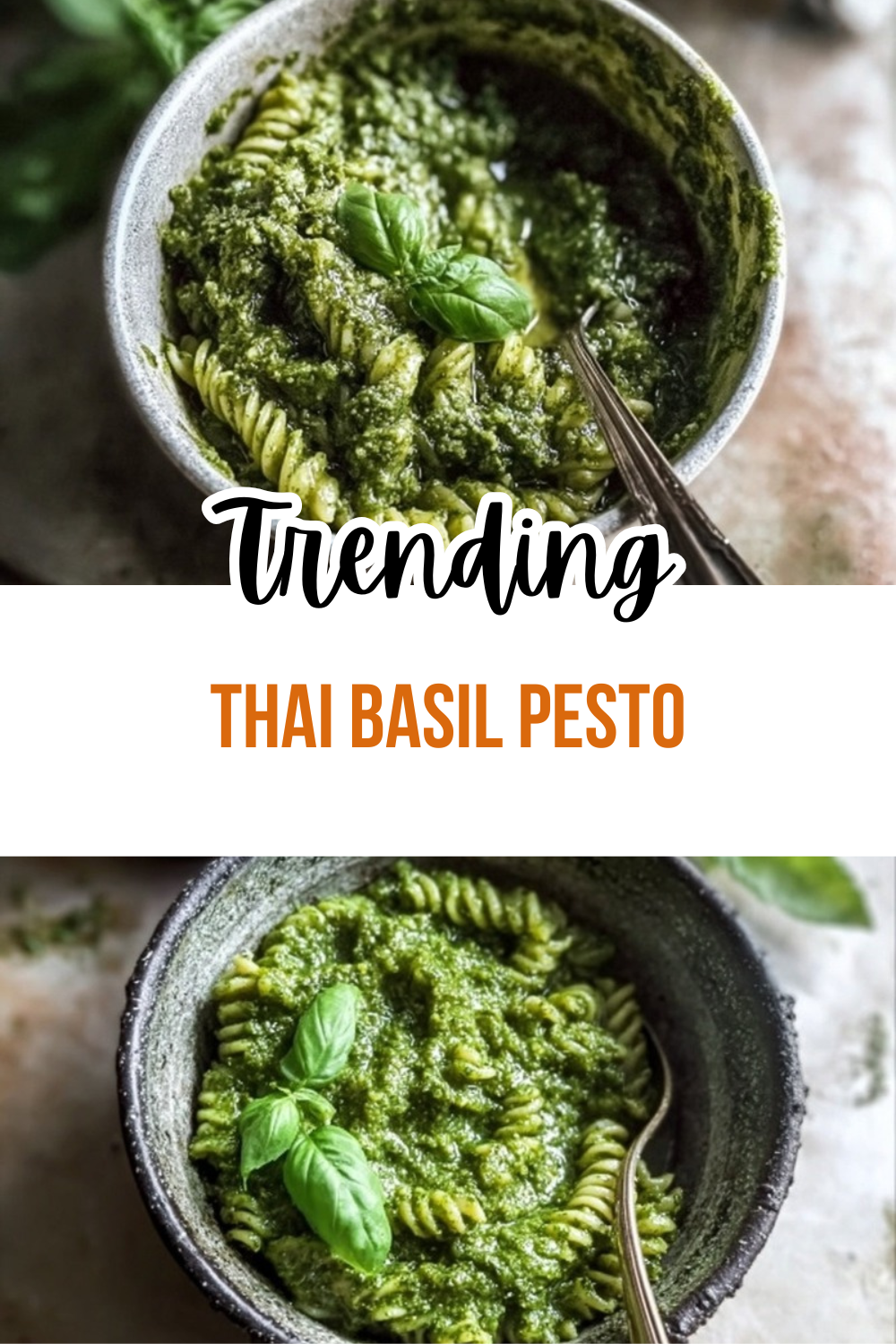
Thai basil pesto is an Asian-inspired twist on the classic Italian pesto, made with Thai basil leaves for a bold, licorice-like flavor with hints of spice. Instead of pine nuts and Parmesan, it often features peanuts or cashews, garlic, fresh chilies, lime juice, fish sauce, and coconut oil or neutral oil. This vibrant green sauce delivers umami and heat, perfect for stir-fries, noodles, grilled meats, or as a dip. Blend all ingredients in a food processor until smooth, adjusting lime and fish sauce for balance. One batch yields about 1 cup, enough for 4 servings. It’s quick to prepare in under 10 minutes and stores well, making it ideal for meal prep. Use it to add authentic Thai flair to everyday dishes.
What’s the difference between Thai basil and regular basil?
Thai basil leaves are narrower with serrated edges, purple stems, and sturdier texture compared to the rounded, delicate green leaves and stems of Italian sweet basil. Flavor-wise, Thai basil offers a sweet, anise-liquorice taste with mild spice, while Italian basil is fresh and sweet with black pepper and mint notes. For Thai basil pesto, Thai basil’s bold profile shines, creating an authentic Asian vibe—Italian basil works as a milder substitute but lacks the punch. Grow Thai basil in warm climates; it thrives like regular basil but prefers full sun. Source it fresh from Asian markets or gardens for best results in recipes.
What ingredients do I need for Thai basil pesto?
Core ingredients for Thai basil pesto include 2 cups packed Thai basil leaves, 1/4 cup roasted peanuts (or cashews), 3 garlic cloves, 1-2 Thai chilies (adjust for heat), juice of 2 limes, 2 tablespoons fish sauce, 1/4 cup coconut oil (or neutral oil), and optional 1/4 cup grated coconut. Skip cheese for vegan authenticity. Toast peanuts first for deeper flavor. Pulse in a food processor: start with nuts and garlic, add basil and chilies, then drizzle in wet ingredients while blending to a chunky paste. Taste and tweak—add more lime for brightness or fish sauce for saltiness. This makes 1 cup; scale up as needed. All items are pantry staples at Asian grocers.
How do you make Thai basil pesto at home?
Rinse 2 cups Thai basil leaves and pat dry. Toast 1/4 cup peanuts in a dry pan until golden, about 2 minutes. In a food processor, combine peanuts, 3 minced garlic cloves, and 1-2 chopped Thai chilies; pulse to chop. Add basil, juice of 2 limes, 2 tablespoons fish sauce, and 1/4 cup coconut oil. Blend until smooth, scraping sides as needed—aim for pesto consistency, not puree. If too thick, add 1-2 tablespoons water or oil. Takes 5-10 minutes total. Serve immediately over rice noodles, chicken satay, or veggies. For extra creaminess, stir in coconut milk. Pro tip: Make ahead and freeze in ice cube trays for portioned use.
How long does Thai basil pesto last and how should I store it?
Homemade Thai basil pesto lasts 5-7 days in an airtight container in the fridge, or up to 3 months frozen. To store, press plastic wrap directly on the surface to prevent oxidation and discoloration—drizzle a thin oil layer on top. Thaw frozen portions in the fridge overnight. Signs of spoilage: off smell, mold, or sliminess—discard if noticed. Without cheese, it’s naturally more stable. For longest freshness, use glass jars. Portion into ice cube trays before freezing for easy single servings in soups or marinades. Always stir well before use, as oil may separate. This keeps your batch versatile for quick weeknight meals.

Thai Basil Pesto
🌿 Dive into bold Thai flavors with this easy homemade pesto – aromatic basil, roasted nuts, and a spicy kick for an authentic twist!
🍝 Vegan, versatile, and ready in minutes – perfect for pasta, rice, stir-fries, or as a zesty dip everyone will love!
- Total Time: 15 minutes
- Yield: 1 cup (8 servings)
Ingredients
– 2 cups Thai basil leaves, packed, washed, and dried
– 2 tablespoons cashew nuts, roasted and unsalted
– 2 tablespoons peanuts, roasted and unsalted
– 2 garlic cloves, crushed
– 1/2 teaspoon chili flakes
– 60 milliliters olive oil or sesame oil
– 1/2 teaspoon sea salt or 1 teaspoon soy sauce or tamari
– 1 teaspoon rice wine vinegar
– 1 teaspoon caster sugar
– Juice from 1/2 lime, to taste
Instructions
1-First Step: Wash, dry, and pick the basil Start with 2 cups Thai basil leaves. Wash them well, then dry them fully with a clean towel or salad spinner. This matters because extra water can make the pesto taste flat and watery. Pick the leaves from the stems and discard any damaged leaves.
2-Second Step: Add the basil to the processor Place the basil leaves in a mini food processor. If you are using a mortar and pestle, add the leaves in small batches. Thai basil has narrower, serrated leaves and purple stems, so it looks different from Italian basil. Its flavor is sweeter and a little spicy, which gives the sauce its unique character.
3-Third Step: Add the rest of the ingredients Add the 2 tablespoons roasted cashews, 2 tablespoons roasted peanuts, 2 crushed garlic cloves, 1/2 teaspoon chili flakes, 60 milliliters olive oil or sesame oil, 1/2 teaspoon sea salt or 1 teaspoon soy sauce or tamari, 1 teaspoon rice wine vinegar, 1 teaspoon caster sugar, and juice from 1/2 lime. If you want a more mellow version, keep the chili flakes at 1/2 teaspoon. If you like heat, you can increase them to 3/4 teaspoon or more.
4-Fourth Step: Blend into a paste Blend everything until it forms a thick paste. Stop now and then to scrape down the sides of the processor so all the ingredients mix evenly. If you are using a mortar and pestle, crush the garlic and nuts first, then work in the basil and liquids until the mixture comes together. The goal is a pesto sauce with texture, not a fully smooth puree. At this point, taste the pesto. If it needs more brightness, add a little more lime juice. If it tastes too sharp, add a touch more sugar or oil. If you want a saltier finish, add a small amount more soy sauce or sea salt. Small adjustments make a big difference here.
5-Final Step: Store or serve right away Spoon the pesto into a jar or container. Drizzle a little oil over the top so the surface stays covered, then seal it tightly. This helps slow browning and keeps the color vibrant. You can serve it right away, or refrigerate it for later use. If you want to pair it with another easy recipe, it also works nicely with blueberry lemonade for a fresh and fun meal spread.
Last Step:
Please leave a rating and comment letting us know how you liked this recipe! This helps our business to thrive and continue providing free, high-quality recipes for you.Notes
⚙️ Use a food processor for quick results or a mortar and pestle for a traditional texture.
🌶️ Start with 1/2 teaspoon chili flakes for mild heat; add more for extra spice.
🛢️ Always top stored pesto with a layer of oil to prevent oxidation and browning.
- Prep Time: 15 minutes
- Category: Sauces & Condiments
- Method: No-Cook
- Cuisine: Thai
- Diet: Vegan
Nutrition
- Serving Size: 2 tablespoons
- Calories: 99 kcal
- Sugar: 1g
- Sodium: 149mg
- Fat: 10g
- Saturated Fat: 1g
- Unsaturated Fat: 8g
- Trans Fat: 0g
- Carbohydrates: 2g
- Fiber: 0.5g
- Protein: 1g
- Cholesterol: 0mg