

Why You’ll Love This Onigirazu
Onigirazu is a fun twist on traditional Japanese sushi that combines the best of a sandwich and a rice roll, making it a hit for anyone craving something portable and delicious. This recipe is super easy to whip up, perfect for busy parents or students who need a quick meal without fuss. What sets onigirazu apart is its adaptability for different diets, like gluten-free or vegan options, while packing in flavors that keep things exciting.
The health benefits are a big plus too each onigirazu sandwich delivers 570 calories, 17 g of sugars, 16 g of fats, 2 g of saturated fats, 22 g of proteins, and 85 g of carbohydrates, helping you stay fueled with vitamins and fiber from fresh veggies. Whether you’re a food enthusiast looking for homemade sushi recipes or a working professional prepping lunches, this rice sandwich travels well for picnics or daily meals. With options like tofu katsu or sweet potato fillings, you’ll find it versatile for tailoring to your tastes.
Quick Prep and Nutritional Perks
This onigirazu recipe serves 4 sandwiches and can be ready in about 30 minutes for prep and another 30 for cooking, making it ideal for beginners. It’s naturally gluten-free when you use the right ingredients, supporting wellness with wholesome components. Imagine enjoying a tasty, nutritious meal that feels like a treat without the guilt it’s that simple and satisfying.
Jump to:
- Why You’ll Love This Onigirazu
- Quick Prep and Nutritional Perks
- Essential Ingredients for Onigirazu
- How to Prepare the Perfect Onigirazu: Step-by-Step Guide
- Assembling Your Onigirazu
- Dietary Substitutions to Customize Your Onigirazu
- Mastering Onigirazu: Advanced Tips and Variations
- Flavors and Presentation Ideas
- How to Store Onigirazu: Best Practices
- FAQs: Frequently Asked Questions About Onigirazu
- Can I use a musubi mold to shape onigirazu?
- How long does homemade pickled cabbage last in the fridge?
- Should I dip onigirazu in soy sauce, or is it flavorful enough on its own?
- Is it okay to swap white rice for brown rice when making onigirazu?
- Can I prepare onigirazu the night before, or should I make it fresh?
- Onigirazu
- Ingredients
- Instructions
- Last Step:
- Notes
- Nutrition
- Did you make this recipe?
Essential Ingredients for Onigirazu
Gathering the right ingredients is key to making a delicious onigirazu, and this recipe focuses on fresh, simple items that bring out the best flavors. You’ll need basics for the main structure, plus options for the tofu katsu or sweet potato versions to suit your preferences. This setup ensures your homemade sushi sandwich is both gluten-free and filling.
- 4 nori sheets
- About 4 cups of cooked sushi rice
- 1 avocado, sliced
- 25 g / 1 oz baby spinach
- Red cabbage, shredded and pickled (optional)
For the tofu katsu version:
- 2 x 200 g / 7 oz firm tofu, pressed
- Soy sauce or tamari (quantity not specified)
- 1 cup aquafaba (reduced to resemble egg white)
- 1-2 cups panko breadcrumbs (use gluten-free breadcrumbs if needed)
- All-purpose flour or cornflour (quantity not specified, for gluten-free option)
- 2 cups frying oil (for fried version only)
For the sweet potato version:
- 1 large sweet potato
- 1 tbsp soy sauce or gluten-free alternative
- 1 tbsp maple syrup
- 2 tsp neutral oil
- 1 tsp toasted sesame oil
For quick pickled red cabbage (optional):
- Wedge of red cabbage, thinly sliced
- ½ cup apple cider vinegar
- 2 tbsp sugar or maple syrup
- 1 tsp fine sea salt
- 1 clove garlic, crushed
These ingredients make it easy to create variations of your onigirazu sushi sandwich, whether you’re going for a hearty protein boost or a sweeter vibe. Remember, swapping in gluten-free options keeps things inclusive and tasty.
How to Prepare the Perfect Onigirazu: Step-by-Step Guide
Getting started with onigirazu is straightforward, even if you’re new to homemade sushi recipes. First, cook about 4 cups of sushi rice according to the package instructions, then season it with a bit of rice vinegar, sugar, and salt for that classic flavor. Let it cool slightly so it’s easier to handle without sticking to your fingers.
Next, prepare your chosen filling: for the tofu katsu version, press 2 x 200 g / 7 oz firm tofu, season it with soy sauce or tamari, coat in all-purpose flour or cornflour, dip in 1 cup aquafaba, and then roll in 1-2 cups toasted panko breadcrumbs. Bake at 200°C / 390°F for 30 minutes, flipping halfway, or fry in 2 cups of oil for about 3 minutes per side. For the sweet potato option, preheat your oven to 220°C / 425°F, mix 1 tbsp soy sauce, 1 tbsp maple syrup, 2 tsp neutral oil, and 1 tsp toasted sesame oil, then brush it on sliced sweet potato and bake for 20 minutes, flipping halfway.
Assembling Your Onigirazu
Now for the fun part: lay a piece of cling film on a flat surface and place one nori sheet shiny side down. Wet your hands and spread a 9 cm by 9 cm layer of the cooked sushi rice in the center, seasoning with salt. Add your fillings like baby spinach, slices from 1 avocado, Sriracha, and your prepared tofu or sweet potato then top with another layer of rice.
Fold the nori corners over to seal, moisten the edges for a good hold, and wrap tightly in cling film to let it sit and soften. After a few minutes, slice it in half with a sharp knife and serve. This method, which takes about 30 minutes to prepare and 30 minutes to cook, makes 4 onigirazu sandwiches, and it’s adaptable for vegan or gluten-free needs by using substitutes like tamari.
| Step | Tofu Katsu Version | Sweet Potato Version |
|---|---|---|
| Prep Time | Press and season tofu | Slice and marinade sweet potato |
| Cook Time | 30 minutes baking or frying | 20 minutes baking |
| Assembly | Layer with spinach and avocado | Layer with pickled cabbage and avocado |

Dietary Substitutions to Customize Your Onigirazu
One of the great things about onigirazu is how easy it is to tweak for different needs, like making it vegan or gluten-free. For protein, swap things like chicken with 2 x 200 g / 7 oz firm tofu or sweet potato to keep it plant-based and hearty. If you’re watching calories, use brown rice instead of regular sushi rice for added fiber without much extra effort.
You can also play with vegetables, like adding shredded and pickled red cabbage for crunch, or switch up sauces such as using tamari instead of soy sauce for gluten-free options. These changes let you enjoy easy onigirazu recipes that fit your lifestyle, from low-calorie tweaks to flavorful upgrades with Sriracha or maple syrup.
This flexibility means everyone, from diet-conscious individuals to busy parents, can make onigirazu their own without losing that signature taste.
Mastering Onigirazu: Advanced Tips and Variations
Once you’re comfortable with the basics of onigirazu, you can level up with some pro techniques to make your rice sandwiches even better. Start by perfectly seasoning your sushi rice and wrapping the nori tightly to keep things from getting soggy try pressing the tofu using towels and weight for better flavor absorption. For variations, experiment with fillings like smoked salmon or spicy mayo to add a unique twist to your homemade sushi.
Flavors and Presentation Ideas
Presentation makes a big difference; use a sharp knife for clean slices and garnish with sesame seeds for a nice touch. If you’re preparing ahead, make the fillings and rice separately and assemble just before eating to maintain freshness like choosing baked tofu for a healthier option or frying for something indulgent. And hey, if you want to pair it with a drink, check out our spicy margarita recipe for a refreshing side that complements the flavors.
Other tips include using a musubi mold for shaping the rice or substituting with brown rice for more nutrition. These tricks help your onigirazu stand out, whether you’re a food enthusiast or just making lunch for the week.
How to Store Onigirazu: Best Practices
Storing your onigirazu properly keeps it tasty and fresh, especially if you’re prepping for meals on the go. Wrap it tightly in plastic or an airtight container and pop it in the fridge for up to 24 hours to hold its shape. Freezing isn’t ideal since it can make the rice mushy, but you can freeze components like cooked tofu separately if needed.
For reheating, it’s best enjoyed fresh, but if you must, gently warm the fillings and reassemble. Meal prep pros suggest getting ingredients ready in advance and putting it all together daily this way, your onigirazu stays crisp and flavorful for picnics or work lunches.
FAQs: Frequently Asked Questions About Onigirazu
Can I use a musubi mold to shape onigirazu?
Yes, a musubi mold can be used to shape onigirazu, especially if you prefer a more uniform shape. While onigirazu is traditionally made by hand by layering rice and fillings between nori sheets, using a mold helps keep everything compact and evenly pressed, making assembly quicker and neater.
How long does homemade pickled cabbage last in the fridge?
Pickled cabbage usually stays fresh for about 1 to 2 weeks when stored in an airtight container in the refrigerator. To maintain its crunch and flavor, check for any signs of spoilage like off smells or sliminess before use.
Should I dip onigirazu in soy sauce, or is it flavorful enough on its own?
Onigirazu is typically flavorful enough without dipping because the fillings are often marinated or seasoned, which adds plenty of taste. However, if you prefer, light dipping in soy sauce or your favorite sauce can enhance the flavor based on your personal preference.
Is it okay to swap white rice for brown rice when making onigirazu?
Absolutely. Brown rice is a nutritious alternative that adds more fiber and a nuttier flavor. Many people choose brown sushi rice for onigirazu, which helps make the meal more filling while still holding together well.
Can I prepare onigirazu the night before, or should I make it fresh?
You can prepare most ingredients the night before; however, it’s best to assemble onigirazu just before eating. This prevents the rice and nori from becoming soggy. For example, tofu katsu tastes best when freshly made, so consider cooking it the same day.
Onigirazu
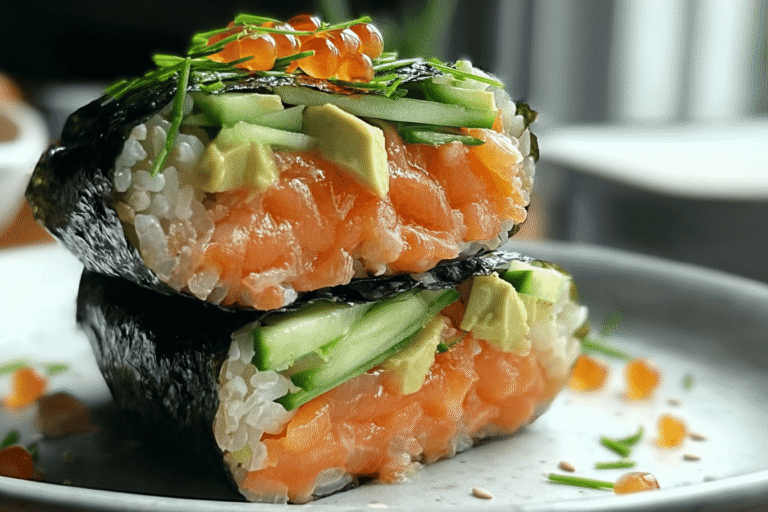
🍣 Experience the fusion of traditional sushi with the convenience of a sandwich in the delicious Onigirazu.
🥑 This recipe uses fresh ingredients like avocado and baby spinach, offering a filling, portable, and gluten-free meal option perfect for lunches or picnics.
- Total Time: 1 hour
- Yield: 4 sandwiches 1x
Ingredients
4 nori sheets
About 4 cups of cooked sushi rice
1 avocado, sliced
25 g / 1 oz baby spinach
Red cabbage, shredded and pickled (optional)
2 x 200 g / 7 oz firm tofu, pressed
Soy sauce or tamari
1 cup aquafaba (reduced to resemble egg white)
1–2 cups panko breadcrumbs (use gluten-free breadcrumbs if needed)
All-purpose flour or cornflour (for gluten-free option)
2 cups frying oil (for fried version only)
1 large sweet potato
1 tbsp soy sauce or gluten-free alternative
1 tbsp maple syrup
2 tsp neutral oil
1 tsp toasted sesame oil
Wedge of red cabbage, thinly sliced
½ cup apple cider vinegar
2 tbsp sugar or maple syrup
1 tsp fine sea salt
1 clove garlic, crushed
Instructions
1-Getting started: Getting started with onigirazu is straightforward, even if you’re new to homemade sushi recipes. First, cook about 4 cups of sushi rice according to the package instructions, then season it with a bit of rice vinegar, sugar, and salt for that classic flavor. Let it cool slightly so it’s easier to handle without sticking to your fingers.
2-Next, prepare your chosen filling: for the tofu katsu version, press 2 x 200 g / 7 oz firm tofu, season it with soy sauce or tamari, coat in all-purpose flour or cornflour, dip in 1 cup aquafaba, and then roll in 1-2 cups toasted panko breadcrumbs. Bake at 200°C / 390°F for 30 minutes, flipping halfway, or fry in 2 cups of oil for about 3 minutes per side. For the sweet potato option, preheat your oven to 220°C / 425°F, mix 1 tbsp soy sauce, 1 tbsp maple syrup, 2 tsp neutral oil, and 1 tsp toasted sesame oil, then brush it on sliced sweet potato and bake for 20 minutes, flipping halfway.
3-Assembling Your Onigirazu: Now for the fun part: lay a piece of cling film on a flat surface and place one nori sheet shiny side down. Wet your hands and spread a 9 cm by 9 cm layer of the cooked sushi rice in the center, seasoning with salt. Add your fillings like baby spinach, slices from 1 avocado, Sriracha, and your prepared tofu or sweet potato then top with another layer of rice.
4-Folding and serving: Fold the nori corners over to seal, moisten the edges for a good hold, and wrap tightly in cling film to let it sit and soften. After a few minutes, slice it in half with a sharp knife and serve. This method, which takes about 30 minutes to prepare and 30 minutes to cook, makes 4 onigirazu sandwiches, and it’s adaptable for vegan or gluten-free needs by using substitutes like tamari.
Last Step:
Please leave a rating and comment letting us know how you liked this recipe! This helps our business to thrive and continue providing free, high-quality recipes for you.Notes
🛠️ Press firm tofu well to improve flavor absorption and texture.
🌿 Assemble sandwiches just before eating to keep the nori crisp and avoid sogginess.
🍚 Use a musubi mold for a neat rice layer and to prevent squashing the fillings.
- Prep Time: 30 minutes
- Cook Time: 30 minutes
- Category: Lunch
- Method: Assembly, Baking, Frying
- Cuisine: Japanese Fusion
- Diet: Gluten-Free
Nutrition
- Serving Size: 1 sandwich
- Calories: 570 kcal
- Sugar: 17 g
- Sodium: 600 mg
- Fat: 16 g
- Saturated Fat: 2 g
- Unsaturated Fat: 10 g
- Trans Fat: 0 g
- Carbohydrates: 85 g
- Fiber: 6 g
- Protein: 22 g
- Cholesterol: 0 mg