

Why You’ll Love These Au Gratin Potatoes
These Au Gratin Potatoes are rich, creamy, and packed with savory flavor, making them a go-to side dish for holidays, potlucks, and busy weeknights. They use simple pantry staples, come together with very little hands-on work, and bake into a comforting casserole that feels special without being fussy. If you want a dish that fits family dinners, party spreads, and cozy meals at home, this one checks every box.
- Easy to make: The prep time is just 15 minutes, and most of the cooking happens in the oven. That makes these au gratin potatoes a smart choice for home cooks who want a low-stress side dish with big flavor.
- Comforting and filling: Potatoes, cheese, milk, and cream create a hearty dish that works well for hungry families, holiday meals, and cold-weather dinners. Each serving brings satisfying protein, fiber, and potassium too.
- Flexible for many meals: Au gratin potatoes pair well with roast chicken, ham, beef, turkey, or even a simple salad. They can also be made ahead, which helps busy parents, students, and working professionals save time.
- Bold, cheesy flavor: The mix of cheddar, Parmesan, onion, garlic, and cream gives these potatoes a deep savory taste that stands apart from plain potato casseroles. The golden top adds a lovely finish that people remember.
If you love a creamy potato bake with a crisp top and tender slices underneath, this recipe brings that classic comfort food feeling to the table.
For a closer look at potato nutrition, you can also read this guide on the health benefits of potatoes.
Jump to:
- Why You’ll Love These Au Gratin Potatoes
- Essential Ingredients for Au Gratin Potatoes
- Special Dietary Options
- How to Prepare the Perfect Au Gratin Potatoes: Step-by-Step Guide
- First Step: Get the oven and dish ready
- Second Step: Soften the onions in butter
- Third Step: Add the garlic and flour
- Fourth Step: Build the creamy sauce
- Fifth Step: Melt in the cheese and seasonings
- Sixth Step: Coat the potatoes
- Seventh Step: Transfer to the casserole dish
- Eighth Step: Bake until tender
- Ninth Step: Rest and serve
- Dietary Substitutions to Customize Your Au Gratin Potatoes
- Protein and Main Component Alternatives
- Vegetable, Sauce, and Seasoning Modifications
- Mastering Au Gratin Potatoes: Advanced Tips and Variations
- How to Store Au Gratin Potatoes: Best Practices
- FAQs: Frequently Asked Questions About Au Gratin Potatoes
- What are au gratin potatoes?
- What’s the difference between au gratin potatoes and scalloped potatoes?
- Can you make au gratin potatoes ahead of time?
- Can you freeze au gratin potatoes?
- How do you get creamy au gratin potatoes without a grainy texture?
- Au Gratin Potatoes
- Ingredients
- Instructions
- Last Step:
- Notes
- Nutrition
- Did you make this recipe?
Essential Ingredients for Au Gratin Potatoes
Below is a structured ingredient list for these cheesy Au Gratin Potatoes. Every ingredient matters because each one helps build the creamy sauce, tender potato layers, and rich baked finish.
- 2 pounds moderate starch potatoes, such as Yukon Gold, peeled and sliced into 1/8-inch thick rounds – These potatoes hold their shape while soaking up the creamy sauce.
- 3 tablespoons butter – This creates the base for the sauce and adds richness.
- 3 tablespoons all-purpose flour – The flour helps thicken the milk and cream into a smooth sauce.
- 1/2 cup finely chopped yellow onion – Onion adds sweetness and savory depth.
- 2 cloves garlic, minced – Garlic brings a warm, fragrant flavor that makes the dish taste homemade.
- 2 cups whole milk – Whole milk gives the sauce a creamy body.
- 1/2 cup heavy cream – Heavy cream makes the dish extra rich and smooth.
- 1 1/2 teaspoons salt – Salt brings all the flavors together.
- 1/4 teaspoon freshly ground black or white pepper, optional – Pepper adds a light kick if you want a little more flavor.
- 1 1/2 cups shredded cheddar cheese – Cheddar gives the sauce its bold cheesy taste.
- 1/3 cup grated Parmesan cheese, divided in half – Parmesan adds a salty, nutty finish inside the sauce and on top.
- Chopped parsley, for garnish – Parsley gives a fresh look and a touch of color before serving.
Special Dietary Options
- Vegan: Use plant-based butter, unsweetened oat milk or cashew milk, dairy-free cream, and vegan cheddar and Parmesan-style cheese.
- Gluten-free: Replace the all-purpose flour with a gluten-free 1:1 flour blend or cornstarch slurry.
- Low-calorie: Swap the heavy cream for evaporated skim milk or a lighter milk option, and use reduced-fat cheese.
For more potato inspiration and nutrition details, visit Potato Goodness nutrition information.
How to Prepare the Perfect Au Gratin Potatoes: Step-by-Step Guide
First Step: Get the oven and dish ready
Start by preheating your oven to 350°F, which is 175°C. This gives the oven time to reach the right temperature so the potatoes cook evenly from the start. Lightly grease a 2-quart casserole dish so nothing sticks, and set it aside while you make the sauce. If you want to save time later, slice the potatoes now and place them in cold water so they do not brown while you prep the rest.
Second Step: Soften the onions in butter
Place a saucepan over medium-high heat and melt the 3 tablespoons of butter. Add the 1/2 cup of finely chopped yellow onion and cook for 5 to 6 minutes, stirring often, until the onion turns soft and translucent. This step builds flavor right away and gives the sauce a sweeter, more mellow taste. If you are cooking for picky eaters, this gentle onion base usually blends in nicely without tasting sharp.
Third Step: Add the garlic and flour
Stir in the 2 minced garlic cloves and cook for 1 minute. Garlic burns fast, so keep the heat moderate and stir constantly. Next, add the 3 tablespoons of all-purpose flour and cook for 1 to 2 minutes. This helps remove the raw flour taste and gives the sauce a smooth, creamy finish later on. For gluten-free cooking, this is the moment to use a gluten-free flour blend instead.
Fourth Step: Build the creamy sauce
Slowly pour in the 2 cups of whole milk and 1/2 cup of heavy cream while stirring all the time. Doing this gradually helps prevent lumps and keeps the sauce silky. Bring it to a slow boil, then lower the heat and let it simmer until it thickens slightly. The sauce should coat the back of a spoon but still stay pourable. If you are cooking for a lighter meal, you can use reduced-fat dairy, but the sauce will be less rich.
Fifth Step: Melt in the cheese and seasonings
Stir in the 1 1/2 cups of shredded cheddar cheese, half of the 1/3 cup grated Parmesan cheese, the 1 1/2 teaspoons salt, and the 1/4 teaspoon black or white pepper if using. Keep stirring until the cheese melts fully and the sauce looks smooth. This is the point where the dish starts smelling irresistible. A good cheese sauce should be thick, creamy, and well seasoned before the potatoes go in.
Sixth Step: Coat the potatoes
Add the sliced potatoes to the saucepan and stir gently but thoroughly so every slice gets covered in sauce. Try not to break the potatoes as you mix. Even coating helps the whole casserole bake evenly and keeps the top and bottom layers flavorful. If your potato slices are very thick, the bake time may run a little longer, so thin, even slices matter a lot here.
Seventh Step: Transfer to the casserole dish
Spoon the potato mixture into the prepared 2-quart casserole dish. Spread it out evenly so the top bakes at the same rate as the center. Sprinkle the remaining Parmesan cheese over the surface. That final layer gives the top a salty, golden finish once it bakes. If you like a little extra crunch, you can add a light dusting of cheddar on top as well.
Eighth Step: Bake until tender
Cover the dish with foil and bake for 1 hour. The foil traps steam and helps the potatoes soften without drying out. After an hour, remove the foil and bake for another 20 minutes, or until the top turns lightly browned and any extra moisture has baked off. This second stage gives you that classic au gratin finish with a lovely top layer and creamy center.
Ninth Step: Rest and serve
Let the casserole rest for 5 minutes before serving. Resting gives the sauce time to settle, so the potatoes hold together better on the plate. Garnish with chopped parsley if you want a fresh pop of color. Serve these Au Gratin Potatoes alongside roast meats, grilled chicken, holiday ham, or a crisp green salad for a complete meal.
| Recipe Detail | Amount |
|---|---|
| Prep Time | 15 minutes |
| Cook Time | 1 hour 30 minutes |
| Total Time | 1 hour 45 minutes |
| Servings | 6 |

Dietary Substitutions to Customize Your Au Gratin Potatoes
Protein and Main Component Alternatives
This recipe is already naturally satisfying, but you can still adjust it to fit different eating styles. If you want more protein, serve the au gratin potatoes with baked chicken, turkey, ham, or even leftover roast beef. For a vegetarian dinner, pair them with roasted vegetables and a big salad. If you need a dairy-free version, use plant-based butter, vegan cream, and dairy-free shredded cheese.
For a lower-fat version, use reduced-fat cheese and swap the heavy cream for a lighter dairy product. Just know that the texture will be less rich. You can also use lower-starch potatoes, but they may create a soupier casserole, so give the dish extra resting time after baking.
Vegetable, Sauce, and Seasoning Modifications
There are many ways to adapt Au Gratin Potatoes without losing the comfort-food feel. Try adding a small amount of cooked cauliflower between the potato layers for a lighter mix. Fresh thyme, rosemary, or chives can bring a more fragrant flavor. If you like a little heat, a tiny pinch of cayenne or smoked paprika works well with the cheese sauce.
You can also swap cheddar for Gruyère, Monterey Jack, or a mild Swiss cheese. Parmesan adds a salty finish, but pecorino can work too if you want a sharper edge. For gluten-free cooking, use a gluten-free flour blend or cornstarch to thicken the sauce. That keeps the dish creamy while making it easier to fit more diets.
Mastering Au Gratin Potatoes: Advanced Tips and Variations
Thin, even slices are one of the biggest secrets to great Au Gratin Potatoes. A mandoline makes this easier, but a sharp knife works too if you stay patient. When the slices are the same thickness, they cook at the same pace, which helps prevent a mix of underdone and mushy pieces. Moderate-starch potatoes like Yukon Gold are a smart choice because they hold shape while still absorbing the sauce well.
For a richer flavor, try using freshly grated cheese instead of pre-shredded cheese. Fresh cheese melts more smoothly and gives you a creamier sauce. If you want a browned top, bake the casserole uncovered at the end just long enough for the surface to turn golden. A small sprinkle of extra Parmesan in the final minutes can also help build a more flavorful crust.
Make-ahead tip: Assemble the dish up to one day ahead, cover tightly, and refrigerate. Bake it the next day with a little extra time because it starts cold. You can also par-bake it about three quarters of the way, cool it completely, refrigerate, and finish baking later. If it seems dry when you return to it, add a splash of extra cream before the final bake.
Many home cooks love this recipe because it is dependable, flexible, and full of flavor. It works just as well for a holiday table as it does for a simple family supper.
How to Store Au Gratin Potatoes: Best Practices
Leftover Au Gratin Potatoes store well, which makes them great for meal prep and next-day lunches. For refrigeration, let the casserole cool completely, then place it in an airtight container or cover the baking dish tightly. It will keep in the fridge for up to 4 days. If you are packing individual portions, shallow containers help the potatoes cool faster and reheat more evenly.
For freezing, cool the baked potatoes fully first. Cut them into portions, place them in freezer-safe containers or bags, and press out extra air before sealing. They can stay frozen for up to 2 months. Dairy sauces may separate a bit after freezing, but a small splash of cream during reheating can help bring back the creamy texture.
To reheat, cover the potatoes and warm them in a 350°F oven until heated through. If you want the top to crisp again, uncover them during the last few minutes. You can also reheat smaller portions in the microwave, though the top will not stay as crisp. For batch cooking, label and date each container so you can use leftovers in the right order.

FAQs: Frequently Asked Questions About Au Gratin Potatoes
What are au gratin potatoes?
Au gratin potatoes are a creamy, cheesy casserole made with thinly sliced potatoes layered with a rich cream sauce, garlic, onions, and plenty of melted cheese like cheddar or Gruyère, then baked until golden and bubbly. The name “au gratin” means “with gratings,” referring to the cheese topping that forms a crispy crust. Unlike scalloped potatoes, which use a milk-based sauce without cheese, au gratin relies on heavy cream and cheese for extra indulgence. They’re a classic holiday side dish or weeknight comfort food, serving 6-8 people from a 9×13-inch pan. Prep takes about 20 minutes, with 1-1.5 hours baking at 350°F. Slice potatoes 1/8-inch thick using a mandoline for even cooking, and parboil briefly if you want softer texture without sogginess.
What’s the difference between au gratin potatoes and scalloped potatoes?
The main difference is cheese: au gratin potatoes feature a generous layer of grated cheese in the sauce and on top, creating a bubbly, golden crust, while scalloped potatoes skip the cheese and use a lighter milk or cream sauce. Both involve thinly sliced potatoes baked in a creamy sauce with onions and seasonings, but au gratin is richer and more indulgent due to ingredients like heavy cream, Parmesan, or Gruyère. Scalloped potatoes are milder and sometimes include ham. Baking times are similar—about 1 hour at 350°F—but au gratin may need broiling for crispiness. Use Yukon Gold or russet potatoes for both. This distinction matters for dietary needs: au gratin isn’t dairy-free, but you can adapt scalloped versions easily.
Can you make au gratin potatoes ahead of time?
Yes, au gratin potatoes are ideal for making ahead. Assemble the dish up to 24 hours in advance, cover tightly with plastic wrap and foil, and refrigerate. Bake the next day, adding 10-15 minutes to the cooking time since it starts cold. Let it sit at room temperature for 1 hour first if possible. Potatoes may discolor slightly, but it vanishes after baking. For best results, par-bake 75% of the way (about 45 minutes at 350°F), cool completely, cover, and refrigerate. Finish baking the next day. Add 1/4 cup extra cream before final bake to prevent dryness as potatoes absorb liquid. This method saves time for holidays and improves flavor as seasonings meld.
Can you freeze au gratin potatoes?
Yes, au gratin potatoes freeze well for up to 2 months. Cool the baked dish completely, then portion into freezer-safe containers or bags, leaving headspace for expansion. Wrap tightly to prevent freezer burn. Thaw overnight in the fridge before reheating at 350°F covered for 20-30 minutes, then uncovered to crisp the top. Dairy-heavy sauces may separate slightly upon freezing, so stir in a splash of cream if needed for creaminess. Avoid freezing uncooked assembled dishes, as potatoes turn mushy from ice crystals. Label with dates for easy use. This makes them great for batch cooking—reheat from frozen at 375°F for 45-60 minutes, checking internal temp reaches 165°F for safety.
How do you get creamy au gratin potatoes without a grainy texture?
For creamy au gratin potatoes, slice potatoes evenly at 1/8-inch thick and soak in cold water 30 minutes to remove starch, which prevents gumminess. Use full-fat heavy cream (not milk) heated with garlic, thyme, salt, and pepper before pouring over layers. Add cheese like sharp cheddar or Gruyère between layers, not just on top. Bake covered at 350°F for 45 minutes to set the sauce, then uncover for 20-30 minutes to brown. If sauce thickens too much, whisk in 2 tbsp cornstarch slurry. Freshly grate cheese for smooth melt—pre-shredded has anti-caking agents that cause graininess. Rest 10 minutes post-bake to thicken. Yields perfect creaminess for 8 servings; scale cream to 2 cups for best results.
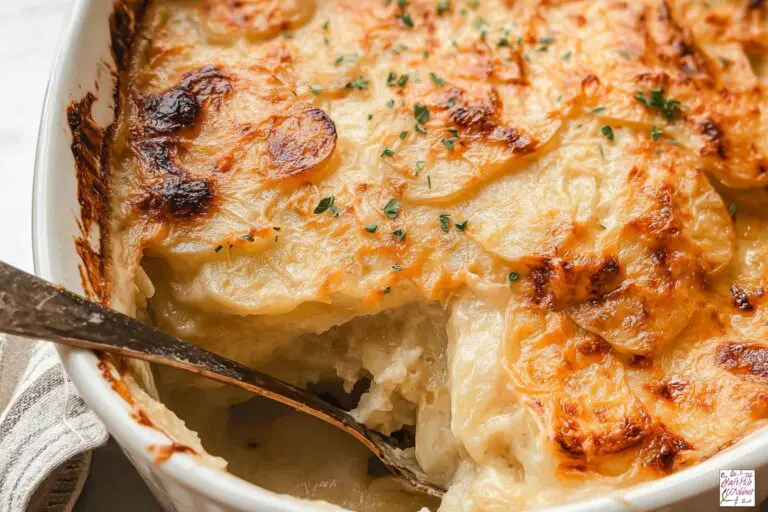
Au Gratin Potatoes
🥔 Creamy, cheesy perfection in every bite – tender potatoes smothered in a rich cheddar-Parmesan sauce for ultimate comfort!
🧀 Ideal holiday side or weeknight upgrade, make-ahead friendly with golden bubbly top everyone craves!
- Total Time: 1 hour 45 minutes
- Yield: 6 servings
Ingredients
– 2 pounds moderate starch potatoes, such as Yukon Gold, peeled and sliced into 1/8-inch thick rounds
– 3 tablespoons butter
– 3 tablespoons all-purpose flour
– 1/2 cup finely chopped yellow onion
– 2 cloves garlic, minced
– 2 cups whole milk
– 1/2 cup heavy cream
– 1 1/2 teaspoons salt
– 1/4 teaspoon freshly ground black or white pepper, optional
– 1 1/2 cups shredded cheddar cheese
– 1/3 cup grated Parmesan cheese, divided in half
– Chopped parsley, for garnish
Instructions
1-First Step: Get the oven and dish ready Start by preheating your oven to 350°F, which is 175°C. This gives the oven time to reach the right temperature so the potatoes cook evenly from the start. Lightly grease a 2-quart casserole dish so nothing sticks, and set it aside while you make the sauce. If you want to save time later, slice the potatoes now and place them in cold water so they do not brown while you prep the rest.
2-Second Step: Soften the onions in butter Place a saucepan over medium-high heat and melt the 3 tablespoons of butter. Add the 1/2 cup of finely chopped yellow onion and cook for 5 to 6 minutes, stirring often, until the onion turns soft and translucent. This step builds flavor right away and gives the sauce a sweeter, more mellow taste. If you are cooking for picky eaters, this gentle onion base usually blends in nicely without tasting sharp.
3-Third Step: Add the garlic and flour Stir in the 2 minced garlic cloves and cook for 1 minute. Garlic burns fast, so keep the heat moderate and stir constantly. Next, add the 3 tablespoons of all-purpose flour and cook for 1 to 2 minutes. This helps remove the raw flour taste and gives the sauce a smooth, creamy finish later on. For gluten-free cooking, this is the moment to use a gluten-free flour blend instead.
4-Fourth Step: Build the creamy sauce Slowly pour in the 2 cups of whole milk and 1/2 cup of heavy cream while stirring all the time. Doing this gradually helps prevent lumps and keeps the sauce silky. Bring it to a slow boil, then lower the heat and let it simmer until it thickens slightly. The sauce should coat the back of a spoon but still stay pourable. If you are cooking for a lighter meal, you can use reduced-fat dairy, but the sauce will be less rich.
5-Fifth Step: Melt in the cheese and seasonings Stir in the 1 1/2 cups of shredded cheddar cheese, half of the 1/3 cup grated Parmesan cheese, the 1 1/2 teaspoons salt, and the 1/4 teaspoon black or white pepper if using. Keep stirring until the cheese melts fully and the sauce looks smooth. This is the point where the dish starts smelling irresistible. A good cheese sauce should be thick, creamy, and well seasoned before the potatoes go in.
6-Sixth Step: Coat the potatoes Add the sliced potatoes to the saucepan and stir gently but thoroughly so every slice gets covered in sauce. Try not to break the potatoes as you mix. Even coating helps the whole casserole bake evenly and keeps the top and bottom layers flavorful. If your potato slices are very thick, the bake time may run a little longer, so thin, even slices matter a lot here.
7-Seventh Step: Transfer to the casserole dish Spoon the potato mixture into the prepared 2-quart casserole dish. Spread it out evenly so the top bakes at the same rate as the center. Sprinkle the remaining Parmesan cheese over the surface. That final layer gives the top a salty, golden finish once it bakes. If you like a little extra crunch, you can add a light dusting of cheddar on top as well.
8-Eighth Step: Bake until tender Cover the dish with foil and bake for 1 hour. The foil traps steam and helps the potatoes soften without drying out. After an hour, remove the foil and bake for another 20 minutes, or until the top turns lightly browned and any extra moisture has baked off. This second stage gives you that classic au gratin finish with a lovely top layer and creamy center.
9-Ninth Step: Rest and serve Let the casserole rest for 5 minutes before serving. Resting gives the sauce time to settle, so the potatoes hold together better on the plate. Garnish with chopped parsley if you want a fresh pop of color. Serve these Au Gratin Potatoes alongside roast meats, grilled chicken, holiday ham, or a crisp green salad for a complete meal.
Last Step:
Please leave a rating and comment letting us know how you liked this recipe! This helps our business to thrive and continue providing free, high-quality recipes for you.Notes
🥔 Use moderate-starch potatoes like Yukon Gold for the best texture and shape retention.
📅 Assemble up to a day ahead, refrigerate covered, and add extra bake time if needed.
🔪 Slice potatoes thinly and evenly for uniform cooking throughout.
- Prep Time: 15 minutes
- Cook Time: 1 hour 30 minutes
- Category: Side Dishes
- Method: Baked
- Cuisine: American
- Diet: Vegetarian
Nutrition
- Serving Size: 1 cup
- Calories: 397 kcal
- Sugar: 4g
- Sodium: 837mg
- Fat: 26g
- Saturated Fat: 16g
- Unsaturated Fat: 10g
- Trans Fat: 0g
- Carbohydrates: 28g
- Fiber: 4g
- Protein: 16g
- Cholesterol: 83mg