

Why You’ll Love This Baked Butternut Squash
As someone who loves simple recipes that pack a punch, I can’t get enough of baked butternut squash. It’s one of those dishes that’s easy to whip up, even on a busy weeknight, while delivering incredible flavor and nutrition. Picture this: tender cubes turning golden in the oven, bringing out a natural sweetness that makes every bite feel like a treat. This baked butternut squash fits right into your routine, whether you’re a home cooks looking for quick sides or busy parents needing something healthy and fast.
One reason you’ll adore this recipe is its ease of preparation. This baked butternut squash recipe is incredibly simple and fast, with only basic prep like halving, scooping seeds, and slicing or cubing, then seasoning and roasting in about 40 50 minutes, with hands-on time around 10 15 minutes. Roasting at 400°F/200°C concentrates the natural sweetness without complicated steps, making it an ideal weeknight side or quick meal component. Plus, it’s versatile enough to adapt to many diets, from vegan bowls to vegetarian salads.
Health benefits are another highlight, as baked butternut squash is nutrient-dense. It offers vitamin A from beta-carotene, vitamin C, fiber, potassium, and antioxidants, all while being low in calories and fat. Regularly enjoying roasted squash supports eye health, immune function, and steady blood sugar thanks to its fiber and complex carbs. This healthy baked squash easily fits into balanced eating plans for diet-conscious individuals like you.
Distinctive flavor and adaptability make it stand out too. Roasting caramelizes the natural sugars, creating a nutty, sweet, and slightly smoky profile that sets baked butternut squash apart from other cooking methods. It’s perfect for gluten-free, dairy-free, or keto-friendly menus with simple swaps, letting you customize it for your needs as a food enthusiasts or working professional.
Jump to:
- Why You’ll Love This Baked Butternut Squash
- Essential Ingredients for Baked Butternut Squash
- How to Prepare the Perfect Baked Butternut Squash: Step-by-Step Guide
- Advanced Preparation Tips
- Dietary Substitutions to Customize Your Baked Butternut Squash – Protein and Main Component Alternatives
- Dietary Substitutions to Customize Your Baked Butternut Squash – Vegetable, Sauce, and Seasoning Modifications
- Mastering Baked Butternut Squash: Advanced Tips and Variations
- Tips for Better Results
- How to Store Baked Butternut Squash: Best Practices
- FAQs: Frequently Asked Questions About Baked Butternut Squash
- How do I prepare butternut squash for baking?
- What temperature and time should I bake butternut squash?
- Can I bake whole butternut squash without peeling it first?
- What are easy seasoning ideas for baked butternut squash?
- How do I store leftover baked butternut squash, and how long does it last?
- Baked Butternut Squash
- Ingredients
- Instructions
- Last Step:
- Notes
- Nutrition
- Did you make this recipe?
Essential Ingredients for Baked Butternut Squash
When it comes to making baked butternut squash, having the right ingredients on hand is key to that perfect, flavorful outcome. This recipe focuses on fresh, simple items that enhance the squash’s natural taste without overwhelming it. I’ll walk you through the list below, pulling from what’s needed to create a delicious dish that anyone can enjoy.
- 1 butternut squash (peeled, seeds scooped, and cubed)
- Olive oil (for drizzling)
- Sea salt (pinches, to taste)
- Freshly ground black pepper (pinches, to taste)
- Chopped fresh parsley (optional, for garnish)
These ingredients come together quickly and keep things straightforward. For special dietary options, you can make it vegan by sticking with olive oil and skipping any non-plant-based additions. It’s naturally gluten-free, and for a low-calorie version, just use less oil while leaning on herbs for flavor. Remember, this baked butternut squash recipe highlights the power of minimalism in the kitchen.
How to Prepare the Perfect Baked Butternut Squash: Step-by-Step Guide
Getting baked butternut squash just right starts with a few key steps that anyone can follow, no matter your cooking experience. Let’s dive into the process, making it as fun and straightforward as possible. You’ll be amazed at how a simple oven roast can turn this veggie into something truly special.
- Preheat your oven to 400°F (200°C) and line a large baking sheet with parchment paper to avoid any mess.
- Place the cubed butternut squash on the prepared baking sheet for even roasting.
- Drizzle olive oil over the squash, then add pinches of sea salt and freshly ground black pepper. Toss everything to coat evenly, ensuring each piece gets a bit of that flavorful touch.
- Spread the squash cubes into a single layer on the baking sheet, leaving space between each one so they crisp up nicely instead of steaming.
- Roast in the oven for 30 to 35 minutes, or until the squash is tender and has golden brown edges that make it irresistible.
- Optionally, sprinkle with chopped fresh parsley before serving to add a fresh, herby finish.
The total time for this is about 40 minutes, with just 10 minutes of prep and 30 minutes of cooking. For variations, try pairing it with fruity elements like in a blueberry lemonade recipe for a refreshing twist. If you’re cubing the squash, aim for about 1-inch pieces for even cooking, and don’t forget to use a sharp peeler for easy prep.
Advanced Preparation Tips
If you’re new to this, warming the squash briefly in the microwave can make cutting safer. Once roasted, you can mix it into salads or grain bowls for more meals. For a silkier texture, mash the leftovers with a bit of olive oil.
Dietary Substitutions to Customize Your Baked Butternut Squash – Protein and Main Component Alternatives
Making baked butternut squash work for your diet is all about smart swaps, and starting with protein alternatives can open up endless possibilities. Whether you’re going plant-based or adding meat, these changes keep the dish flexible and delicious. It’s a great way to tailor the recipe to what you have on hand.
- 1 2 cups cooked chickpeas or white beans as a plant-based protein to mix with roasted cubes or stuff into baked halves.
- 1 cup cooked lentils for a hearty, low-cost option that pairs well in salads or bowls.
- 8 oz (225 g) tofu or tempeh, marinated and pan-seared, to complement the sweet roasted squash.
- 2 small chicken breasts (about 10 12 oz / 280 340 g) for a lean protein addition in warm salads.
- 4 oz (110 g) turkey or pork sausage for savory depth, ensuring it’s gluten-free if needed.
- 6 oz (170 g) fish like salmon or cod as a flavorful side.
These options help keep your baked butternut squash adaptable, whether for vegan or omnivore preferences. For more ideas on complementary dishes, check out recipes like lemon blueberry bread that blend sweet and savory elements seamlessly.
Dietary Substitutions to Customize Your Baked Butternut Squash – Vegetable, Sauce, and Seasoning Modifications
Switching up vegetables, sauces, and seasonings can take your baked butternut squash to the next level, making it fresh and exciting every time. These tweaks are simple yet effective, allowing you to play with flavors based on what you’re craving. Let’s explore some easy ways to customize.
- Roast sweet potatoes, carrots, or parsnips alongside the butternut squash for added variety.
- Use a herb vinaigrette instead of butter for a lighter finish.
- Try curry powder or garam masala for an Indian-inspired twist.
- Add red pepper flakes for a bit of heat, balanced with maple syrup.
- Top with citrus zest or chopped herbs for a bright, fresh end.
These modifications ensure your dish stays versatile for different tastes. For instance, adding herbs can remind you of other simple bakes that elevate everyday meals.
Mastering Baked Butternut Squash: Advanced Tips and Variations
Taking your baked butternut squash from good to great involves some pro techniques that make a big difference. Start with even heat and good airflow for that perfect caramelization. Spacing out the pieces on the baking sheet is key to avoid steaming and promote crisp edges.
Tips for Better Results
Preheat your oven fully and use a rimmed sheet to catch juices. For deeper flavor, roast flesh-side down first. If you’re pureeing, a fine mesh sieve gives a smooth texture that’s ideal for soups.
| Technique | Benefit |
|---|---|
| Roast flesh-side down | Intensifies browning |
| Space out cubes | Promotes caramelization |
| Use high heat | Creates crisp edges |
Flavor variations include Mediterranean styles with garlic and oregano or sweet-savory with maple and cinnamon. Presentation ideas, like stuffing squash halves, make it party-ready.
How to Store Baked Butternut Squash: Best Practices
Proper storage keeps your baked butternut squash tasty for days, so let’s cover the basics to avoid waste. Cool it to room temperature first, then pop it into airtight containers. This simple step helps maintain that fresh, roasted flavor you love.
- Refrigerate for 3 4 days in shallow containers for quick cooling.
- Freeze cubes on a tray before bagging to prevent clumping.
- Reheat gently in the oven or skillet to keep texture intact.
For meal prep, portion it out for easy use during the week. This way, your baked butternut squash stays a go-to option without losing its charm.

FAQs: Frequently Asked Questions About Baked Butternut Squash
How do I prepare butternut squash for baking?
To prepare butternut squash for baking, start by washing the outside and drying it. Carefully cut off both ends, then peel the skin using a vegetable peeler or sharp knife. Slice the squash in half lengthwise and scoop out the seeds with a spoon. Cut the flesh into even-sized cubes or slices, depending on your recipe. This steady preparation ensures even cooking and a tender, flavorful result.
What temperature and time should I bake butternut squash?
Bake butternut squash at 400°F (204°C) for about 25 to 35 minutes. Spread the cut pieces evenly on a baking sheet, drizzle with olive oil, and season as desired. Bake until the squash is tender and lightly browned, testing with a fork near the end of cooking. Adjust time slightly based on the size of your pieces to avoid undercooking or burning.
Can I bake whole butternut squash without peeling it first?
Yes, you can bake a whole butternut squash without peeling it first. Preheat the oven to 375°F (190°C), poke a few holes in the skin to let steam escape, and place it on a baking sheet. Bake for 60 to 90 minutes, turning halfway through, until a knife slides easily into the thickest part. After baking, let it cool slightly, then slice open and scoop out the softened flesh.
What are easy seasoning ideas for baked butternut squash?
Simple seasonings like olive oil, salt, and black pepper work well for baked butternut squash. For extra flavor, try adding garlic powder, paprika, thyme, cinnamon, or a touch of maple syrup. These additions complement the natural sweetness of the squash and can be tossed with the pieces before baking for even coating.
How do I store leftover baked butternut squash, and how long does it last?
Store leftover baked butternut squash in an airtight container in the refrigerator. It will stay fresh for up to 3 to 4 days. When ready to eat, reheat gently in the oven at 350°F (175°C) or microwave until warmed through. For longer storage, you can freeze cooked squash in sealed freezer bags for up to 3 months. Thaw overnight in the fridge before reheating.
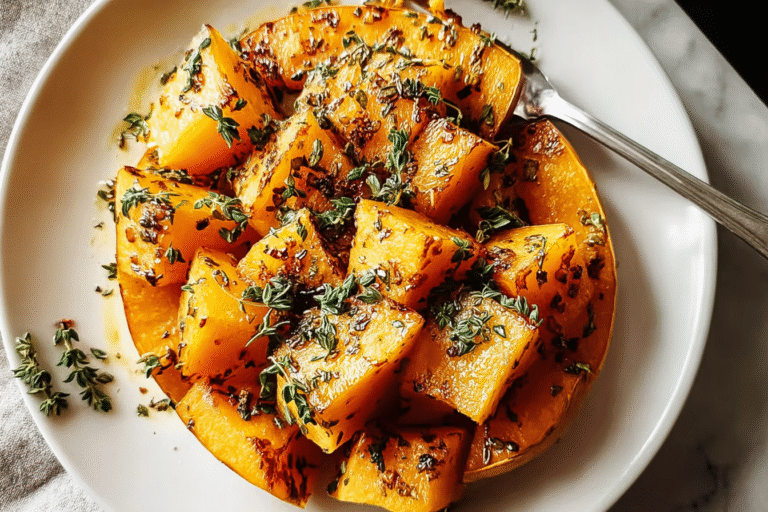
Baked Butternut Squash
🍂 Roasted Butternut Squash Recipes provide a simple and flavorful way to enjoy a nutritious autumn vegetable.
🔥 This recipe offers easy preparation and versatile serving options, making it perfect for wholesome meals and leftovers.
- Total Time: 40 minutes
- Yield: 4-6 servings
Ingredients
– 1 butternut squash (peeled, seeds scooped, and cubed)
– Olive oil for drizzling
– Sea salt pinches to taste
– Freshly ground black pepper pinches to taste
– Chopped fresh parsley optional for garnish
Instructions
1-Preheat your oven to 400°F (200°C) and line a large baking sheet with parchment paper to avoid any mess.
2-Place the cubed butternut squash on the prepared baking sheet for even roasting.
3-Drizzle olive oil over the squash, then add pinches of sea salt and freshly ground black pepper. Toss everything to coat evenly, ensuring each piece gets a bit of that flavorful touch.
4-Spread the squash cubes into a single layer on the baking sheet, leaving space between each one so they crisp up nicely instead of steaming.
5-Roast in the oven for 30 to 35 minutes, or until the squash is tender and has golden brown edges that make it irresistible.
6-Optionally, sprinkle with chopped fresh parsley before serving to add a fresh, herby finish.
Last Step:
Please leave a rating and comment letting us know how you liked this recipe! This helps our business to thrive and continue providing free, high-quality recipes for you.Notes
🍴 Use a sharp vegetable peeler to peel the squash in long strips from the stem down.
🌡️ If the squash is too hard to cut, warm it briefly in the microwave or oven to soften.
🍽️ Cut into 1-inch cubes and space cubes on the baking sheet for crispy caramelized edges.
- Prep Time: 10 minutes
- Cook Time: 30 minutes
- Category: Side Dish
- Method: Roasting
- Cuisine: American
- Diet: Vegetarian, Gluten-Free
Nutrition
- Serving Size: 1/2 cup