

Why You’ll Love This Beef Stew
This beef stew offers a straightforward way to enjoy a hearty meal that warms you up on chilly days. It’s packed with tender chunks of beef and fresh veggies that make every bite satisfying and full of flavor. Whether you’re cooking for family or just yourself, this recipe fits into busy schedules without much fuss.
One of the best parts is how easy it is to put together. You can use common ingredients from your kitchen and have dinner ready in about an hour. Plus, it delivers key nutrients that help you feel good, making it a smart choice for everyday eating.
What’s more, you can tweak the recipe to match what you like, such as making it lighter or adding your favorite herbs. This flexibility means it’s a recipe you’ll come back to time and again for its comforting taste and ease.
Jump to:
- Why You’ll Love This Beef Stew
- Essential Ingredients for Beef Stew
- How to Prepare the Perfect Beef Stew: Step-by-Step Guide
- Step-by-Step Breakdown
- Dietary Substitutions to Customize Your Beef Stew
- Mastering Beef Stew: Advanced Tips and Variations
- Pro Techniques and Ideas
- How to Store Beef Stew: Best Practices
- FAQs: Frequently Asked Questions About Beef Stew
- How do I thicken beef stew without changing its flavor?
- Can I freeze homemade beef stew and how should I reheat it?
- How long should I cook beef stew to get tender meat?
- Is browning the beef necessary before making stew?
- What vegetables work best in beef stew and when should they be added?
- Beef Stew
- Ingredients
- Instructions
- Last Step:
- Notes
- Nutrition
- Did you make this recipe?
Essential Ingredients for Beef Stew
Gathering the right ingredients is key to making a delicious beef stew. This section lists everything you need, based on a tried-and-true recipe that brings out rich flavors. We’ll focus on the exact measurements to ensure your stew turns out perfectly every time.
- 2 pounds stewing beef, trimmed and cubed
- 3 tablespoons flour
- ½ teaspoon garlic powder
- ½ teaspoon salt
- ½ teaspoon black pepper
- 3 tablespoons olive oil, more as needed
- 1 onion, chopped
- 6 cups beef broth
- ½ cup red wine (optional)
- 1 pound potatoes, peeled and cubed
- 4 carrots, cut into 1-inch pieces
- 4 ribs celery, cut into 1-inch pieces
- 3 tablespoons tomato paste
- 1 teaspoon dried rosemary or 1 sprig fresh
- 2 tablespoons cornstarch (or as needed)
- 2 tablespoons water (or as needed)
- ¾ cup peas
These ingredients work together to create a balanced dish that’s hearty and nutritious. For instance, the beef provides protein while the veggies add vitamins and a nice crunch. If you’re watching your diet, you can swap things around as needed, like using vegetable broth for a lighter version.
How to Prepare the Perfect Beef Stew: Step-by-Step Guide
Getting started with beef stew begins with pulling together all your ingredients, like cubing the beef and chopping the vegetables. This setup helps everything go smoothly and keeps your kitchen organized. Once you’re ready, browning the beef in a pot adds a deep, tasty layer to the dish.
Step-by-Step Breakdown
- First, coat the beef cubes with flour, garlic powder, salt, and black pepper for seasoning, then brown them in olive oil over medium heat to lock in flavor.
- Next, sauté the chopped onion in the same pot until it softens, which builds a solid base for the stew.
- Add beef broth and optional red wine to deglaze the pot, scraping up those tasty bits from the bottom.
- Stir in the browned beef, cubed potatoes, carrot pieces, celery pieces, tomato paste, and rosemary, then bring it all to a simmer.
- Cover and let it cook gently for about an hour until the beef turns tender and the flavors blend well.
- To thicken, mix cornstarch with water to make a slurry and stir it in, cooking for a few more minutes.
- Finally, add the peas in the last few minutes so they stay bright and fresh, then serve it up hot.
This method ensures your beef stew is full of rich tastes and textures. For a simple dessert to follow, check out our apple crumble recipe on the site.
Remember, simmering low and slow is what makes the meat so tender, so don’t rush it. You can adapt this for different needs, like using leaner meats if you’re cutting calories. The result is a meal that’s both comforting and customizable.

Dietary Substitutions to Customize Your Beef Stew
Beef stew is versatile, so you can change it up based on what you prefer or need. Swapping ingredients lets everyone enjoy it, whether you’re going vegan or keeping it gluten-free. Let’s look at some easy ways to make these adjustments.
- For protein, try seitan or mushrooms instead of beef to make it plant-based.
- Use turkey or chicken if you want something leaner than beef.
- Check that your broth and seasonings are gluten-free to fit that diet.
- Swap carrots for parsnips or turnips to add new flavors and nutrients.
- Experiment with herbs like thyme or smoked paprika for a fresh twist.
These changes help keep the stew delicious while meeting your goals. For example, reducing salt can make it healthier without losing that savory edge. It’s all about making the recipe work for you.
One thing to note is how these subs can affect cooking times, like veggies that cook faster. Always taste as you go to get the balance just right. That way, your stew stays hearty and enjoyable for all.
Mastering Beef Stew: Advanced Tips and Variations
Taking your beef stew to the next level involves a few smart tricks and changes. Things like using a slow cooker can make the beef even more tender while letting flavors mix deeply. It’s a great way to save time on busy days.
Pro Techniques and Ideas
Try pressure cooking for quicker results, as it helps break down the meat fast. For flavor boosts, add spices like cumin or a bit of balsamic vinegar to bring in some tang. When serving, dish it out in nice bowls and top with fresh herbs for a polished look.
| Technique | Benefit |
|---|---|
| Slow Cooking | Enhances tenderness and flavor over time |
| Adding Vinegar | Introduces a tangy note that brightens the dish |
| Garnishing | Makes the stew more appealing and fresh |
If you’re planning ahead, make a big batch and freeze portions for easy meals later. The stew often tastes better the next day as the flavors settle. Pair it with something sweet, like our classic chocolate chip cookies for a nice finish.
Don’t forget to play with seasonal veggies to keep things exciting. This approach turns a simple stew into a standout meal that impresses friends and family.
How to Store Beef Stew: Best Practices
Keeping your beef stew fresh is simple with the right steps. After cooking, let it cool a bit before storing to avoid any bacterial growth. This keeps the flavors intact for your next meal.
- Put leftovers in airtight containers and chill in the fridge for up to 4 days.
- For longer storage, freeze in sealed bags, leaving room for expansion, and it can last up to 3 months.
- When reheating, warm it slowly on the stove or in the microwave to keep the texture just right.
- Label your containers with dates to make meal prep easier and cut down on waste.
Following these tips means you can enjoy your stew without worry. It’s a handy way to have a home-cooked meal ready anytime. As noted in an article about beef, good storage ties into overall nutrition, so check out benefits of beef in your diet for more insights.
FAQs: Frequently Asked Questions About Beef Stew
How do I thicken beef stew without changing its flavor?
To thicken beef stew without altering the flavor, mash some of the cooked vegetables like potatoes or carrots directly in the pot. Alternatively, you can mix equal parts cornstarch and cold water to create a slurry, then slowly stir it into the simmering stew. Let it boil for 1-2 minutes to activate the thickening agent while cooking out any raw starch taste.
Can I freeze homemade beef stew and how should I reheat it?
Yes, homemade beef stew freezes well. Store it in airtight, single-serving freezer bags or containers to prevent freezer burn. When ready to eat, thaw the stew overnight in the refrigerator or defrost it in the microwave. Reheat on the stove over low heat, stirring occasionally until warmed through, to keep the texture consistent.
How long should I cook beef stew to get tender meat?
Simmer beef stew for at least 60 minutes on low heat to allow the meat to become tender. If the beef is still tough after that, continue cooking covered for an additional 15 to 20 minutes. Slow, gentle simmering breaks down the connective tissue for soft, tender bites.
Is browning the beef necessary before making stew?
Browning the beef before stewing is recommended because it caramelizes the meat’s surface, creating richer flavor and deeper color in the stew. This step also helps lock in juices, resulting in a more flavorful and satisfying dish.
What vegetables work best in beef stew and when should they be added?
Common vegetables for beef stew include carrots, potatoes, onions, and celery. Hard vegetables like carrots and potatoes should be added early in the cooking process to become tender. Quick-cooking vegetables, such as peas or green beans, should be added during the last 5 to 10 minutes to prevent overcooking and maintain their texture.
Beef Stew
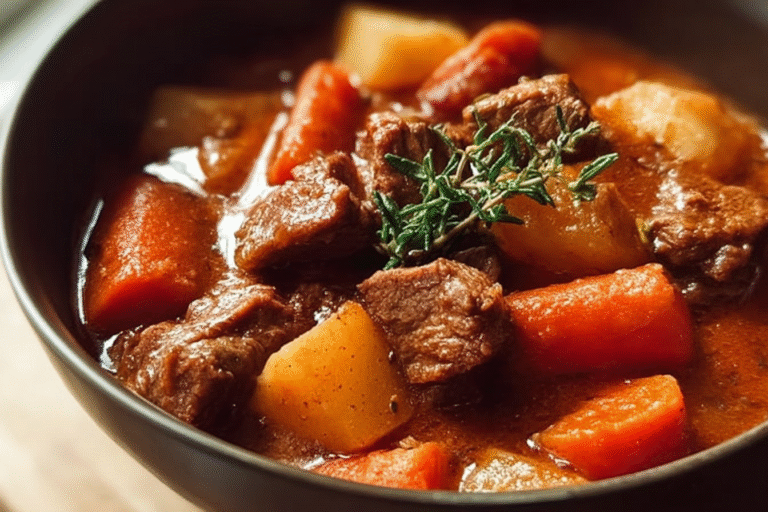
🍖 Hearty, slow-simmered beef stew with fall-apart tender meat in a rich, savory broth that warms you from the inside out
🥕 Classic comfort food that combines tender vegetables and perfectly seasoned beef for a satisfying meal any time of year
- Total Time: 1 hour 50 minutes
- Yield: 6-8 servings
Ingredients
– 2 pounds stewing beef, trimmed and cubed
– 3 tablespoons flour
– ½ teaspoon garlic powder
– ½ teaspoon salt
– ½ teaspoon black pepper
– 3 tablespoons olive oil, more as needed
– 1 onion, chopped
– 6 cups beef broth
– ½ cup red wine (optional)
– 1 pound potatoes, peeled and cubed
– 4 carrots, cut into 1-inch pieces
– 4 ribs celery, cut into 1-inch pieces
– 3 tablespoons tomato paste
– 1 teaspoon dried rosemary or 1 sprig fresh
– 2 tablespoons cornstarch (or as needed)
– 2 tablespoons water (or as needed)
– ¾ cup peas
Instructions
1-First, coat the beef cubes with flour, garlic powder, salt, and black pepper for seasoning, then brown them in olive oil over medium heat to lock in flavor.
2-Next, sauté the chopped onion in the same pot until it softens, which builds a solid base for the stew.
3-Add beef broth and optional red wine to deglaze the pot, scraping up those tasty bits from the bottom.
4-Stir in the browned beef, cubed potatoes, carrot pieces, celery pieces, tomato paste, and rosemary, then bring it all to a simmer.
5-Cover and let it cook gently for about an hour until the beef turns tender and the flavors blend well.
6-To thicken, mix cornstarch with water to make a slurry and stir it in, cooking for a few more minutes.
7-Finally, add the peas in the last few minutes so they stay bright and fresh, then serve it up hot.
Last Step:
Please leave a rating and comment letting us know how you liked this recipe! This helps our business to thrive and continue providing free, high-quality recipes for you.Notes
🥩 Choose well-marbled stewing beef like chuck roast for the most tender results and rich flavor
⏰ Low and slow cooking is key – simmer gently rather than boiling to keep meat tender
🍷 Don’t skip the wine deglazing step – it adds incredible depth and removes any burnt bits from the pot
- Prep Time: 20 minutes
- Cook Time: 1 hour 30 minutes
- Category: Main Course
- Method: Braising/Simmering
- Cuisine: American
- Diet: Gluten-Free (with gluten-free flour)
Nutrition
- Serving Size: 1 serving
- Calories: 380
- Sugar: 8
- Sodium: 680
- Fat: 15
- Saturated Fat: 5
- Unsaturated Fat: 8
- Trans Fat: 0.5
- Carbohydrates: 28
- Fiber: 5
- Protein: 35
- Cholesterol: 85