

Why You’ll Love This Beef Stew
This beef stew is a go-to meal for anyone seeking comfort in a bowl. It’s simple to prepare with basic ingredients you likely have on hand, making it perfect for busy evenings. Plus, the tender meat and rich flavor create a satisfying dish that warms you up on chilly days.
One of the best parts is how easy it is to make. With a one-pot technique, prep takes about 20 minutes and active cooking is quick before letting it simmer for 1 to 2 hours. Using a slow cooker or pressure cooker makes it even simpler, so it’s ideal for weeknights or meal prep without much hassle. This approach keeps the steps minimal while delivering tender results every time.
Health-wise, it’s packed with nutrients too. Lean beef offers protein, iron, and B vitamins, while veggies like potatoes, carrots, and celery add fiber, vitamins A and C, and potassium. Choosing low-sodium broth helps cut down on salt, making it a smart choice for diet-conscious folks. It’s a hearty meal that supports your wellness goals without skimping on taste.
You’ll also appreciate its versatility. It adapts to different diets easily, like swapping potatoes for sweet ones or using gluten-free options. Whether you serve it with grains or bread, it’s a flexible base that fits Paleo, gluten-free, or low-carb needs. The slow simmer brings out savory depth from the beef, stock, and herbs, with a hint of red wine adding complexity if you choose.
For more ways to enjoy comforting meals, check out our berry crisp recipe for a sweet twist on similar flavors.
Jump to:
- Why You’ll Love This Beef Stew
- Essential Ingredients for Beef Stew
- How to Prepare the Perfect Beef Stew: Step-by-Step Guide
- Building and Simmering the Stew
- Dietary Substitutions to Customize Your Beef Stew
- Protein and Main Component Alternatives
- Vegetable, Sauce, and Seasoning Modifications
- Mastering Beef Stew: Advanced Tips and Variations
- How to Store Beef Stew: Best Practices
- FAQs: Frequently Asked Questions About Beef Stew
- How can I make my beef stew taste richer and more flavorful?
- What is the easiest way to thicken beef stew without changing its flavor?
- Can I freeze beef stew, and how should I reheat it for best results?
- What are some good side dishes that pair well with beef stew?
- What can I do if the beef in my stew is still tough after cooking for an hour?
- Beef Stew
- Ingredients
- Instructions
- Last Step:
- Notes
- Nutrition
- Did you make this recipe?
Essential Ingredients for Beef Stew
Gathering the right ingredients is key to making a delicious beef stew. Below is a complete list based on a trusted recipe, ensuring you have everything needed for that rich, tender result. Each item is measured precisely to help you follow along without any guesswork.
- 2 pounds stewing beef, trimmed and cubed
- 3 tablespoons flour
- ½ teaspoon garlic powder
- ½ teaspoon salt
- ½ teaspoon black pepper
- 3 tablespoons olive oil, more as needed
- 1 onion, chopped
- 6 cups beef broth
- ½ cup red wine (optional)
- 1 pound potatoes, peeled and cubed
- 4 carrots, cut into 1-inch pieces
- 4 ribs celery, cut into 1-inch pieces
- 3 tablespoons tomato paste
- 1 teaspoon dried rosemary or 1 sprig fresh
- 2 tablespoons cornstarch or as needed
- 2 tablespoons water or as needed
- ¾ cup peas
These ingredients create a balanced stew that’s hearty and flavorful. For special diets, you can make swaps like using mushrooms for a vegan version or cornstarch for gluten-free thickening. Keeping these on hand makes it simple to whip up a meal that suits your needs.
How to Prepare the Perfect Beef Stew: Step-by-Step Guide
Getting started with beef stew begins with some basic prep work. First, trim and cube 2 pounds of stewing beef, then pat it dry. Chop 1 onion, mince any garlic if needed, and cut up 1 pound of potatoes, 4 carrots, and 4 ribs of celery into pieces. Measure out 6 cups of beef broth, ½ cup of red wine if you’re using it, and 3 tablespoons of tomato paste. Having everything ready helps the process go smoothly and ensures even cooking.
Next, season and coat the beef. Mix 3 tablespoons of flour with ½ teaspoon garlic powder, ½ teaspoon salt, and ½ teaspoon black pepper, then toss the beef in this mixture. This step adds flavor and helps thicken the stew later. If you’re avoiding flour, you can skip this and use a cornstarch slurry at the end instead.
Now, sear the beef for that rich taste. Heat 3 tablespoons of olive oil in a large pot over medium-high heat. Brown the beef in small batches, shaking off excess flour first, and set it aside. This browning step is crucial as it builds deep flavor through caramelization. Remember, don’t crowd the pan to get an even sear.
After that, sauté the aromatics. Add the chopped onion to the pot, using more oil if needed, and cook until soft, about 3 minutes. Pour in the beef broth and red wine, scraping up the brown bits from the bottom. This deglazing adds even more flavor to the base of your stew.
Building and Simmering the Stew
Stir in the browned beef, potatoes, carrots, celery, tomato paste, and 1 teaspoon of dried rosemary. Bring it to a gentle simmer, then cover and cook on medium-low for about 1 hour, or until the beef is tender it might take up to 90 minutes. This slow cooking breaks down the meat and melds the flavors together.
To thicken the stew, mix 2 tablespoons of cornstarch with 2 tablespoons of water to make a slurry. Add it slowly to the boiling stew until it reaches your desired thickness, and let it boil for 1-2 minutes to remove any starchy taste. Finally, stir in ¾ cup of peas and simmer for 5-10 minutes more. Taste and adjust seasoning with salt and pepper before serving.
For more recipe ideas that pair well with hearty dishes, try our Lemon Blueberry Bread as a fresh side option.

Dietary Substitutions to Customize Your Beef Stew
Making beef stew your own is all about smart swaps. Under the protein category, you can switch beef for chicken thighs, which cook faster in about 45-60 minutes for a lighter take. Lamb or pork shoulder works too, offering a robust flavor similar to beef with the same cook time.
Protein and Main Component Alternatives
For plant-based options, firm tofu or tempeh can replace the meat sear it first and add it near the end to keep it from falling apart. Mushrooms and jackfruit make a great vegetarian choice, giving that hearty texture. Seitan adds chewiness if you’re looking for something vegan and protein-rich.
Vegetable, Sauce, and Seasoning Modifications
Swap root veggies like replacing potatoes with rutabaga or parsnips for different tastes and textures. Add winter squash or greens in the last few minutes for extra nutrients. For the sauce, skip tomato paste and use more stock with balsamic for a twist, or go for a curry version with coconut milk. Use cornstarch for thickening if you’re going gluten-free, and play with spices like cumin or rosemary to change things up.
This flexibility means everyone at your table can enjoy the stew, no matter their preferences.
Mastering Beef Stew: Advanced Tips and Variations
Taking your beef stew to the next level starts with layering flavors. Begin by searing the beef in a hot pan to create a fond, then deglaze it to pull in all those tasty bits. You could even roast veggies separately for added sweetness before adding them to the pot. For the tenderest meat, braise it low and slow in the oven at 300 325°F for even heat.
Experiment with global flavors too. Add smoked paprika and sherry for a Spanish vibe, or star anise and hoisin for an Asian twist. A bit of citrus zest at the end can brighten the dish, and umami boosters like miso work wonders. When it comes to serving, use shallow bowls to show off the chunks of beef and veggies, topped with fresh herbs for a nice touch.
For make-ahead meals, the stew tastes even better the next day. Prep it ahead, cool it down, and store in the fridge or freeze in portions for up to 3 months. Just thaw and reheat gently to keep the flavors intact. If you love trying new variations, this method makes it easy for any schedule.
| Technique | Benefit |
|---|---|
| Searing beef | Enhances flavor through caramelization |
| Slow braising | Achieves tender meat |
| Freezing portions | Allows for easy meal prep |
How to Store Beef Stew: Best Practices
Proper storage keeps your beef stew fresh and safe. Cool it slightly before putting it in shallow airtight containers to chill quickly. It lasts 3-4 days in the fridge, so divide larger batches into smaller ones for even cooling and reheating.
For freezing, portion it into freezer-safe bags or containers and remove extra air. It stays good for up to 3 months, but note that potatoes might change texture after thawing. Always label with the date for easy tracking.
When reheating, thaw overnight in the fridge and warm on the stove over low heat. Add a bit of broth if it’s too thick, and make sure it reaches 165°F. For oven reheating, cover and bake at 325°F until hot. This way, your stew retains its great taste and texture for meal prep.
As shared on a popular cooking discussion, searing is key to flavor, so don’t skip it.
FAQs: Frequently Asked Questions About Beef Stew
How can I make my beef stew taste richer and more flavorful?
To add depth to your beef stew’s flavor, start by searing the beef pieces in a hot pan until they develop a golden-brown crust. This caramelization adds savory notes to the dish. Additionally, using beef broth instead of water and including aromatic vegetables like onions, garlic, and carrots can boost taste. Season well with herbs such as thyme or bay leaves during simmering. Cooking the stew slowly at low heat also allows flavors to meld and intensify.
What is the easiest way to thicken beef stew without changing its flavor?
One simple method to thicken beef stew is using a cornstarch slurry. Mix equal parts cornstarch and cold water until smooth, then stir it gradually into the boiling stew. Let the stew simmer for 1-2 minutes to activate the thickening and remove any starchy taste. Alternatively, mashing some of the cooked potatoes or carrots directly into the stew can naturally thicken the broth without altering flavor.
Can I freeze beef stew, and how should I reheat it for best results?
Yes, beef stew freezes well. Divide it into single-serving airtight containers or freezer bags to help with portioning and faster thawing. When ready to eat, thaw the stew overnight in the refrigerator. Reheat gently on the stove over medium heat, stirring occasionally to evenly warm the contents. Using a microwave is also an option; heat in short intervals, stirring between to avoid uneven heating.
What are some good side dishes that pair well with beef stew?
Beef stew pairs nicely with hearty sides that complement its rich texture. Crusty bread, dinner rolls, or biscuits are popular for dipping into the stew’s savory broth. Mashed potatoes or creamy polenta also work well to soak up the sauce and add smoothness. For a lighter balance, consider a fresh green salad or steamed seasonal vegetables alongside the stew.
What can I do if the beef in my stew is still tough after cooking for an hour?
If the beef remains chewy after one hour of simmering, continue cooking the stew on low heat, covered, for an additional 15 to 30 minutes. Tougher cuts need longer slow cooking to break down connective tissues and become tender. Check the beef periodically to avoid overcooking. Using cuts like chuck or brisket, which soften well with slow cooking, is recommended for stew.
Beef Stew
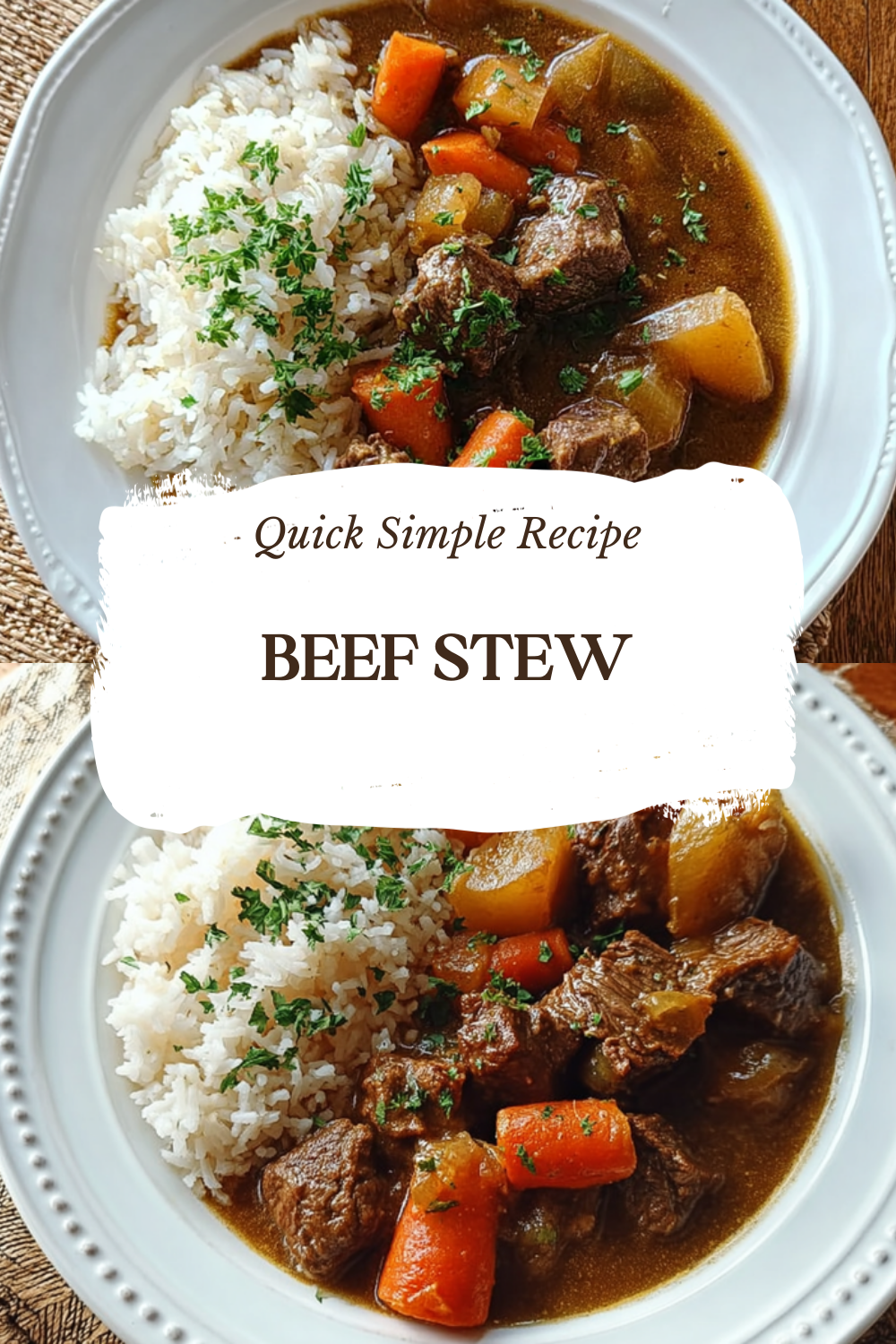
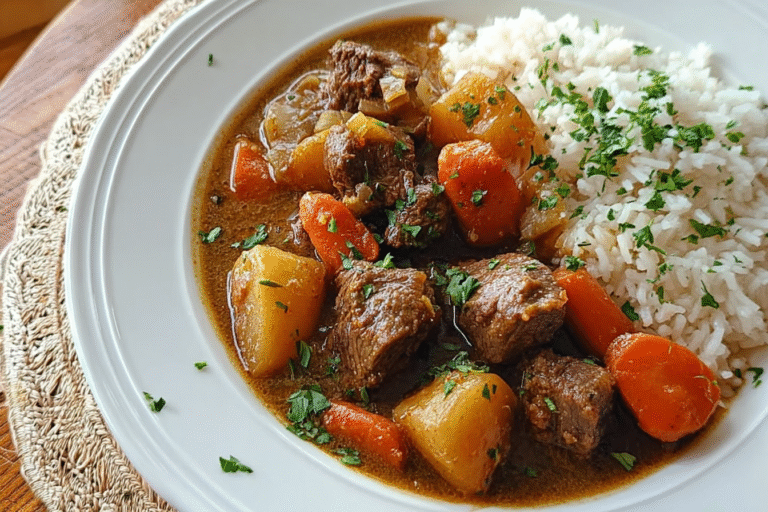
🍲 Beef Stew Recipe with Tender Meat and Rich Flavor offers a hearty and satisfying meal packed with savory goodness.
🥩 This recipe ensures tender beef and a rich, flavorful broth, making it perfect for comforting dinners any day of the week.
- Total Time: 1 hour 30 minutes
- Yield: 8 servings 1x
Ingredients
2 pounds stewing beef, trimmed and cubed
3 tablespoons flour
½ teaspoon garlic powder
½ teaspoon salt
½ teaspoon black pepper
3 tablespoons olive oil, more as needed
1 onion, chopped
6 cups beef broth
½ cup red wine (optional)
1 pound potatoes, peeled and cubed
4 carrots, cut into 1-inch pieces
4 ribs celery, cut into 1-inch pieces
3 tablespoons tomato paste
1 teaspoon dried rosemary or 1 sprig fresh
2 tablespoons cornstarch or as needed
2 tablespoons water or as needed
¾ cup peas
Instructions
1-Getting started with beef stew begins with some basic prep work: First, trim and cube 2 pounds of stewing beef, then pat it dry. Chop 1 onion, mince any garlic if needed, and cut up 1 pound of potatoes, 4 carrots, and 4 ribs of celery into pieces. Measure out 6 cups of beef broth, ½ cup of red wine if you’re using it, and 3 tablespoons of tomato paste. Having everything ready helps the process go smoothly and ensures even cooking.
2-Next, season and coat the beef: Mix 3 tablespoons of flour with ½ teaspoon garlic powder, ½ teaspoon salt, and ½ teaspoon black pepper, then toss the beef in this mixture. This step adds flavor and helps thicken the stew later. If you’re avoiding flour, you can skip this and use a cornstarch slurry at the end instead.
3-Now, sear the beef for that rich taste: Heat 3 tablespoons of olive oil in a large pot over medium-high heat. Brown the beef in small batches, shaking off excess flour first, and set it aside. This browning step is crucial as it builds deep flavor through caramelization. Remember, don’t crowd the pan to get an even sear.
4-After that, sauté the aromatics: Add the chopped onion to the pot, using more oil if needed, and cook until soft, about 3 minutes. Pour in the beef broth and red wine, scraping up the brown bits from the bottom. This deglazing adds even more flavor to the base of your stew.
5-Building and Simmering the Stew: Stir in the browned beef, potatoes, carrots, celery, tomato paste, and 1 teaspoon of dried rosemary. Bring it to a gentle simmer, then cover and cook on medium-low for about 1 hour, or until the beef is tender it might take up to 90 minutes. This slow cooking breaks down the meat and melds the flavors together.
6-To thicken the stew, mix 2 tablespoons of cornstarch with 2 tablespoons of water to make a slurry. Add it slowly to the boiling stew until it reaches your desired thickness, and let it boil for 1-2 minutes to remove any starchy taste. Finally, stir in ¾ cup of peas and simmer for 5-10 minutes more. Taste and adjust seasoning with salt and pepper before serving.
Last Step:
Please leave a rating and comment letting us know how you liked this recipe! This helps our business to thrive and continue providing free, high-quality recipes for you.Notes
🔥 Searing beef before adding broth enhances flavor through caramelization.
🥕 Add peas near the end to maintain their texture and color.
🍄 Substitute or add other vegetables like green beans or mushrooms to customize.
⏳ Use cornstarch slurry for thickening instead of mashing vegetables or flour.
🧊 Steer slurry before use as it settles quickly.
❄️ Freeze leftovers in single-serving bags for convenience; defrost in fridge or microwave.
🍞 Serve with bread, biscuits, or crackers to soak up the stew.
⏰ If beef isn’t tender after 60 minutes, continue simmering another 15-20 minutes.
- Prep Time: 20 minutes
- Cook Time: 1 hour 10 minutes
- Category: Main Dish
- Method: Searing, simmering, thickening
- Cuisine: American
Nutrition
- Serving Size: 1 serving
- Calories: 444
- Sugar: 4 g
- Sodium: 383 mg
- Fat: 28 g
- Saturated Fat: 9 g
- Carbohydrates: 22 g
- Fiber: 4 g
- Protein: 25 g
- Cholesterol: 80 mg