
Why Cuban Sandwiches Remain a Popular Pressed Sandwich
Cuban sandwiches are a practical meal for home cooks who want strong flavor with a short preparation time. The sandwich combines crisp bread, warm meat, melted cheese, and mustard in a format that is easy to assemble and quick to press. It fits busy schedules well because the active cooking time is usually about 10 to 15 minutes once the ingredients are ready.
- Ease of preparation: The sandwich uses simple assembly steps, then a short press in a plancha or panini press. This makes it suitable for lunch, a fast dinner, or game day food.
- Balanced nutrition: Cuban Sandwiches provide protein from ham and roast pork, along with dairy from Swiss cheese. For readers who track intake, the portion can be kept moderate and served with a light side.
- Versatility: While the classic version stays strict, some cooks adjust the meat choice, bread shape, or salami addition for Tampa style. This gives the sandwich room for regional and dietary variation.
- Distinctive flavor: The mix of yellow mustard, pickles, pork, ham, and melted Swiss cheese creates a salty, tangy, and savory profile that stands apart from a standard ham and cheese sandwich.
According to historical references on the Cuban sandwich, its Florida roots helped turn it into one of the best known pressed sandwiches in the United States.
For readers who enjoy a full meal with bold flavor, Cuban Sandwiches are a reliable choice. They also pair well with other casual dishes, including drinks and party foods from this spicy margarita recipe for entertaining. The result is a sandwich that works for students, busy parents, working professionals, and hosts who need something filling without much prep.
Jump to:
- Why Cuban Sandwiches Remain a Popular Pressed Sandwich
- Essential Ingredients for Cuban Sandwiches
- Main ingredients
- Ingredient notes
- Special dietary options
- How to Prepare Cuban Sandwiches Step by Step
- Step 1: Prepare the bread
- Step 2: Spread the mustard
- Step 3: Layer the fillings
- Step 4: Close and press the sandwich
- Step 5: Finish and serve
- Timing guide
- Protein and Main Component Alternatives
- Meat substitutions
- Cheese substitutions
- Bread substitutions
- Vegetable, Sauce, and Seasoning Modifications
- Vegetable changes
- Sauce changes
- Seasoning ideas
- Mastering Cuban Sandwiches: Advanced Tips and Variations
- Pro cooking techniques
- Flavor variations
- Presentation tips
- Make-ahead options
- How to Store Cuban Sandwiches Safely
- Refrigeration
- Freezing
- Reheating
- Meal prep considerations
- FAQs About Cuban Sandwiches
- What is a Cuban sandwich?
- Where did the Cuban sandwich originate?
- What are the main ingredients in a Cuban sandwich?
- How do I make a Cuban sandwich at home?
- What’s the difference between a Cuban sandwich and a regular ham and cheese?
- Cuban Sandwiches
- Ingredients
- Notes
- Nutrition
- Did you make this recipe?
Essential Ingredients for Cuban Sandwiches
The traditional ingredient list is short, but each item matters. Use fresh bread, thinly sliced meats, and a hot press for the best result. The ingredients below reflect the classic version, including the Tampa variation with salami.
Main ingredients
- 1 loaf Cuban bread, 8 to 12 inches long – This bread has a crusty exterior and soft interior that presses well.
- 1 to 2 tablespoons butter or olive oil – Used to coat the outside of the bread before pressing.
- 1 to 2 tablespoons yellow mustard – Adds tang and helps define the sandwich’s classic flavor.
- 4 to 6 ounces ham, thinly sliced – Provides salt and protein.
- 4 to 6 ounces roast pork, thinly sliced – Supplies the central savory meat layer.
- 2 to 4 ounces Swiss cheese, sliced – Melts evenly and binds the sandwich.
- 2 to 4 pickle slices – Brings acidity and a crisp bite.
- 2 to 4 slices salami, optional for Tampa style – Adds a spiced meat note used in some regional versions.
Ingredient notes
| Ingredient | Purpose | Traditional note |
|---|---|---|
| Cuban bread | Provides structure and texture | Best when fresh and crusty |
| Yellow mustard | Adds acidity | Used instead of mayonnaise |
| Roast pork | Main savory component | Often seasoned with garlic and citrus |
| Swiss cheese | Melts and binds layers | Standard cheese for the sandwich |
| Pickles | Adds sharpness | Dill pickles are typical |
Special dietary options
- Vegan: Use plant-based deli slices, vegan cheese, and a mustard spread on vegan Cuban-style bread.
- Gluten-free: Choose gluten-free crusty sandwich bread that can hold up under pressure.
- Low-calorie: Use lighter bread portions, reduced cheese, and leaner meat cuts while keeping the mustard and pickles.
How to Prepare Cuban Sandwiches Step by Step
Making Cuban Sandwiches at home follows a straightforward process. The sandwich is built in layers, pressed until crisp, and served hot. A plancha gives the most even result, but a panini press also works well. If neither is available, a heavy skillet can press the sandwich in a similar way.
Step 1: Prepare the bread
Slice the Cuban bread into 8 to 12 inch lengths. Lightly butter the outside or brush it with olive oil, then cut the loaf in half horizontally. This creates the top and bottom halves that will be filled and pressed. The bread should remain sturdy so it can support the meats and cheese without becoming soggy.
Step 2: Spread the mustard
Spread yellow mustard on the inside of both bread halves. Use enough to flavor the sandwich, but not so much that it overpowers the meat. Traditional Cuban Sandwiches avoid mayonnaise, so mustard serves as the main condiment. It adds brightness and cuts through the richness of the pork and cheese.
Step 3: Layer the fillings
Add the ham first, followed by the roast pork. Place the Swiss cheese over the meat, then add the pickle slices. If you are making a Tampa style version, add salami as well. Some cooks also place cheese on both sides of the meat so it melts into a seal during pressing.
The key to a good Cuban sandwich is balance: thin meat, sturdy bread, and enough heat to melt the cheese without burning the crust.
Step 4: Close and press the sandwich
Place the top half of the bread over the fillings and transfer the sandwich to a plancha or panini press. Press it until the bread becomes crisp and the cheese melts fully. This usually takes about 10 to 15 minutes total for assembly and pressing, depending on the equipment and the thickness of the sandwich. A cast iron skillet with a heavy pan on top can work if a press is not available.
Step 5: Finish and serve
When the sandwich is evenly browned and the cheese has melted, remove it from the heat and let it rest for a minute. Cut the sandwich into diagonal halves before serving. The diagonal cut gives a neat presentation and makes the layers easier to see. Serve hot while the crust is still crisp.
Timing guide
- Preparation time: 10 to 15 minutes
- Cooking time: About 5 to 7 minutes in a hot press
- Total time: About 15 to 20 minutes, depending on equipment
Protein and Main Component Alternatives
The classic Cuban sandwich depends on ham, roast pork, Swiss cheese, and Cuban bread, but some cooks need substitutes because of availability or dietary needs. The main challenge is keeping the same balance of salt, richness, and acidity.
Meat substitutions
- Turkey instead of ham: This works for a lighter sandwich, although the flavor becomes milder.
- Chicken instead of roast pork: Shredded or sliced chicken can replace pork, but it will not recreate the traditional flavor profile.
- Vegetarian deli slices: These can replace the meats for a plant-based version while still keeping the pressed format.
Cheese substitutions
- Mild provolone: A workable substitute if Swiss cheese is not available, though the flavor is less traditional.
- Plant-based cheese: A vegan alternative for readers avoiding dairy.
Bread substitutions
- French bread: Acceptable when Cuban bread is unavailable, especially if it has a firm crust.
- Italian bread: Another practical substitute, though it may be softer and less crisp after pressing.
- Gluten-free bread: A suitable choice for gluten-free readers, provided it can hold the fillings.
For the closest result, the pork should remain the main meat whenever possible. Roast pork gives the sandwich depth, while ham supplies salt and cured flavor. If you need a shortcut, use quality deli meats sliced thin. That keeps the structure close to the original, even if the method changes slightly.
Vegetable, Sauce, and Seasoning Modifications
Traditional Cuban Sandwiches use a narrow set of ingredients, and that is part of their identity. Lettuce, tomatoes, and mayonnaise are not part of the classic version. Still, some cooks want to adjust flavor or texture for personal preference or special diets.
Vegetable changes
- Extra pickles: Add more pickle slices if you want a sharper taste.
- Thin onion slices: These are not traditional, but they can add bite for those who prefer a stronger flavor.
- Roasted peppers: A mild option for cooks who want a softer, sweeter note.
Sauce changes
- Mustard variations: Yellow mustard is traditional, but a softer stone-ground mustard can be used in modern versions.
- Light garlic spread: This is a nontraditional choice that may appeal to cooks who want more aroma.
- No mayo: Keeping mayonnaise out preserves the classic Cuban sandwich profile.
Seasoning ideas
- Black pepper: A light sprinkle can give the sandwich a little more warmth.
- Garlic seasoning on the pork: Useful if you are preparing roast pork from scratch.
- Oregano or cumin in the pork marinade: These spices fit well with the Cuban style and support the meat’s savory profile.
Regional preference matters as well. Tampa style includes salami, while South Florida versions often omit it. That difference affects the final taste more than any small sauce change. If authenticity matters most, keep the sandwich simple and use only the classic ingredients.
Mastering Cuban Sandwiches: Advanced Tips and Variations
Once the basic method is clear, a few small techniques can improve texture and flavor. Cuban Sandwiches depend on the contrast between crisp bread and warm, melted filling. The sandwich should feel compact but not dry, rich but not greasy.
Pro cooking techniques
Use thinly sliced meats so the sandwich presses evenly. Thick cuts can prevent the cheese from melting fully before the bread becomes too dark. Warm the roast pork slightly before assembling so the sandwich heats through at the same pace. If you are using a plancha, keep steady pressure on the sandwich so the crust browns evenly on both sides.
Butter or olive oil on the outside of the bread helps create a crisp crust. Some cooks prefer butter for a fuller flavor, while others choose olive oil for a lighter finish. Either option works if applied sparingly.
Flavor variations
- Tampa style: Add salami to the standard ham and pork layers.
- South Florida style: Leave out the salami and keep the sandwich closer to the lean classic form.
- Extra tangy version: Add a few more pickle slices and a light extra swipe of mustard.
Presentation tips
Cut the sandwich diagonally after pressing. This creates a cleaner look and makes the layers visible. Serve it on a warm plate so the bread stays crisp longer. If the sandwich is part of a larger meal, pair it with plantain chips, black beans, or a light salad for contrast.
Make-ahead options
To save time, cook the roast pork ahead of schedule and slice the meats in advance. Store the components separately, then assemble and press the sandwich just before serving. This method works well for busy households, party hosts, and meal-prep readers who want fast assembly without giving up texture.
How to Store Cuban Sandwiches Safely
Cuban Sandwiches are best eaten fresh after pressing, but leftovers can still be handled properly.
Refrigeration
Wrap the sandwich tightly and store it in the refrigerator for up to 2 days. The bread will soften, so the texture will not be the same as when freshly pressed. For better results, store the fillings separately if possible.
Freezing
Freezing a fully assembled sandwich is not ideal, but cooked roast pork can be frozen separately for later use. Wrap portions well and thaw them in the refrigerator before reheating. This is useful for batch cooking and meal prep.
Reheating
Reheat the sandwich in a skillet, panini press, or oven until the bread is crisp and the filling is hot. A microwave is not the best choice because it softens the crust. If the sandwich was stored already assembled, a brief press in a hot skillet helps restore some texture.
Meal prep considerations
Prepare the pork, slice the cheese, and portion the pickles in advance. That way, you can assemble Cuban Sandwiches quickly when needed. Keeping each component separate also helps preserve flavor and reduces sogginess.
FAQs About Cuban Sandwiches
What is a Cuban sandwich?
A Cuban sandwich, also called a Cubano, is a pressed sandwich made with Cuban bread filled with roasted pork (lechón asado), boiled or cured ham, Swiss cheese, dill pickles, and yellow mustard. The bread is key—it’s a soft, crusty loaf made with lard, slightly sweet, and flattened under a plancha (hot grill) until crispy and melty. Originating from Cuban immigrant communities in Florida, it’s a handheld meal perfect for lunch. Each bite balances salty ham, tender pork, tangy pickles, and creamy cheese. For authenticity, use pernil (slow-roasted pork shoulder) marinated in garlic, cumin, and citrus. Clocking in at around 800 calories, it’s hearty but shareable. Pair with plantain chips or black beans for a full Cuban meal. (92 words)
Where did the Cuban sandwich originate?
The Cuban sandwich traces its roots to Tampa, Florida, in the early 1900s, created by Cuban tobacco workers in Ybor City. They combined salami (from Italian immigrants), ham, and pork on Cuban bread for quick, portable lunches. Miami later adapted it without salami, sparking a friendly rivalry over the “true” version. Tampa’s includes salami for extra crunch; Miami’s sticks to basics. Both press the sandwich hot. Today, it’s Florida’s iconic street food, with spots like Columbia Restaurant in Tampa serving thousands daily since 1905. If visiting, try La Segunda Bakery in Tampa for bread straight from their ovens. This history makes it a cultural staple beyond just a sandwich. (108 words)
What are the main ingredients in a Cuban sandwich?
Essential ingredients: Cuban bread (or substitute with French/Italian bread brushed with lard), slow-roasted pork (pernil seasoned with garlic, oregano, cumin, orange, and lime), thinly sliced boiled ham, Swiss cheese, dill pickle slices, and yellow mustard. No mayo or lettuce—keep it simple. For Tampa-style, add Genoa salami. Proportions: 4-6 oz pork, 2 oz ham, 2-3 pickle slices per half-sandwich. Bread should be 8-10 inches long. Avoid substitutions like turkey; authenticity matters for flavor. Source quality meats from a Latin market. These create the perfect salty-tangy-melty contrast when pressed at 350°F for 5-7 minutes. (102 words)
How do I make a Cuban sandwich at home?
Slice Cuban bread lengthwise. Spread mustard on both halves. Layer Swiss cheese, ham, pork, pickles, and more cheese (cheese on both sides melts and seals). Brush exterior with butter or lard. Heat a panini press or cast-iron skillet to medium-high. Press 5-7 minutes until golden and cheese oozes. No press? Use a skillet with a heavy pan on top. Prep pork ahead: marinate shoulder overnight, roast at 325°F for 4 hours to 195°F internal. Yields 4 servings. Total time: 30 minutes active + roasting. Serve hot with café con leche. Common mistake: skipping the press— it crisps bread and fuses flavors. Perfect for game day. (114 words)
What’s the difference between a Cuban sandwich and a regular ham and cheese?
A Cuban sandwich uses specific roasted pork (not just deli meat), Swiss cheese (not American), dill pickles and mustard (no mayo), and Cuban bread pressed hot for crunch and melt. Ham and cheese is cold, often on white bread with mayo or tomato. Cuban packs bold garlic-citrus pork flavor, salami in Tampa versions, and gets griddled for toasty edges—around 10 minutes cook time. Ham and cheese? No cooking needed. Nutritionally, Cuban has more protein (35g vs. 20g) but higher calories. It’s a meal; ham and cheese is a snack. For upgrades, check our pernil recipe or Miami vs. Tampa taste test articles. (109 words)
Cuban Sandwiches
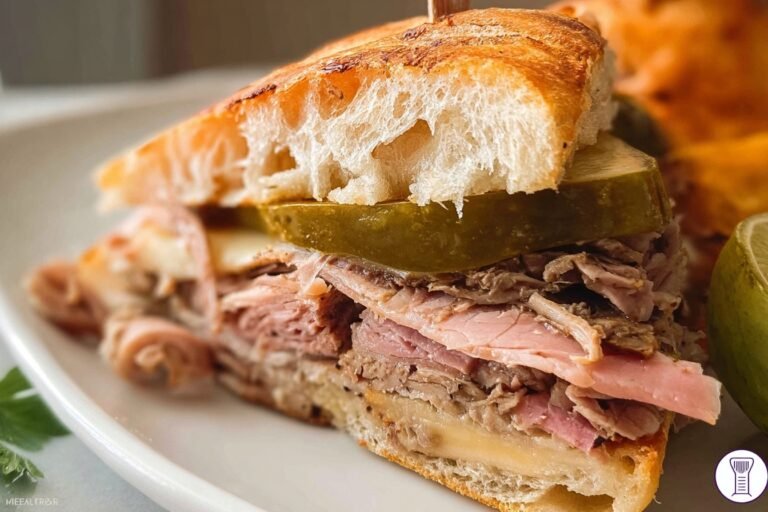
🥪 Iconic Cuban sandwich stacks roast pork, ham, melty Swiss, and pickles in crusty bread – bold flavors explode!
🔥 Pressed golden perfection delivers Miami street food magic at home, effortlessly crowd-pleasing!
- Total Time: 25 minutes
- Yield: 4 sandwiches
Ingredients
– 1 loaf Cuban bread, 8 to 12 inches long
– 1 to 2 tablespoons butter or olive oil
– 1 to 2 tablespoons yellow mustard
– 4 to 6 ounces ham, thinly sliced
– 4 to 6 ounces roast pork, thinly sliced
– 2 to 4 ounces Swiss cheese, sliced
– 2 to 4 pickle slices
– 2 to 4 slices salami, optional for Tampa style
Notes
🍞 Seek authentic Cuban bread for airy interior and crisp crust; French bread works in a pinch.
🔥 Press firmly and evenly for perfect melty cheese and crunchy exterior.
🥓 Use thinly sliced, high-quality meats for even cooking and traditional texture.
- Prep Time: 15 minutes
- Cook Time: 10 minutes
- Category: Sandwiches
- Method: Pressed
- Cuisine: Cuban
Nutrition
- Serving Size: 1 sandwich
- Calories: 650 kcal
- Sugar: 4g
- Sodium: 1850mg
- Fat: 35g
- Saturated Fat: 15g
- Unsaturated Fat: 18g
- Trans Fat: 0.5g
- Carbohydrates: 45g
- Fiber: 2g
- Protein: 40g
- Cholesterol: 120mg