
Why You’ll Love This German Oven Pancake
This German oven pancake is a go-to choice for anyone seeking a quick and satisfying breakfast or brunch option. It’s simple to whip up with basic kitchen staples, making it ideal for busy mornings when you want something impressive without the fuss. Plus, the way it puffs up in the oven delivers a fun surprise that delights both kids and adults alike.
Beyond its ease, this recipe brings a host of health benefits by packing in essential nutrients from the eggs and milk. For instance, each serving provides about 300 kcal, along with 10 g of protein and vitamins like 720 IU of vitamin A, helping you start your day on a nutritious note. Whether you’re a health-conscious parent or a student watching their diet, this pancake’s adaptability means it can fit various lifestyles.
One of the best parts is how versatile it is, allowing for easy tweaks like gluten-free options by swapping in gluten-free flour. This means families with different dietary needs can all enjoy it without any hassle. Overall, the light, custard-like center with crispy edges creates a taste that’s hard to beat, perfect for topping with fresh fruit or syrup.
Key Features That Make It Special
- Quick prep time of just 5 minutes, ideal for busy parents and working professionals.
- Adapts to dietary preferences, such as vegan or low-calorie versions, making it great for diverse households.
- Offers a distinctive flavor profile with its puffed texture, setting it apart from regular stovetop pancakes.
The recipe takes about 22-27 minutes to cook, giving you time to prepare other meal elements. Remember, it will puff up beautifully in the oven but deflate as it cools, which is completely normal and doesn’t affect the taste.
Jump to:
- Why You’ll Love This German Oven Pancake
- Key Features That Make It Special
- Essential Ingredients for German Oven Pancake
- Nutritional Breakdown
- How to Prepare the Perfect German Oven Pancake: Step-by-Step Guide
- Tips for Success
- Dietary Substitutions to Customize Your German Oven Pancake
- Mastering German Oven Pancake: Advanced Tips and Variations
- How to Store German Oven Pancake: Best Practices
- FAQs: Frequently Asked Questions About German Oven Pancake
- What is a German oven pancake and how is it different from regular pancakes?
- What ingredients do I need to make a German oven pancake?
- What type of pan should I use to bake a German pancake?
- Can I make a German oven pancake if I’m gluten intolerant?
- How should I serve German oven pancakes for the best flavor?
- German Oven Pancake
- Ingredients
- Instructions
- Last Step:
- Notes
- Nutrition
- Did you make this recipe?
Essential Ingredients for German Oven Pancake
Gathering the right ingredients is the first step to nailing this recipe, and I’ve listed them out clearly below based on the classic version. This ensures you have everything needed for a fluffy result every time. Let’s break it down into a structured list so it’s easy to follow along.
- 6 large eggs
- 1 cup (240 ml) of milk
- 1 cup (120 g) of all-purpose flour
- A dash of salt
- 1 teaspoon (5 ml) of vanilla extract
- 5 tablespoons (70 g) of butter
These ingredients combine to create a smooth batter that bakes up perfectly. For special dietary options, you can make simple swaps, like using gluten-free flour for those with gluten sensitivities. This keeps the recipe accessible while maintaining its delicious texture.
Nutritional Breakdown
| Nutrient | Amount per Serving |
|---|---|
| Calories | 300 kcal |
| Carbohydrates | 21 g |
| Protein | 10 g |
| Fat | 18 g |
| Saturated Fat | 9 g |
| Cholesterol | 231 mg |
| Sodium | 197 mg |
| Potassium | 164 mg |
| Sugar | 2 g |
| Vitamin A | 720 IU |
| Calcium | 92 mg |
| Iron | 2.1 mg |
As you can see, it’s a balanced option that fits into many diets. For more ideas on healthy tweaks, check out our breakfast recipes for additional inspiration.
How to Prepare the Perfect German Oven Pancake: Step-by-Step Guide
Getting started with this German oven pancake is straightforward and fun, beginning with preheating your oven to 425°F (220°C). This high heat helps achieve that signature puff and crispy edges we all love. Place the 5 tablespoons of butter in an ungreased 9×13-inch metal baking dish and let it melt in the oven while it preheats, which takes just a few minutes.
Next, in a blender, combine the 6 large eggs, 1 cup of milk, 1 cup of all-purpose flour, a dash of salt, and 1 teaspoon of vanilla extract, then blend until smooth for a flawless batter. Once ready, carefully pour this mixture over the melted butter in the baking dish. Pop it back in the oven and bake for 22 to 27 minutes until the edges turn golden brown and the pancake puffs up impressively.
For the best results, use a metal baking dish as it promotes better puffiness compared to glass ones. After baking, serve it warm with toppings like powdered sugar, syrup, fresh lemon, butter, or fruit to enhance the flavors. If you’re exploring more oven-baked treats, this method aligns well with classic German pancakes techniques from reliable sources.
Tips for Success
- Always use room-temperature ingredients for a smoother batter.
- Keep an eye on the oven; don’t open it too early to maintain the puff.
- This recipe is ready in about 5 minutes of prep, making it perfect for quick meals.
Dietary adaptations are easy too, like substituting with gluten-free flour for those needs. This step-by-step process ensures your German oven pancake turns out just right every time.

Dietary Substitutions to Customize Your German Oven Pancake
Making this German oven pancake work for your diet is simple with a few smart swaps. For example, replace the eggs with flaxseed or chia seeds mixed with water to keep it vegan while maintaining that protein boost. You can also switch out the milk for plant-based options like almond or soy milk, which adds moisture without the dairy.
When it comes to flavors, add in seasonal veggies such as spinach or bell peppers for a savory twist, or incorporate herbs like thyme for extra taste. For a sweeter version, try spices like cinnamon in the batter. These changes help keep the dish versatile for everyone, from food enthusiasts to travelers looking for on-the-go options.
Remember, the core ingredients like the 6 large eggs and flour can be adjusted as needed. This flexibility ensures the pancake stays light and airy, no matter your preferences.
Mastering German Oven Pancake: Advanced Tips and Variations
To take your German oven pancake to the next level, focus on pro techniques like preheating the baking dish with butter for those perfect crispy edges. Using room-temperature ingredients ensures a consistent batter that bakes evenly every time. Once you master the basics, experiment with flavors by adding lemon zest or vanilla extract for a fresh vibe.
For variations, try a savory version with cheese and herbs, or stick to sweet by incorporating fruits into the batter. Presentation matters too serve it on a warmed plate with a dusting of powdered sugar and fresh berries for a wow factor. If you’re planning ahead, prepare the batter the night before and store it in the fridge to save time in the morning.
These tips make the process even more enjoyable, especially for baking enthusiasts. And for how it deflates when cool, that’s just part of its charm, so enjoy it warm for the best experience.
How to Store German Oven Pancake: Best Practices
Proper storage keeps your German oven pancake tasting fresh, starting with refrigeration in an airtight container for up to 3 days. This method helps maintain its soft center and crisp edges without much loss of flavor. For longer keeping, freeze it by wrapping tightly and storing in a freezer-safe bag for up to 2 months.
When you’re ready to eat, reheat slices in a 350°F oven for about 10 minutes to bring back that crispy texture, or use the microwave for a quicker option. Meal prep lovers will appreciate portioning it out ahead of time for easy grab-and-go breakfasts. These practices ensure your pancake stays delicious for busy schedules.
FAQs: Frequently Asked Questions About German Oven Pancake
What is a German oven pancake and how is it different from regular pancakes?
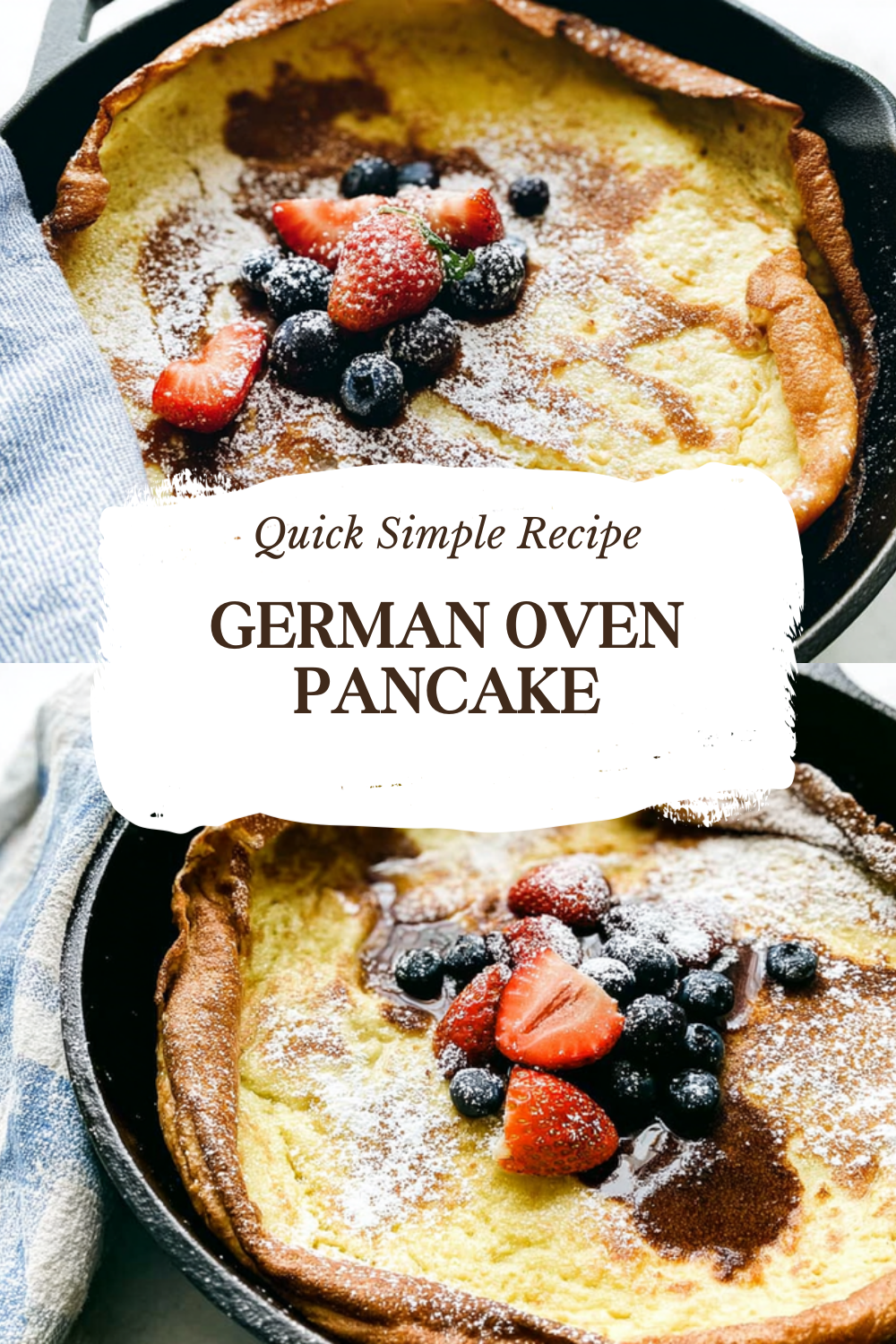
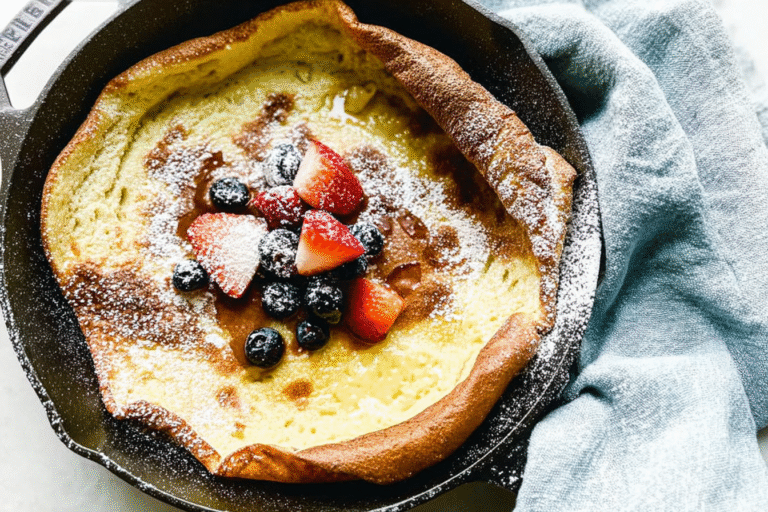
A German oven pancake, also known as a Dutch Baby, is a baked pancake made from eggs, milk, flour, and vanilla. Unlike traditional stovetop pancakes, it is cooked in the oven in a single pan where it puffs up dramatically. The texture is light and airy with crisp edges, and it deflates as it cools. It’s typically served warm with toppings like powdered sugar, fresh lemon juice, syrup, or fruit.
What ingredients do I need to make a German oven pancake?
To make a classic German oven pancake, you’ll need eggs, milk, all-purpose flour, vanilla extract, salt, and butter. For variations, you can add cinnamon or sugar to the batter or top with fresh fruit after baking. All ingredients are mixed into a smooth batter, which is poured over melted butter in a hot oven-safe pan before baking.
What type of pan should I use to bake a German pancake?
A metal or cast iron skillet works best for baking German pancakes because they conduct heat evenly and help create the puffed, crisp edges characteristic of the dish. A 9×13 inch metal baking dish is ideal. Glass pans can also be used but the pancake may not puff as much.
Can I make a German oven pancake if I’m gluten intolerant?
Yes, German oven pancakes can be made gluten-free by substituting regular flour with a gluten-free flour blend. Make sure the blend you choose is suitable for baking and follow the recipe as usual. This allows you to enjoy the same light and puffy texture without gluten.
How should I serve German oven pancakes for the best flavor?
Serve German oven pancakes immediately after baking when they are still puffed and warm. Popular toppings include a sprinkle of powdered sugar, a squeeze of fresh lemon juice, maple syrup, fresh berries, or melted butter. Because the pancake deflates quickly, serving right away ensures the best taste and texture experience.
German Oven Pancake
🥞 Enjoy a fluffy and crisp German pancake that’s perfect for breakfast or brunch.
🍳 Quick and easy to prepare, this recipe guarantees a deliciously golden puff every time you bake.
- Total Time: 27-32 minutes
- Yield: 6 servings 1x
Ingredients
6 large eggs
1 cup (240 ml) of milk
1 cup (120 g) of all-purpose flour
A dash of salt
1 teaspoon (5 ml) of vanilla extract
5 tablespoons (70 g) of butter
Instructions
1-Getting started: with this German oven pancake is straightforward and fun, beginning with preheating your oven to 425°F (220°C). This high heat helps achieve that signature puff and crispy edges we all love. Place the 5 tablespoons of butter in an ungreased 9×13-inch metal baking dish and let it melt in the oven while it preheats, which takes just a few minutes.
2-Next: in a blender, combine the 6 large eggs, 1 cup of milk, 1 cup of all-purpose flour, a dash of salt, and 1 teaspoon of vanilla extract, then blend until smooth for a flawless batter. Once ready, carefully pour this mixture over the melted butter in the baking dish. Pop it back in the oven and bake for 22 to 27 minutes until the edges turn golden brown and the pancake puffs up impressively.
3-For the best results: use a metal baking dish as it promotes better puffiness compared to glass ones. After baking, serve it warm with toppings like powdered sugar, syrup, fresh lemon, butter, or fruit to enhance the flavors. If you’re exploring more oven-baked treats, this method aligns well with classic German pancakes techniques from reliable sources.
Last Step:
Please leave a rating and comment letting us know how you liked this recipe! This helps our business to thrive and continue providing free, high-quality recipes for you.Notes
🔥 Use a metal baking dish for better puffiness and even baking.
⏰ The pancake will puff up during baking and deflate as it cools—serve immediately for best effect.
🌾 For a gluten-free version, substitute with gluten-free flour instead of all-purpose flour.
- Prep Time: 5 minutes
- Cook Time: 22-27 minutes
- Category: Breakfast
- Method: Baking
- Cuisine: German
- Diet: Vegetarian
Nutrition
- Serving Size: 1 serving
- Calories: 300 kcal
- Sugar: 2 g
- Sodium: 197 mg
- Fat: 18 g
- Saturated Fat: 9 g
- Carbohydrates: 21 g
- Protein: 10 g
- Cholesterol: 231 mg