

Why You’ll Love This Japanese Style Risotto
This Japanese style risotto combines the best of simple cooking with bold flavors, making it a go-to for anyone eager to try something new in the kitchen. It’s packed with nutrients from fresh ingredients like shiitake mushrooms, which bring a deep umami taste that’s both satisfying and healthy. Whether you’re a busy parent whipping up a quick dinner or a food enthusiast exploring global recipes, this dish fits right in with its ease and adaptability.
One of the biggest draws is how straightforward it is to make. You can have a creamy, comforting meal ready in just 35 minutes, perfect for those hectic evenings when you need something tasty without much fuss. Plus, its vegan-friendly base means it caters to all kinds of diets, from plant-based eaters to anyone watching their calories, while still delivering that rich, savory punch.
Beyond the basics, this risotto’s fusion of Japanese elements like dashi broth and soy sauce creates a memorable taste that’s hard to forget. It’s versatile enough for family dinners or casual get-togethers, and you can tweak it with what’s in your fridge for endless variety. If you’re looking to add more excitement to your meals, this recipe is a great starting point for home cooks of all levels.
Key Benefits Highlighted
- Ease of preparation: This Japanese style risotto is designed for simplicity and speed, allowing even novice cooks to create a delicious dish quickly. Its straightforward method reduces cooking time without compromising flavor, making it an ideal choice for busy weeknights.
- Health benefits: Packed with nutritious ingredients, this risotto supports wellness by offering a balanced combination of proteins, vitamins, and minerals. The recipe emphasizes fresh, wholesome components that contribute to a nutritious diet. For more on the health benefits of shiitake mushrooms, check out reliable sources that dive into their immune-boosting properties.
- Versatility: Adaptable to various dietary preferences, it can easily be customized for vegan, gluten-free, or low-calorie diets. This flexibility makes the dish suitable for a wide range of eating habits and occasions.
- Distinctive flavor: What sets this risotto apart is its unique fusion of traditional Italian technique with Japanese flavors, resulting in a savory and umami-rich profile that delivers a memorable culinary experience.
To expand on this, the umami from dashi and shiitake mushrooms makes every bite feel indulgent, yet it’s light enough for everyday meals. On my blog, I love sharing recipes like this one that blend cultures, and if you’re into fruity twists, you might enjoy our blueberry lemonade recipe as a refreshing side.
Jump to:
- Why You’ll Love This Japanese Style Risotto
- Key Benefits Highlighted
- Essential Ingredients for Japanese Style Risotto
- Main Ingredients Breakdown
- How to Prepare the Perfect Japanese Style Risotto: Step-by-Step Guide
- Dietary Substitutions to Customize Your Japanese Style Risotto
- Mastering Japanese Style Risotto: Advanced Tips and Variations
- How to Store Japanese Style Risotto: Best Practices
- FAQs: Frequently Asked Questions About Japanese Style Risotto
- What type of rice is best for making Japanese style risotto?
- Can I use chicken broth instead of dashi stock in Japanese style risotto?
- Which mushrooms work best in Japanese style risotto?
- How do I achieve the creamy texture typical of risotto without using cream?
- Can I prepare Japanese style risotto in advance and reheat it?
- Japanese Style Risotto
- Ingredients
- Instructions
- Last Step:
- Notes
- Nutrition
- Did you make this recipe?
Essential Ingredients for Japanese Style Risotto
Gathering the right ingredients is key to making this Japanese style risotto shine, as they create that perfect creamy texture and umami depth. This recipe keeps things simple with mostly pantry staples and a few fresh items, ensuring it’s accessible for home cooks. Let’s break down what you’ll need to get started.
Based on the detailed recipe, here’s a complete list of all ingredients with their precise measurements. This ensures you have everything measured out accurately for success in the kitchen.
- 1 cup arborio rice
- 1½ tablespoons dashi stock (powder or granules)
- 6 cups water
- 2 tablespoons neutral oil (butter can be used for a richer flavor if not vegan)
- 1 small shallot or yellow onion
- 150 grams sliced shiitake mushrooms
- 2 tablespoons light soy sauce
- ½ cup white wine or sake
- 2 chopped scallions
- White toasted sesame seeds (amount to taste)
- Salt and pepper to taste
These ingredients come together to form a vegan-friendly base that’s easy to adjust. For special dietary options, you can swap dashi with kombu or shiitake mushroom broth for vegan versions, or use tamari instead of soy sauce for gluten-free needs. This setup not only highlights the umami from shiitake but also keeps the dish light and nutritious.
Main Ingredients Breakdown
- Arborio rice (1 cup): Provides the creamy texture essential to risotto.
- Dashi broth (made from 1½ tablespoons powder or granules in 6 cups water): Adds authentic Japanese umami flavor.
- Sliced shiitake mushrooms (150 grams): Contribute earthiness and depth.
- Light soy sauce (2 tablespoons): Enhances savory notes.
- White wine or sake (½ cup): Balances flavor with a subtle acidity.
- Chopped scallions (2): Offer fresh aroma and color.
Remember, using fresh ingredients like these keeps the dish vibrant and full of flavor, perfect for busy parents or students looking for a quick meal.
How to Prepare the Perfect Japanese Style Risotto: Step-by-Step Guide
Diving into making Japanese style risotto is fun and straightforward, with steps that build flavor layer by layer. Start by getting all your ingredients ready to make the process smooth and enjoyable. This method draws from traditional techniques but adds a Japanese twist for extra depth.
First, heat 6 cups of water and dissolve 1½ tablespoons of dashi stock by bringing it to a boil, then set it aside for later. This creates the flavorful broth that forms the heart of the dish. Next, in a pan, warm 2 tablespoons of neutral oil and sauté 1 small shallot or yellow onion until it turns translucent, which takes just a couple of minutes to release those sweet aromas.
Then, add 150 grams of sliced shiitake mushrooms without crowding the pan, and cook until they’re nicely browned. Once browned, stir in 2 tablespoons of light soy sauce, let it sit for 2 minutes, then give it a good stir to coat everything evenly. This step locks in that umami goodness that makes the risotto special.
After that, toss in 1 cup of dry arborio rice and toast it until it turns golden brown, which helps bring out its nutty flavor. Pour in ½ cup of white wine or sake to deglaze the pan, scraping up any tasty bits from the bottom. Gradually add ½ cup of the dashi stock at a time, stirring constantly to prevent sticking, and wait for each addition to be absorbed before adding more, until the rice is tender but still slightly firm, using about 5 cups in total.
Finally, finish by stirring in 2 chopped scallions and white toasted sesame seeds, then season with salt and pepper to taste for a perfect balance. Here’s a quick table to summarize the steps for easy reference:
| Step | Description | Time Estimate |
|---|---|---|
| 1. Prepare broth | Heat water and dissolve dashi stock | 5 minutes |
| 2. Sauté onion | Cook until translucent | 3 minutes |
| 3. Cook mushrooms | Brown and add soy sauce | 5 minutes |
| 4. Toast rice | Add and stir until golden | 2 minutes |
| 5. Deglaze and add stock | Add wine and stock gradually | 15 minutes |
| 6. Finish and season | Stir in scallions and seeds | 2 minutes |
This guide takes about 35 minutes total, with 10 minutes prep and 25 minutes cooking, serving 2 people comfortably.

Dietary Substitutions to Customize Your Japanese Style Risotto
One of the joys of this Japanese style risotto is how easy it is to tweak for different needs, whether you’re aiming for vegan options or just mixing things up. Start with the base recipe and swap ingredients to match your preferences, keeping that creamy texture intact.
For protein boosts, replace mushrooms with firm tofu or tempeh in a one-to-one ratio to keep it plant-based and hearty. If you’re not sticking to vegan, grilled chicken or shrimp can add a nice twist without overpowering the flavors.
- Protein and Main Component Alternatives: Replace mushrooms with firm tofu or tempeh for added protein in vegan variations. Use grilled chicken or shrimp for non-vegetarian options.
- Vegetable, Sauce, and Seasoning Modifications: Swap green onions with chives or leeks to vary flavor. Experiment with different sauces such as miso paste or ginger-infused soy sauce. Seasonal vegetables like asparagus or spinach can be added for freshness and nutritional variety.
These changes make the dish flexible for diet-conscious individuals, and for more ideas, our lemon blueberry bread shows how simple swaps can enhance flavors in other recipes.
Mastering Japanese Style Risotto: Advanced Tips and Variations
Once you’re comfortable with the basics, take your Japanese style risotto to the next level with some pro tips that make a big difference. Using the right tools, like a heavy-bottomed pan, ensures even cooking and helps release the rice’s starch for that ideal creaminess.
Stir frequently with a wooden spoon to avoid sticking and build flavor gradually. For fun variations, add yuzu zest for a citrusy note or seaweed flakes for more umami it’s all about experimenting while keeping the core recipe intact.
When it comes to presentation, plating with a ring mold can make your dish look professional, and a sprinkle of toasted sesame seeds adds both taste and visual appeal.
- Pro cooking techniques: Use a heavy-bottomed pan for even heat distribution and stir with a wooden spoon to release rice starch for optimal creaminess.
- Flavor variations: Try adding yuzu zest or wasabi for a citrusy kick, or incorporate seaweed flakes for extra umami.
- Presentation tips: Plate using a ring mold for neat servings and garnish with finely chopped herbs or toasted sesame seeds for visual appeal.
- Make-ahead options: Prepare the risotto to the stage just before adding final seasoning, then refrigerate. Reheat gently, adding broth to restore creaminess.
These tricks, drawn from the recipe’s tips, emphasize gradual stock addition to avoid a dry result, and substituting mushrooms with varieties like brown or oyster ones works great with extra oil for browning.
How to Store Japanese Style Risotto: Best Practices
Keeping your Japanese style risotto fresh is simple with some smart storage methods, so it tastes just as good the next day. Store leftovers in an airtight container in the refrigerator for up to 2-3 days to lock in flavor. If you want to keep it longer, freeze in sealed portions and thaw in the fridge before reheating it’s a smart way for working professionals to meal-prep.
- Refrigeration: Store leftover risotto in an airtight container in the refrigerator for up to 2 days to maintain freshness.
- Freezing: Portion risotto and freeze in sealed containers; thaw in the refrigerator before reheating to preserve texture.
- Reheating: Gently warm on the stovetop or microwave, adding a splash of broth to restore the creamy consistency and prevent drying.
- Meal prep considerations: Prepare in batches and store in individual portions for convenient, quick meals throughout the week.
This approach aligns with the recipe’s storage advice, ensuring the texture stays as close as possible to fresh-made.
FAQs: Frequently Asked Questions About Japanese Style Risotto
What type of rice is best for making Japanese style risotto?
The ideal rice for Japanese style risotto is short-grain japonica rice, such as sushi rice, which has a sticky texture and high starch content. This type of rice helps achieve the creamy consistency characteristic of risotto while maintaining a slightly chewy bite, different from the Italian arborio rice commonly used. Avoid long-grain rice, as it won’t produce the right texture.
Can I use chicken broth instead of dashi stock in Japanese style risotto?
Yes, you can substitute chicken broth for dashi if dashi isn’t available. However, dashi provides a unique umami flavor with a subtle seafood and kombu (kelp) aroma that chicken broth lacks. To bring Japanese flavors closer, consider adding a small amount of soy sauce or mirin to the chicken broth as you cook.
Which mushrooms work best in Japanese style risotto?
Shiitake mushrooms are the most traditional and highly recommended due to their rich umami flavor and meaty texture that complements the dish. However, other mushrooms like maitake, enoki, or oyster mushrooms also work well and add interesting textures. For balanced flavor and browning, sauté mushrooms in a little sesame oil before mixing them into the risotto.
How do I achieve the creamy texture typical of risotto without using cream?
The creaminess in Japanese style risotto comes from the starch released by the short-grain rice as it slowly absorbs hot broth. To achieve this, add the broth gradually and stir frequently during cooking. This method helps release the rice’s natural starches for a smooth, velvety consistency, so there’s no need to add cream or cheese.
Can I prepare Japanese style risotto in advance and reheat it?
Japanese style risotto is best served fresh because it can thicken and lose its creamy texture when refrigerated. If needed, you can store leftovers in the fridge for up to 2 days and gently reheat on low heat with a splash of broth or water to loosen the rice. Stirring frequently while reheating helps restore some creaminess.
Japanese Style Risotto
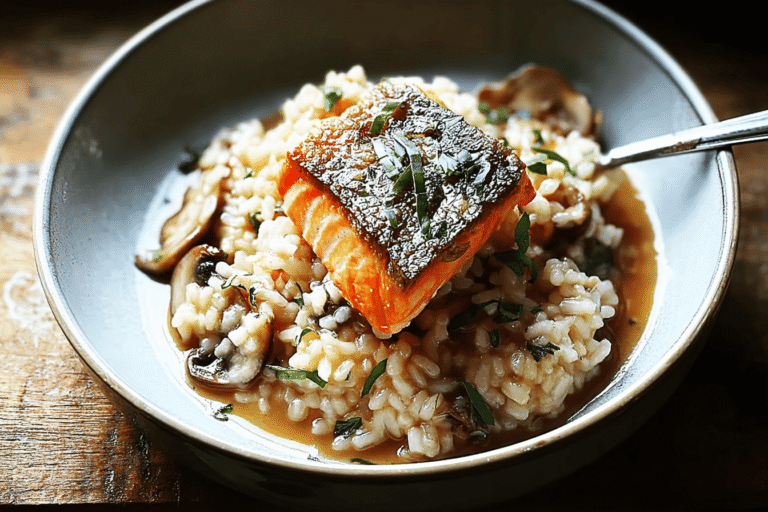
🍄 Japanese Mushroom Risotto features shiitake mushrooms and dashi broth, delivering rich umami flavors in a creamy, comforting meal.
🌱 This vegan-friendly recipe is perfect for those seeking a plant-based dish with a satisfying risotto texture.
- Total Time: 35 minutes
- Yield: 2 servings
Ingredients
– 1 cup arborio rice
– 1½ tablespoons dashi stock (powder or granules)
– 6 cups water
– 2 tablespoons neutral oil (butter can be used for a richer flavor if not vegan)
– 1 small shallot or yellow onion
– 150 grams sliced shiitake mushrooms
– 2 tablespoons light soy sauce
– ½ cup white wine or sake
– 2 chopped scallions
– White toasted sesame seeds (amount to taste)
– Salt and pepper to taste
Instructions
1-First, heat 6 cups of water and dissolve 1½ tablespoons of dashi stock by bringing it to a boil, then set it aside for later. This creates the flavorful broth that forms the heart of the dish.
2-Next, in a pan, warm 2 tablespoons of neutral oil and sauté 1 small shallot or yellow onion until it turns translucent, which takes just a couple of minutes to release those sweet aromas.
3-Then, add 150 grams of sliced shiitake mushrooms without crowding the pan, and cook until they’re nicely browned. Once browned, stir in 2 tablespoons of light soy sauce, let it sit for 2 minutes, then give it a good stir to coat everything evenly. This step locks in that umami goodness that makes the risotto special.
4-After that, toss in 1 cup of dry arborio rice and toast it until it turns golden brown, which helps bring out its nutty flavor. Pour in ½ cup of white wine or sake to deglaze the pan, scraping up any tasty bits from the bottom. Gradually add ½ cup of the dashi stock at a time, stirring constantly to prevent sticking, and wait for each addition to be absorbed before adding more, until the rice is tender but still slightly firm, using about 5 cups in total.
5-Finally, finish by stirring in 2 chopped scallions and white toasted sesame seeds, then season with salt and pepper to taste for a perfect balance.
Last Step:
Please leave a rating and comment letting us know how you liked this recipe! This helps our business to thrive and continue providing free, high-quality recipes for you.Notes
🍚 Add dashi stock gradually and stir often to create a creamy risotto texture.
🧈 For richer flavor, substitute oil with butter if not vegan.
🍤 Add pan-fried seafood like scallops or shrimp for a non-vegetarian variation.
- Prep Time: 10 minutes
- Cook Time: 25 minutes
- Category: Main Course
- Method: Sautéing, Simmering
- Cuisine: Japanese
- Diet: Vegan, Vegetarian
Nutrition
- Serving Size: 1 serving