
Why You’ll Love This Polenta And Meatballs
The classic combination of polenta and meatballs brings comfort to the table with its hearty flavors and satisfying textures. This polenta and meatballs dish stands out for its ease of preparation, making it a go-to option for busy nights when you want something tasty without much fuss. You’ll appreciate how simple ingredients come together to create a meal that’s both nutritious and full of heartwarming appeal.
Health benefits are a big plus here, as polenta offers fiber from cornmeal while meatballs provide protein from beef, supporting your daily energy needs. The recipe can be tweaked for different diets, ensuring everyone can enjoy it, whether you’re aiming for lighter options or just seeking a filling dinner. What really makes this polenta and meatballs recipe shine is its versatility, from casual family meals to impressive gatherings, proving it’s more than just everyday fare.
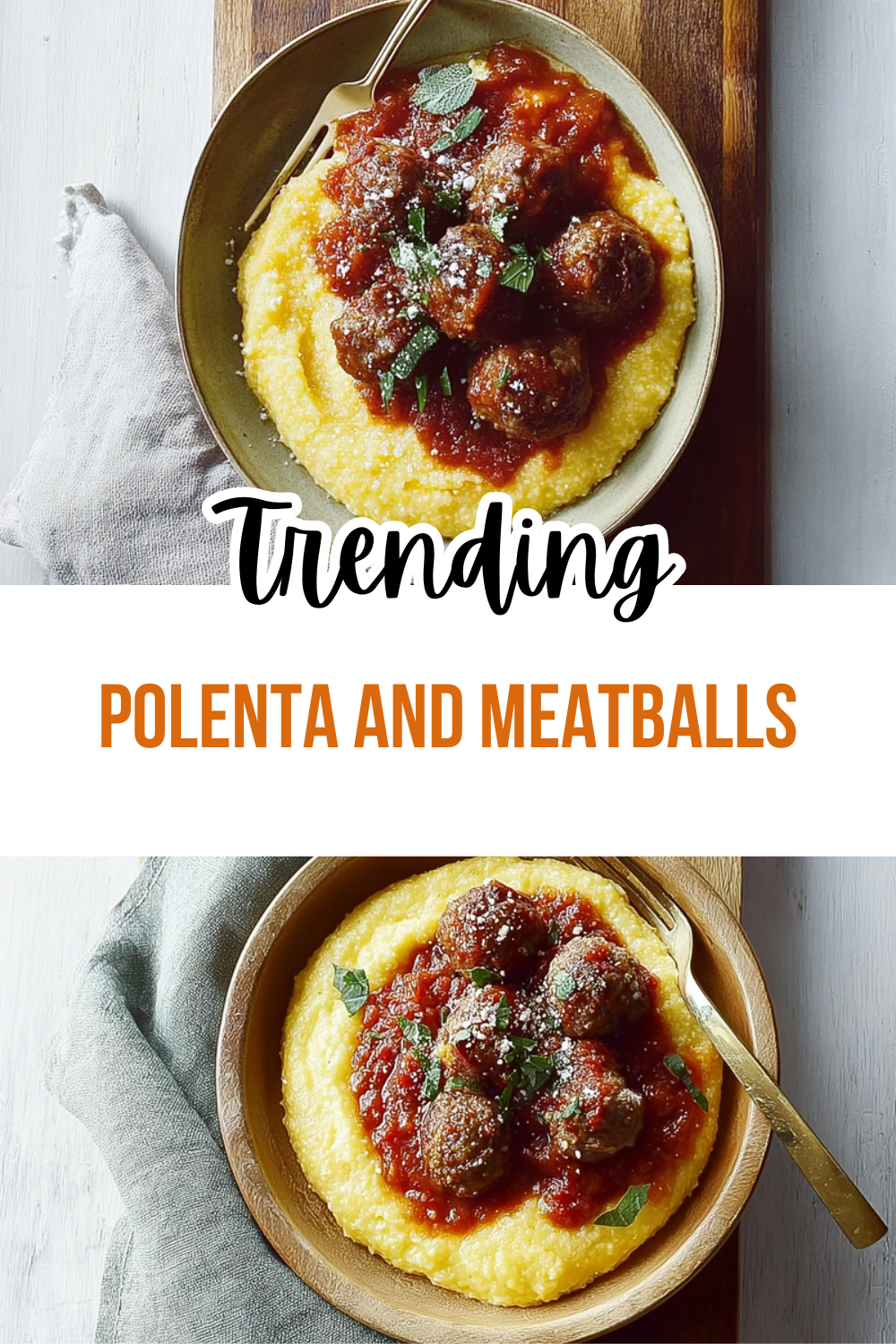
This dish’s distinctive flavor comes from the creamy polenta paired with savory meatballs in a flavorful tomato sauce. It’s designed to delight your taste buds with a balance of herbs and spices that elevate simple ingredients. Whether you’re a home cook or feeding a crowd, this polenta and meatballs option delivers on taste and satisfaction every time.
Jump to:
- Why You’ll Love This Polenta And Meatballs
- Essential Ingredients for Polenta And Meatballs
- Ingredients for the Meatballs
- Ingredients for the Tomato Sauce
- Ingredients for the Polenta
- How to Prepare the Perfect Polenta And Meatballs: Step-by-Step Guide
- Dietary Substitutions to Customize Your Polenta And Meatballs
- Mastering Polenta And Meatballs: Advanced Tips and Variations
- Tips for Better Flavor and Texture
- How to Store Polenta And Meatballs: Best Practices
- FAQs: Frequently Asked Questions About Polenta And Meatballs
- What is the best way to make creamy polenta for meatballs?
- How can I make meatballs that stay tender and flavorful?
- What sauces pair well with polenta and meatballs?
- Can polenta and meatballs be prepared ahead of time?
- Is polenta gluten-free and suitable for people with dietary restrictions?
- Polenta And Meatballs
- Ingredients
- Instructions
- Last Step:
- Notes
- Nutrition
- Did you make this recipe?
Essential Ingredients for Polenta And Meatballs
Great recipes start with the right ingredients, and for polenta and meatballs, you’ll need a mix that builds rich flavors and textures. This section breaks down everything you need for the meatballs, tomato sauce, and polenta, all formatted clearly for easy shopping and prep. Let’s dive into the specifics to make your cooking experience smooth and successful.
Ingredients for the Meatballs
- 2 tablespoons olive oil
- 2 pounds (about 907 grams) 80% lean ground beef
- 1 cup ricotta cheese
- 2 large eggs
- 1 cup breadcrumbs
- 1/4 cup chopped parsley
- 2 teaspoons kosher salt
- 1 teaspoon dried oregano
- 1/2 teaspoon ground fennel seed
- 1/4 teaspoon red pepper flakes
Ingredients for the Tomato Sauce
- 2 tablespoons extra virgin olive oil
- 3 garlic cloves, thinly sliced
- 28 ounces (about 794 grams) canned crushed tomatoes
- 1 tablespoon tomato paste
- 1 teaspoon dried basil
- 1 teaspoon dried oregano
- Salt and pepper to taste
Ingredients for the Polenta
- 1 cup corn meal
- 3 cups water
- 1/2 stick butter (approximately 4 tablespoons or 57 grams)
- 1 cup grated cheese (fontina recommended)
- Kosher salt and freshly ground black pepper to taste
These ingredients make about 24 meatballs and serve 6-8 people, blending protein from beef and cheese with carbs from breadcrumbs and cornmeal for a balanced meal. For more on how these choices boost nutrition, check out this overview of beef benefits.
How to Prepare the Perfect Polenta And Meatballs: Step-by-Step Guide
Getting polenta and meatballs just right involves a few straightforward steps that anyone can follow, even if you’re new to cooking. Start by gathering your ingredients and setting up your workspace, which makes the process flow smoothly. This guide incorporates the full directions for meatballs, sauce, and polenta to ensure everything turns out delicious.
First, preheat the oven to 450°F (232°C) and drizzle olive oil into a 9×13 inch baking dish to coat it. In a bowl, mix the ground beef, ricotta cheese, eggs, breadcrumbs, parsley, oregano, salt, red pepper flakes, and fennel seed until combined. Shape the mixture into 1½ to 2-inch meatballs and arrange them snugly in the dish, then roast for 20 minutes until firm and cooked through.
While the meatballs roast, heat the extra virgin olive oil in a wide skillet over medium heat and lightly brown the sliced garlic. Add the crushed tomatoes, tomato paste, dried basil, and oregano, stirring well before reducing to a gentle boil. Cook for about 20 minutes until thickened, then pour the sauce over the meatballs, roll them to coat, and return to the oven for another 15-20 minutes.
For the polenta, bring water to a boil and slowly whisk in the cornmeal to avoid lumps. Reduce the heat to a low boil and stir frequently for 15-20 minutes until fully cooked, then lower the heat and mix in the butter and grated cheese until melted. Season with salt and pepper to taste, and serve the polenta in warmed bowls topped with the meatballs and sauce.
This step-by-step approach ensures even cooking and great flavors. If you’re looking for more dessert ideas to pair with this meal, try a simple berry crisp recipe from our site. Tips for success include lining meatballs tightly for even heat and stirring polenta often to keep it smooth.

Dietary Substitutions to Customize Your Polenta And Meatballs
Making polenta and meatballs work for your needs is easy with a few swaps, allowing you to adapt based on preferences or restrictions. These changes keep the dish tasty while fitting different lifestyles. You’ll find options for proteins, veggies, and more to make it your own.
Start with protein alternatives: replace beef with ground turkey or chicken for a leaner choice, or use lentils and chickpeas for vegan versions. For the sauce and seasonings, switch tomato sauce with roasted red pepper sauce or add spinach and zucchini for extra nutrition. You can also tweak herbs like using rosemary instead of oregano to match your taste.
| Original Ingredient | Substitution Option | Why It Works |
|---|---|---|
| Ground beef | Ground turkey | Reduces fat while keeping meatballs tender |
| Canned crushed tomatoes | Roasted red pepper sauce | Adds a smoky flavor for variety |
| Cornmeal | Gluten-free cornmeal | Maintains creaminess for gluten-free diets |
These modifications help keep the essence of polenta and meatballs intact, making it accessible for all. For more healthy twists, explore health benefits of cornmeal.
Mastering Polenta And Meatballs: Advanced Tips and Variations
Taking your polenta and meatballs to the next level means trying advanced techniques that enhance both flavor and presentation. Slowly simmering the polenta ensures a creamy result, while searing meatballs at high heat locks in juices for a better bite. These steps build on the basic recipe for more impressive results.
Tips for Better Flavor and Texture
Experiment with fresh herbs like thyme or basil to add depth, or mix in sun-dried tomatoes for a tangy twist. For make-ahead convenience, prepare meatballs ahead and freeze them, then reheat gently. Polenta can be made in advance and warmed with a bit of water to restore its smooth texture.
- Use high-quality cheese like fontina for richer polenta.
- Brown garlic carefully to avoid bitterness in the sauce.
- Add variations such as olives for a Mediterranean feel.
Presentation matters too, so serve meatballs on polenta with a sprinkle of microgreens or cheese. These strategies make polenta and meatballs not just a meal, but a standout dish for any occasion, adapting to your tastes with ease.
How to Store Polenta And Meatballs: Best Practices
Proper storage keeps your polenta and meatballs fresh and tasty for later, helping you make the most of leftovers. Store them correctly to maintain quality and safety, whether you’re saving for the next day or longer. This way, you can enjoy a quick meal without starting from scratch.
Keep cooked polenta and meatballs in airtight containers in the fridge for up to 3 days. For freezing, lay meatballs on a baking sheet to freeze individually before bagging them, and portion polenta for easy thawing. When reheating, warm polenta in a saucepan with a splash of water and heat meatballs in the oven to keep them juicy.
Meal prep ideas include batch cooking for busy weeks, so you always have a hearty option ready. This approach makes polenta and meatballs even more practical for everyday life.
FAQs: Frequently Asked Questions About Polenta And Meatballs
What is the best way to make creamy polenta for meatballs?
To make creamy polenta for meatballs, start by boiling 4 cups of water or broth. Gradually whisk in 1 cup of coarse cornmeal to avoid lumps. Cook on low heat, stirring frequently, for about 30-40 minutes until thickened and smooth. Add a tablespoon of butter and ½ cup of grated Parmesan cheese at the end for rich flavor. Season with salt and pepper to taste. This method produces a creamy base that complements the savory meatballs perfectly.
How can I make meatballs that stay tender and flavorful?
To keep meatballs tender and flavorful, use a mix of ground beef and pork for better texture. Add soaked breadcrumbs or an egg to retain moisture. Incorporate finely chopped onions, garlic, fresh herbs like parsley, and Parmesan cheese for extra flavor. Avoid overmixing the meat, which can make meatballs dense. Cook them gently by pan-frying or baking at 375°F (190°C) for about 20 minutes before simmering in sauce to finish.
What sauces pair well with polenta and meatballs?
Classic tomato sauce is the most popular choice for polenta and meatballs, offering a tangy balance. You can make a simple sauce with crushed tomatoes, garlic, onions, and herbs like basil or oregano. For a richer option, a mushroom gravy or creamy mushroom sauce also works well, especially for a comforting twist. Lightly spoon the sauce over both polenta and meatballs to keep the dish moist and flavorful.
Can polenta and meatballs be prepared ahead of time?
Yes, both polenta and meatballs can be prepared ahead. Meatballs can be made and fully cooked, then stored in the refrigerator for up to 3 days or frozen for up to 3 months. Polenta can be cooked and poured into a dish to set, then refrigerated. When ready to serve, reheat the polenta gently with a bit of water or broth and stir to restore creaminess. Prepare sauce separately and combine all components just before serving for best results.
Is polenta gluten-free and suitable for people with dietary restrictions?
Yes, polenta is naturally gluten-free since it’s made from cornmeal. This makes it suitable for people with gluten intolerance or celiac disease. However, it’s important to check the packaging to ensure there is no cross-contamination with gluten-containing grains. Meatballs can be made gluten-free by using gluten-free breadcrumbs or crushed gluten-free crackers as a binder instead of traditional breadcrumbs. This way, the entire dish remains safe for those following a gluten-free diet.
Polenta And Meatballs
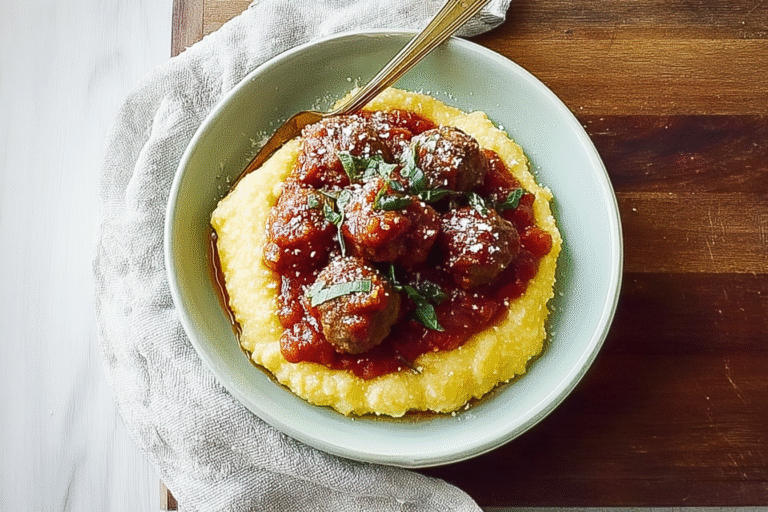
🍝 This Classic Meatballs Served with Creamy Cheesy Polenta recipe offers a comforting and hearty meal with rich flavors and satisfying textures.
🧀 Combining protein-rich meatballs with smooth, cheesy polenta makes it an ideal dish for family dinners or special occasions.
- Total Time: 55 minutes
- Yield: 24 meatballs, serves 6-8 1x
Ingredients
2 tablespoons olive oil
2 pounds (about 907 grams) 80% lean ground beef
1 cup ricotta cheese
2 large eggs
1 cup breadcrumbs
1/4 cup chopped parsley
2 teaspoons kosher salt
1 teaspoon dried oregano
1/2 teaspoon ground fennel seed
1/4 teaspoon red pepper flakes
2 tablespoons extra virgin olive oil
3 garlic cloves, thinly sliced
28 ounces (about 794 grams) canned crushed tomatoes
1 tablespoon tomato paste
1 teaspoon dried basil
1 teaspoon dried oregano
Salt and pepper to taste
1 cup corn meal
3 cups water
1/2 stick butter (approximately 4 tablespoons or 57 grams)
1 cup grated cheese (fontina recommended)
Kosher salt and freshly ground black pepper to taste
Instructions
1-First, preheat the oven to 450°F (232°C) and drizzle olive oil into a 9×13 inch baking dish to coat it. In a bowl, mix the ground beef, ricotta cheese, eggs, breadcrumbs, parsley, oregano, salt, red pepper flakes, and fennel seed until combined. Shape the mixture into 1½ to 2-inch meatballs and arrange them snugly in the dish, then roast for 20 minutes until firm and cooked through.
2-While the meatballs roast, heat the extra virgin olive oil in a wide skillet over medium heat and lightly brown the sliced garlic. Add the crushed tomatoes, tomato paste, dried basil, and oregano, stirring well before reducing to a gentle boil. Cook for about 20 minutes until thickened, then pour the sauce over the meatballs, roll them to coat, and return to the oven for another 15-20 minutes.
3-For the polenta, bring water to a boil and slowly whisk in the cornmeal to avoid lumps. Reduce the heat to a low boil and stir frequently for 15-20 minutes until fully cooked, then lower the heat and mix in the butter and grated cheese until melted. Season with salt and pepper to taste, and serve the polenta in warmed bowls topped with the meatballs and sauce.
Last Step:
Please leave a rating and comment letting us know how you liked this recipe! This helps our business to thrive and continue providing free, high-quality recipes for you.Notes
🍖 Arrange meatballs tightly in baking dish for even cooking and better texture.
🧀 Use ricotta cheese to keep meatballs moist and tender.
🧄 Brown garlic carefully in sauce to avoid bitter burnt flavor.
🍲 Stir polenta frequently to achieve smooth, lump-free consistency.
- Prep Time: 15 minutes
- Cooking and baking time: 40 minutes
- Cook Time: 40 minutes
- Category: Main dish
- Method: Roasting and simmering
- Cuisine: Italian
- Diet: Gluten (from breadcrumbs), can be modified
Nutrition
- Serving Size: Approximately 1/4 recipe
- Calories: 550
- Sugar: 6 grams
- Sodium: 800 mg
- Fat: 30 grams
- Saturated Fat: 15 grams
- Unsaturated Fat: 12 grams
- Trans Fat: 0 grams
- Carbohydrates: 35 grams
- Fiber: 3 grams
- Protein: 35 grams
- Cholesterol: 120 mg