

Why You’ll Love This Vegan Sesame Ramen
This vegan sesame ramen offers a comforting blend of creamy broth and hearty toppings that feels like a hug in a bowl. It’s simple to whip up on a busy day, using everyday ingredients to create something truly special. Whether you’re new to plant-based meals or a longtime fan, this dish brings together ease, nutrition, and flavor in ways that keep you coming back.
The recipe shines with its quick prep, taking just about 30 minutes from start to finish, making it ideal for busy parents or working professionals. You’ll enjoy the creamy texture from the sesame broth and the spicy kick from tofu crumbles, all while feeling good about the fresh veggies packed inside. It’s a meal that adapts to your life, perfect for students grabbing a quick bite or diet-conscious folks seeking balance.
Health-wise, it’s loaded with plant-based goodness from soy milk, veggies, and tofu, giving you essential vitamins and proteins without any fuss. For food enthusiasts, the umami-rich broth made from kombu dashi or vegetable broth adds a layer of depth that’s hard to beat. Overall, this vegan sesame ramen is all about tasty, customizable comfort that fits right into your routine.
Jump to:
- Why You’ll Love This Vegan Sesame Ramen
- Essential Ingredients for Vegan Sesame Ramen
- How to Prepare the Perfect Vegan Sesame Ramen: Step-by-Step Guide
- Gathering and Prepping Ingredients
- Cooking the Spicy Crumbles and Veggies
- Making and Assembling the Broth
- Dietary Substitutions to Customize Your Vegan Sesame Ramen
- Mastering Vegan Sesame Ramen: Advanced Tips and Variations
- Pro Cooking Techniques
- More Ideas for Customization
- How to Store Vegan Sesame Ramen: Best Practices
- FAQs: Frequently Asked Questions About Vegan Sesame Ramen
- Can I use tahini instead of Asian sesame paste in vegan sesame ramen?
- What type of noodles should I use for vegan sesame ramen?
- Can I prepare the sesame ramen paste ahead of time?
- What are good vegetable toppings for vegan sesame ramen?
- How can I make the vegan sesame ramen spicy without rayu (Japanese chili oil)?
- Vegan Sesame Ramen
- Ingredients
- Instructions
- Last Step:
- Notes
- Nutrition
- Did you make this recipe?
Essential Ingredients for Vegan Sesame Ramen
Gathering the right ingredients is key to making this vegan sesame ramen recipe shine. The specific measurements ensure a balanced flavor and texture in every bowl. Below is a comprehensive list of all needed items, pulled directly from the recipe details for clarity and accuracy.
- 3 tablespoons Asian sesame paste For the creamy base of the soup.
- 2 tablespoons soy sauce Adds savory umami to both the broth and crumbles.
- 1/2 tablespoon rice vinegar Provides a subtle tang to brighten the flavors.
- 1 tablespoon sesame oil Infuses a nutty aroma throughout the dish.
- 1 teaspoon rayu (Japanese red chili oil) Brings heat and depth to the broth and crumbles.
- 1 cup (250 ml) soy milk Creates the rich, creamy texture in the soup base.
- 1.5 cups (300 ml) kombu dashi broth or vegetable broth Forms the flavorful liquid foundation.
- 100 grams soy meat or tofu Serves as the base for the spicy crumbles.
- 1 teaspoon minced garlic Enhances the savory notes in the crumbles.
- 1 teaspoon minced ginger Adds a warm, zesty kick to the crumbles.
- 1/2 tablespoon miso paste Boosts umami in the crumbles and overall dish.
- 1 teaspoon sake (optional) Offers a slight depth if you have it on hand.
- 1 teaspoon red chili oil For extra spice in the crumbles.
- 2 portions of ramen noodles Fresh ones are best for that chewy texture.
- 1/2 head small cabbage, shredded Steamed for a crisp-tender veggie addition.
- 1 cup bean sprouts Adds crunch and freshness as a topping.
- 1/2 cup corn Provides sweetness and color to the mix.
- Crushed peanuts (amount as desired) For garnish and extra crunch.
- Sesame seeds (amount as desired) To sprinkle on top for nutty flavor.
- Sliced green onions (amount as desired) Fresh garnish for a pop of taste.
- Sliced garlic tops (amount as desired) Adds a mild, garlicky finish.
- Soy sauce (to taste) For adjusting seasoning in the final bowl.
- Rayu or red chili oil (to taste) For customizing the heat level.
These ingredients cover everything for the soup base, spicy crumbles, noodles, veggies, and garnishes. Remember, it’s easy to tweak for special diets, like using gluten-free noodles or tamari instead of soy sauce. For more ideas on adapting recipes, check out this refreshing drink option that shows how simple swaps can enhance flavors.
How to Prepare the Perfect Vegan Sesame Ramen: Step-by-Step Guide
Gathering and Prepping Ingredients
First, start by preparing your ingredients to make the process smooth. Soak 100 grams of soy meat in hot water for 5 minutes or crumble the tofu to mimic mince this step ensures the crumbles have the right texture. Wash and shred 1/2 head of small cabbage, measure out 1 cup of bean sprouts, and get 1/2 cup of corn ready for steaming.
Next, measure all the liquids: 1 cup of soy milk, 1.5 cups of kombu dashi or vegetable broth, and the seasonings like 3 tablespoons of Asian sesame paste and 2 tablespoons of soy sauce. Mince 1 teaspoon each of garlic and ginger for the crumbles to save time later. This setup helps everything come together quickly in about 30 minutes total.
Cooking the Spicy Crumbles and Veggies
In a skillet over medium-high heat, warm 1 tablespoon of sesame oil and sauté the minced garlic and ginger until fragrant, about 1 minute. Add the soaked soy meat or crumbled tofu, then season with 1/2 tablespoon of soy sauce, 1 teaspoon of sake if using, 1/2 tablespoon of miso paste, and 1 teaspoon of red chili oil. Fry this mixture for 3-5 minutes until it gets slightly crispy and flavorful.
While that’s cooking, steam the sliced vegetables like the shredded cabbage, bean sprouts, and corn for about 3 minutes to keep them crisp yet tender. In another pot, boil water and cook 2 portions of ramen noodles for around 5 minutes, then drain them. Fresh ramen noodles work best for that optimal chewy texture, making this step crucial for the dish’s appeal.
Making and Assembling the Broth
For the soup base, mix the paste ingredients 3 tablespoons Asian sesame paste, 2 tablespoons soy sauce, 1/2 tablespoon rice vinegar, 1 tablespoon sesame oil, and 1 teaspoon rayu in a bowl, excluding the soy milk and broth for now. In a separate pot, heat the 1 cup of soy milk and 1.5 cups of broth until small bubbles form, then whisk in the paste until it’s fully dissolved and creamy.
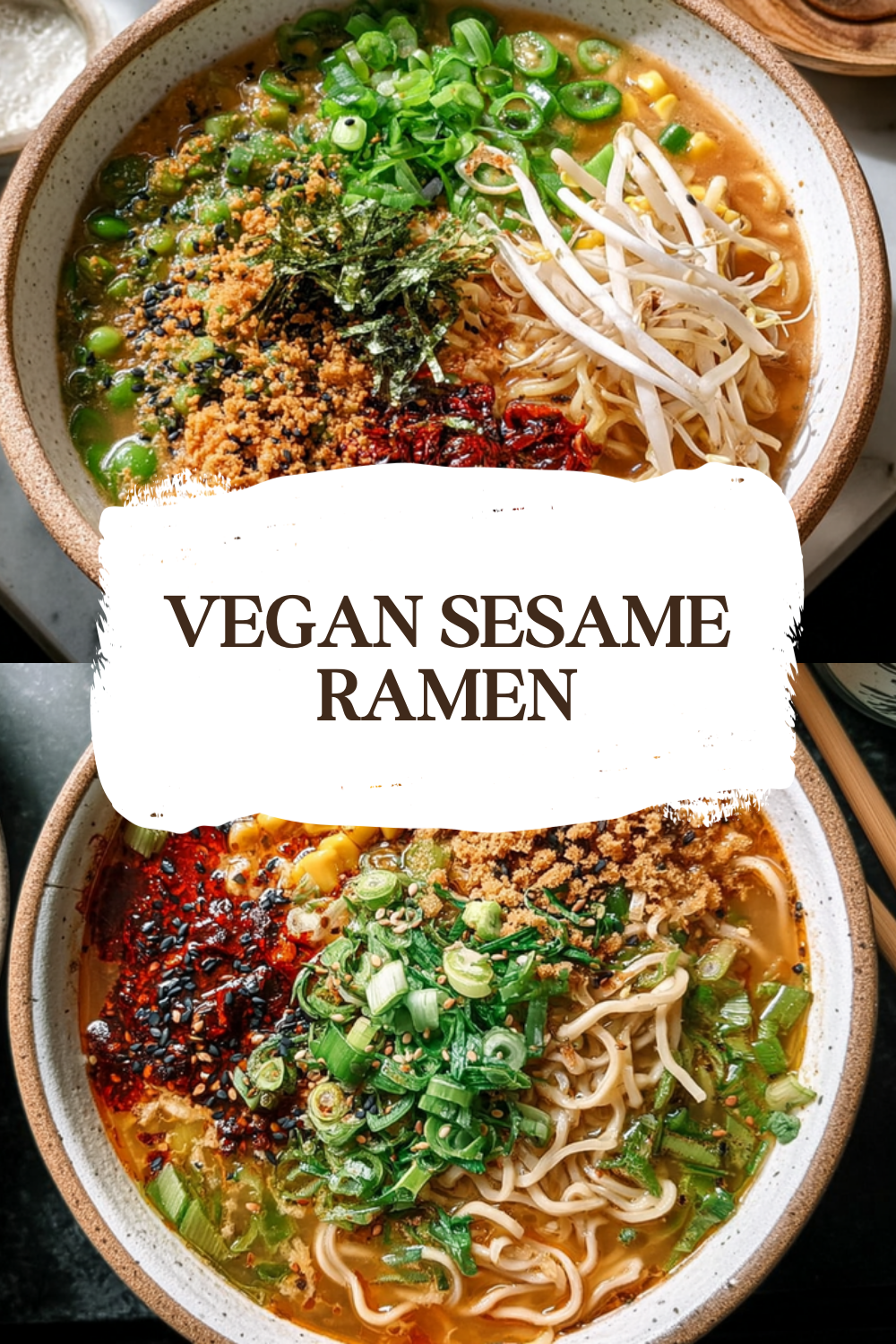
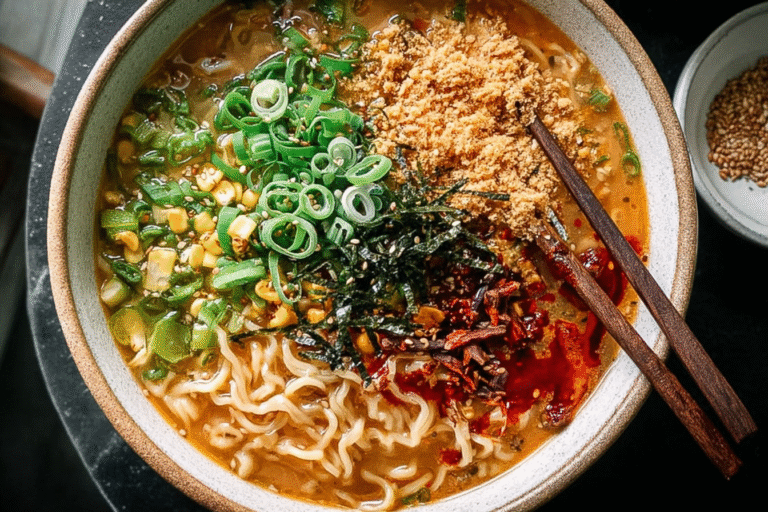
To assemble, place the cooked noodles in bowls and pour over the warm broth. Top with the spicy soy/tofu crumbles, steamed vegetables, and garnishes like crushed peanuts, sesame seeds, sliced green onions, and sliced garlic tops. Drizzle with extra soy sauce or rayu for a personalized touch. This vegan sesame tantanmen recipe with homemade ramen broth comes out rich and satisfying every time.

Dietary Substitutions to Customize Your Vegan Sesame Ramen
One of the best parts of this vegan sesame ramen is how easy it is to adapt. For protein, swap the soy meat or tofu with tempeh or seitan if you want more variety, keeping things vegan and protein-packed. Veggies like bean sprouts and cabbage can be replaced with bamboo shoots or mushrooms for a fresh twist, especially if you’re customizing for seasonal finds.
When it comes to sauces, use tamari instead of soy sauce for a gluten-free version, or try coconut aminos for a lower-sodium option. If you’re aiming to reduce spice, swap rayu with milder chili options or skip it altogether. These changes let you tailor the dish to fit diets for diet-conscious individuals or busy parents without losing that homemade ramen broth magic.
Mastering Vegan Sesame Ramen: Advanced Tips and Variations
Pro Cooking Techniques
To take your vegan sesame ramen to the next level, try toasting sesame seeds before adding them for a deeper nutty flavor. You can enhance the broth by simmering store-bought veggie stock with dried seaweed or shiitake mushrooms, building on the kombu dashi base for extra depth. Preparing the ramen paste ahead and storing it in an airtight container for up to a week makes weeknight meals a breeze for travelers or working professionals.
Flavor variations might include stirring in coconut milk for creaminess or peanut butter for a nutty twist, complementing the sesame ramen broth nicely. For presentation, arrange toppings like corn and green onions neatly in the bowl. If you’re into desserts as a follow-up, check out this berry crisp recipe for a sweet ending to your meal.
More Ideas for Customization
Experiment with herbs like cilantro to elevate the aroma, or add edamame for extra protein. Toppings can include bamboo shoots or various mushrooms, as suggested, to keep things versatile. These tips help food enthusiasts create a dish that’s not just tasty but also tailored to their preferences.
How to Store Vegan Sesame Ramen: Best Practices
Keeping your vegan sesame ramen fresh starts with proper storage right after cooking. Store leftovers in an airtight container in the fridge for up to 3 days, separating the noodles from the broth to keep everything from getting soggy. This method works well for meal prep, letting you grab a quick, nutritious meal anytime.
If you’re freezing, put the broth in a separate container and freeze for up to a month, while keeping solid parts like veggies in another spot. When reheating, warm it gently on the stove to avoid overcooking, and add fresh greens at the end for a boost. These steps ensure your homemade ramen broth stays flavorful and ready for busy days ahead.
FAQs: Frequently Asked Questions About Vegan Sesame Ramen
Can I use tahini instead of Asian sesame paste in vegan sesame ramen?
Yes, tahini can be used as a substitute for Asian sesame paste in vegan sesame ramen. It provides a similar creamy texture and nutty flavor, although the taste will be milder and slightly different from traditional sesame paste. Adjust the amount to your preference to maintain balance in the broth’s richness.
What type of noodles should I use for vegan sesame ramen?
Fresh ramen noodles are recommended for the best texture and taste. These noodles, usually found in the refrigerated section, have a chewy and springy quality that dried or frozen noodles lack. If fresh noodles are unavailable, high-quality dried noodles can be used, but the cooking time and texture may vary.
Can I prepare the sesame ramen paste ahead of time?
Yes, the sesame ramen paste can be prepared in advance and stored in an airtight container in the refrigerator for up to one week. Making the paste ahead saves time when assembling the ramen and allows the flavors to meld, enhancing the overall taste.
What are good vegetable toppings for vegan sesame ramen?
Common vegetable toppings include bean sprouts, shredded cabbage, corn, bamboo shoots, and various mushrooms such as shiitake, enoki, and oyster mushrooms. These toppings add texture and nutrition, and you can mix and match according to your taste and seasonal availability. Blanched or lightly sautéed vegetables work best.
How can I make the vegan sesame ramen spicy without rayu (Japanese chili oil)?
If you don’t have rayu, any chili oil can be used as a substitute to add heat and flavor. You can also add crushed red pepper flakes, chili garlic sauce, or a dash of hot sauce to achieve the spiciness you prefer. Adjust the amount gradually to suit your heat tolerance.
Vegan Sesame Ramen
🍜 Experience a rich and creamy vegan ramen with this Sesame Tantanmen recipe, blending comforting flavors and wholesome ingredients.
🌶️ This dish highlights spicy tofu crumbles and fresh vegetables, making it a satisfying and nutritious meal for vegan diets.
- Total Time: 30 minutes
- Yield: 2 servings 1x
Ingredients
3 tablespoons Asian sesame paste for the creamy base of the soup
2 tablespoons soy sauce adds savory umami to both the broth and crumbles
1/2 tablespoon rice vinegar provides a subtle tang to brighten the flavors
1 tablespoon sesame oil infuses a nutty aroma throughout the dish
1 teaspoon rayu (Japanese red chili oil) brings heat and depth to the broth and crumbles
1 cup (250 ml) soy milk creates the rich, creamy texture in the soup base
1.5 cups (300 ml) kombu dashi broth or vegetable broth forms the flavorful liquid foundation
100 grams soy meat or tofu serves as the base for the spicy crumbles
1 teaspoon minced garlic enhances the savory notes in the crumbles
1 teaspoon minced ginger adds a warm, zesty kick to the crumbles
1/2 tablespoon miso paste boosts umami in the crumbles and overall dish
1 teaspoon sake (optional) offers a slight depth if you have it on hand
1 teaspoon red chili oil for extra spice in the crumbles
2 portions of ramen noodles fresh ones are best for that chewy texture
1/2 head small cabbage, shredded steamed for a crisp-tender veggie addition
1 cup bean sprouts adds crunch and freshness as a topping
1/2 cup corn provides sweetness and color to the mix
Crushed peanuts (amount as desired) for garnish and extra crunch
Sesame seeds (amount as desired) to sprinkle on top for nutty flavor
Sliced green onions (amount as desired) fresh garnish for a pop of taste
Sliced garlic tops (amount as desired) adds a mild, garlicky finish
Soy sauce (to taste) for adjusting seasoning in the final bowl
Rayu or red chili oil (to taste) for customizing the heat level
Instructions
1-Gathering and Prepping Ingredients: First, start by preparing your ingredients to make the process smooth. Soak 100 grams of soy meat in hot water for 5 minutes or crumble the tofu to mimic mince this step ensures the crumbles have the right texture. Wash and shred 1/2 head of small cabbage, measure out 1 cup of bean sprouts, and get 1/2 cup of corn ready for steaming.
2-Gathering and Prepping Ingredients: Next, measure all the liquids: 1 cup of soy milk, 1.5 cups of kombu dashi or vegetable broth, and the seasonings like 3 tablespoons of Asian sesame paste and 2 tablespoons of soy sauce. Mince 1 teaspoon each of garlic and ginger for the crumbles to save time later. This setup helps everything come together quickly in about 30 minutes total.
3-Cooking the Spicy Crumbles and Veggies: In a skillet over medium-high heat, warm 1 tablespoon of sesame oil and sauté the minced garlic and ginger until fragrant, about 1 minute. Add the soaked soy meat or crumbled tofu, then season with 1/2 tablespoon of soy sauce, 1 teaspoon of sake if using, 1/2 tablespoon of miso paste, and 1 teaspoon of red chili oil. Fry this mixture for 3-5 minutes until it gets slightly crispy and flavorful.
4-Cooking the Spicy Crumbles and Veggies: While that’s cooking, steam the sliced vegetables like the shredded cabbage, bean sprouts, and corn for about 3 minutes to keep them crisp yet tender. In another pot, boil water and cook 2 portions of ramen noodles for around 5 minutes, then drain them. Fresh ramen noodles work best for that optimal chewy texture, making this step crucial for the dish’s appeal.
5-Making and Assembling the Broth: For the soup base, mix the paste ingredients 3 tablespoons Asian sesame paste, 2 tablespoons soy sauce, 1/2 tablespoon rice vinegar, 1 tablespoon sesame oil, and 1 teaspoon rayu in a bowl, excluding the soy milk and broth for now. In a separate pot, heat the 1 cup of soy milk and 1.5 cups of broth until small bubbles form, then whisk in the paste until it’s fully dissolved and creamy.
6-Making and Assembling the Broth: To assemble, place the cooked noodles in bowls and pour over the warm broth. Top with the spicy soy/tofu crumbles, steamed vegetables, and garnishes like crushed peanuts, sesame seeds, sliced green onions, and sliced garlic tops. Drizzle with extra soy sauce or rayu for a personalized touch. This vegan sesame tantanmen recipe with homemade ramen broth comes out rich and satisfying every time.
Last Step:
Please leave a rating and comment letting us know how you liked this recipe! This helps our business to thrive and continue providing free, high-quality recipes for you.Notes
🌱 Use fresh ramen noodles if possible for the best texture.
🍲 Prepare the sesame paste mixture ahead and store in an airtight container up to a week.
🥢 Customize toppings with additional vegetables like bamboo shoots or mushrooms for variety.
- Prep Time: 10 minutes
- Cooking time: 20 minutes
- Cook Time: 20 minutes
- Category: Main Course
- Method: Simmering, Frying, Steaming
- Cuisine: Japanese
- Diet: Vegan
Nutrition
- Serving Size: 1 bowl
- Calories: 450 kcal
- Sugar: 3 g
- Sodium: 850 mg
- Fat: 20 g
- Saturated Fat: 3 g
- Unsaturated Fat: 15 g
- Trans Fat: 0 g
- Carbohydrates: 50 g
- Fiber: 6 g
- Protein: 18 g
- Cholesterol: 0 mg